When Art Becomes the New Magnet for Luxury Travel
Over the past decade, the global trend in luxury real estate has evolved beyond breathtaking landscapes and lavish amenities. Successful destinations now share a common formula: integrating art into the living space. This fusion of art and hospitality has become a defining feature of top-tier retreats worldwide.
Consider Benesse Art Site Naoshima in Japan, which transformed a small island in the Seto Inland Sea into a contemporary art hub. Visitors now travel for hours to immerse themselves in works by Yayoi Kusama and Tadao Ando. Similarly, Fogo Island Inn in Canada uses local craftsmanship to turn a remote, icy region into a destination celebrated by Vogue and National Geographic. Château La Coste in France has reimagined a Provence vineyard as a captivating art installation journey.
In these locations, art is not merely decorative—it is the soul that creates a unique, unmistakable identity. This draws visitors not just once, but repeatedly, as they seek exclusive cultural and artistic experiences that cannot be replicated elsewhere. More importantly, the enduring value of art transforms real estate into an asset that appreciates over time, as these spaces and works gain recognition as genuine cultural legacies.
In Southeast Asia, despite numerous 5- and 6-star resorts, there has been a notable absence of an art-dedicated island retreat. Flamingo Holdings recognized this untapped potential. After a decade of success with Art In The Forest in Dai Lai—Vietnam’s pioneering project blending contemporary art with hospitality—Flamingo is now elevating art to an entirely new stage with its islands in Ho Nui Coc Lake.

After 10 years, “Art in The Forest” has become Flamingo’s signature artistic imprint, now continued at Flamingo Maison 108 Ho Nui Coc.
According to Nguyen Thuong Quan, Deputy General Director and Chief Architect of Flamingo Group, Flamingo Maison 108 Ho Nui Coc marks a significant leap forward. Here, art is not an afterthought but an integral part of the design. With its 2,500-hectare lake surrounded by pristine forests, Ho Nui Coc provides the perfect canvas for Flamingo to create an unprecedented art-hospitality complex.
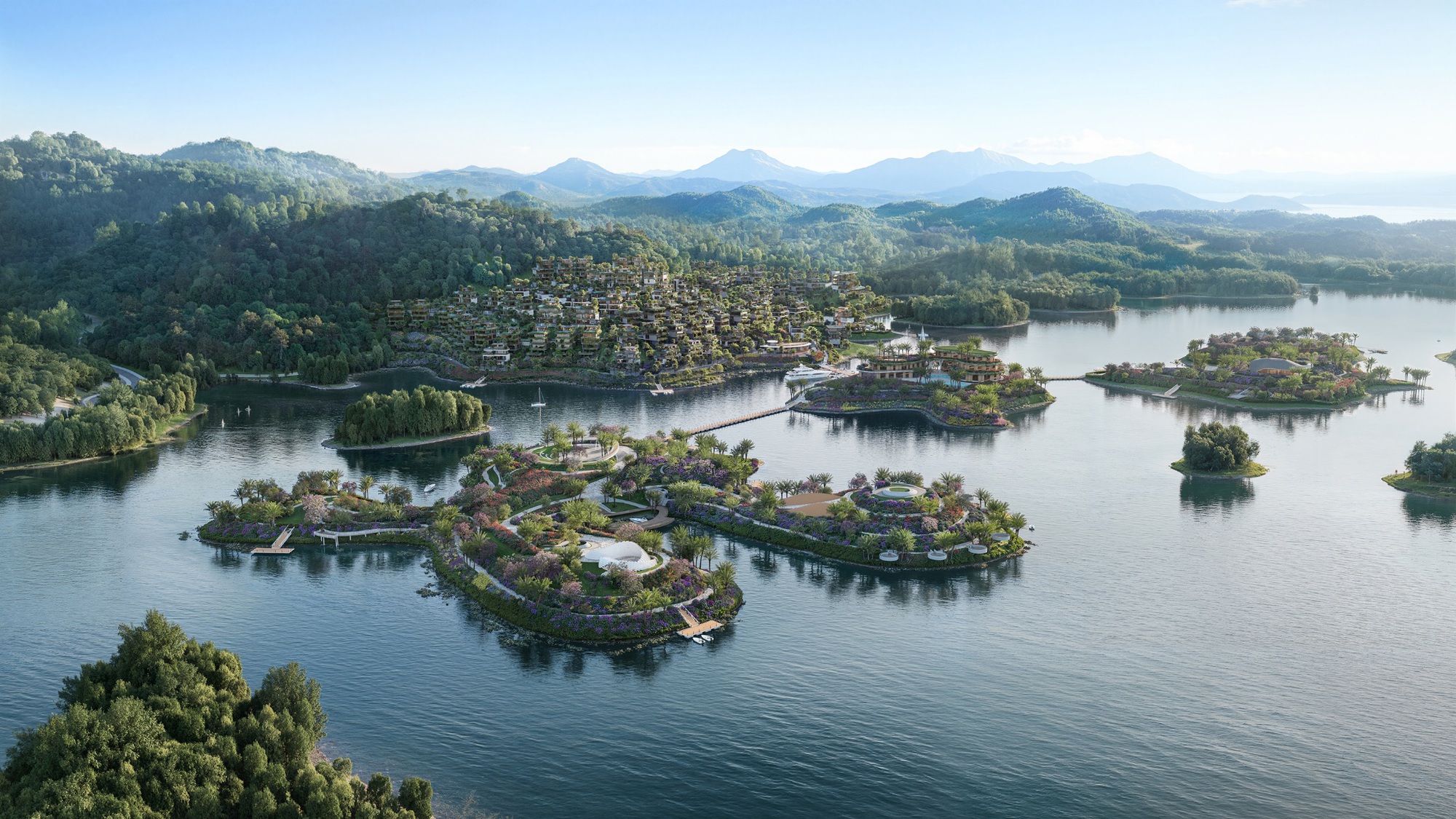
In Southeast Asia, Flamingo Maison 108 Ho Nui Coc pioneers the outdoor art island concept.
The Art Island at Flamingo Maison 108 Ho Nui Coc: A Southeast Asian Pioneer
Unlike typical sculpture parks, Flamingo Holdings’ “outdoor art island” at Flamingo Maison 108 Ho Nui Coc is built on three distinct pillars. It is a physically independent space, separated from the mainland, featuring carefully curated and placed artworks by skilled artisans. Most importantly, art is seamlessly integrated throughout the visitor journey—from pathways and bridges to intimate corners—rather than confined to specific spots. This allows guests to truly “live” with art across three islands: The Moon, The Sun, and The Eclipse.

The Moon Island resembles a blooming tea flower, honoring Thai Nguyen’s tea culture.
Each island tells a unique yet interconnected story of art, wellness, and Thai Nguyen’s tea heritage. The Moon Island (nearly 1.5 hectares) is designed as a Land Art project, shaping the island itself into a blooming tea flower—a tribute to Thai Nguyen’s elegant tea culture. It will showcase large-scale sculptures, outdoor installations, and interactive art, continuing the legacy of Flamingo’s Contemporary Art Museum (formerly Art in The Forest).

The Eclipse Island draws inspiration from terraced tea fields for its healing and rejuvenation center.
The Eclipse Island stands out as a fusion of art and wellness. Its centerpiece, the Maison Wellness Center, is a leading Asian health retreat inspired by terraced tea fields. The interior features a grand lobby with tree-like columns, blending symbolism and artistry. Here, world-class wellness practices are offered, developed by top international experts.
In the near future, The Moon, The Sun, and The Eclipse will host annual events such as an international sculpture festival, regional art weeks, global artist residencies, and workshops inviting guests to participate in art creation. Ho Nui Coc will evolve from a mere getaway into a birthplace of art, radiating creativity for generations.
Flamingo Maison 108 Ho Nui Coc is more than a real estate project—it is a testament to art’s power as a new magnet for luxury travel. It attracts high-spending visitors year-round, driving sustainable economic growth for Thai Nguyen. Art critic Nguyen Quan notes that the project elegantly solves a global challenge: harmonizing economy, culture, and art to create enduring value rather than isolated elements.
“With this vision, the project not only crafts a premium retreat but also sets a new development model. Art becomes the core driver, elevating luxury tourism and ensuring long-term prosperity for Thai Nguyen, placing it on the global travel map,” affirms Mr. Quan.
SHB Honored Among Top 100 Best Workplaces in Southeast Asia, Leading Vietnam’s Banking Sector
Saigon-Hanoi Commercial Joint Stock Bank (SHB) has been honored in the Top Fortune 100 Best Companies to Work For™ Southeast Asia 2025. Notably, SHB ranks as the highest-placed Vietnamese bank on this prestigious list, securing the 37th position.
Fortune Honors PNJ as “Best Company to Work For in Southeast Asia 2025”

A comprehensive, people-centric HR strategy, coupled with a sustainable corporate culture, has propelled PNJ to become Vietnam’s sole jewelry and lifestyle retailer recognized by Fortune as one of the Best Companies to Work For in Southeast Asia 2025.
Unlocking ASEAN’s Potential: Japanese Retail Giant Aims to Turn Vietnam, Thailand into the Next ‘Golden Goose’ with Bold Initiatives

Muji is strategically localizing its product offerings to cater specifically to the diverse markets within the ASEAN region.
Vietnam Poised for Stunning Surge, Projected to Hit $39 Billion by 2025: Doubling Southeast Asia’s Benchmark
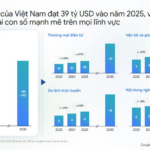
Achieving the $39 billion target by 2025 is not merely a milestone in economic growth but a testament to the adaptability and technological embrace of the Vietnamese people.
Vietnam’s Leading Index Tops Southeast Asia for Three Consecutive Years

Experience exponential growth with a remarkable 20% annual development rate—three times faster than the GDP growth rate.