Recently, the Department of Construction has submitted a report to the Ministry of Construction regarding the implementation status of Ho Chi Minh City’s urban railway projects.
For the Metro Line 2 (Bến Thành – Tham Lương), the HCMC People’s Committee is currently processing the appraisal and approval of the adjusted feasibility study report. The project is expected to break ground in January 2026 and be completed before 2030. This marks the first project in the city to apply the special mechanisms and policies outlined in Resolution 188.
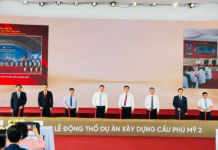
Simultaneously, in collaboration with the Dong Nai Provincial People’s Committee, the Thu Thiem – Long Thanh route has been added to the urban railway planning of both provinces/cities. Procedures are underway to report to the People’s Councils of both localities, with a consensus to designate the HCMC People’s Committee as the competent authority. Consideration is being given to assigning the investor (Truong Hai Group) to study and implement the Bến Thành – Thu Thiem and Thu Thiem – Long Thanh railway lines under a public-private partnership (PPP) model. The project is slated for completion by 2030.
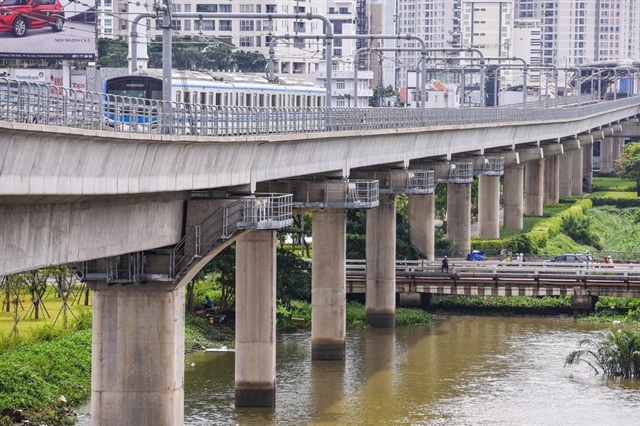 |
Currently, HCMC only has Metro Line 1 (Bến Thành – Suoi Tien) in operation.
Additionally, for the Binh Duong – Suoi Tien Metro and Thu Dau Mot – HCMC Metro projects, the HCMC People’s Committee has tasked the Urban Railway Management Board with preparing the feasibility study reports. The city is in the process of selecting consulting contractors to initiate project development, aiming to commence construction between 2026-2028 and complete before 2035.
Several enterprises are also engaged in researching investments for metro projects connecting the city center to the Can Gio coastal urban area, Metro Line 4, Metro Line 3 (Hiep Binh Phuoc – An Ha), and the Bau Bang – Cai Mep national railway…
|
The projected budget allocation for urban railways in the medium-term public investment plan for 2026-2030 is approximately 345,094 billion VND (equivalent to 13.1 billion USD). Therefore, additional resources need to be mobilized through TOD land fund exploitation, issuance of local government bonds, and private sector investment. |
Regarding the North-South High-Speed Railway project, the HCMC People’s Committee has proposed that the Ministry of Construction request the Ministry of Finance to allocate 10,800 billion VND from the central budget for compensation, support, and resettlement activities in 2026.
The Ministry of Construction is expected to officially hand over the project boundaries and land acquisition scope to facilitate compensation, support, and resettlement procedures in accordance with regulations.
|
Targeted commencement of HCMC – Can Tho railway in 2027 For the HCMC – Can Tho national railway, the My Thuan Project Management Board (Ministry of Construction) is currently preparing the pre-feasibility study report. It is anticipated that the National Assembly will approve the investment policy in the final session of 2025, with construction aimed to start in 2027 and Phase 1 completion by 2035. The Bien Hoa – Vung Tau national railway: The Railway Project Management Board (Ministry of Construction) has been tasked with preparing the feasibility study report, with implementation scheduled for 2026-2035. The Bau Bang – Cai Mep railway (including the Bien Hoa – Vung Tau segment) is a national railway passing through two localities (HCMC and Dong Nai Province). Currently, HCMC is coordinating with the Dong Nai Provincial People’s Committee to finalize procedures and seek consensus from the Ministry of Construction and the People’s Councils of both localities to designate the HCMC People’s Committee as the competent authority. Consideration is also being given to assigning the investor (Becamex IDC Corporation) to study and implement the project under a PPP model. |
NHƯ NGỌC
– 09:30 04/12/2025
Decaying Old Apartments in Ho Chi Minh City Still Fetching $20,000 per Square Meter

In the heart of Ho Chi Minh City, aging apartments with shrinking spaces and deteriorating quality still command staggering prices, often reaching hundreds of millions of dong per square meter.
Four Gasoline Vehicle Groups in Ho Chi Minh City to Transition to Electric Vehicles by 2030
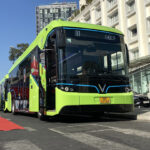
Ho Chi Minh City has set a definitive timeline to phase out gasoline vehicles in its transportation services. By 2030, all public buses, ride-hailing and delivery vehicles, government agency vehicles, and motorcycles used by public servants are expected to transition 100% to electric vehicles.
SeaSun Group Wins Bid for VND 14.5 Trillion Highway Project in Lam Dong
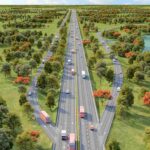
SeaSun Group has been awarded the contract to execute the Tan Phu – Bao Loc expressway project through a public-private partnership (PPP) model under a BOT (Build-Operate-Transfer) agreement.
Revising Resolution 98: Government Proposes Establishment of Ho Chi Minh City Free Trade Zone
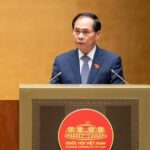
On the afternoon of December 3rd, as part of the 10th session agenda, the Government presented to the National Assembly a draft Resolution to amend and supplement certain provisions of Resolution No. 98/2023/QH15. This Resolution focuses on piloting specific mechanisms and policies for the development of Ho Chi Minh City. A key highlight of the draft is the addition of provisions for the establishment of the Ho Chi Minh City Free Trade Zone.
Ho Chi Minh City to Pilot Flying Cars and Delivery Drones: Businesses Concerned Over Legal Hurdles and No-Fly Zones

Unmanned Aerial Vehicles (UAVs) are currently predominantly utilized in agriculture, but their application in delivery services necessitates a significantly more sophisticated management system.