



















Michael Burry
|
In a rare interview with author Michael Lewis on the podcast “Against The Rules: The Big Short Companion,” Michael Burry—the investor who accurately predicted the 2008 housing market crash—shared a bleak outlook on the current tech market.
“What you see in every bubble is that the stock market peaks before capital spending is even halfway done,” Burry explained. “In most cases, capital spending hasn’t even peaked yet.”
According to the veteran investor, this pattern mirrors the early 2000s when tech stocks peaked long before companies fully invested in internet technology.
Burry specifically targeted Palantir and similar firms, arguing they engage in “consulting” around AI rather than developing real technology, making their high valuations hard to justify.
“I think the whole thing will collapse,” Burry stated. “It will be very difficult to maintain a long position in U.S. stocks and protect yourself.”
Burry, who recently closed his hedge fund Scion Asset Management to focus on writing a Substack blog, advised investors to sell stocks that have surged during this rally.
Regarding Palantir, Burry predicted its stock would plummet from current levels. The company has seen a staggering 130% growth in 2025 and 2,100% over the past three years.
The collapse will differ from the dotcom era
Burry warned that this collapse will be more severe and prolonged than the dotcom bubble. The main reason is that many retail investors now passively invest through index funds and ETFs heavily concentrated in AI stocks.
This means that when the bubble bursts, the domino effect will be more widespread, impacting more individual investors than ever before.
Instead of investing in AI, Burry recommended shifting to the healthcare sector, which he described as “truly undervalued.” Statistics support this view: Healthcare stocks have risen only 11% in the past three years, compared to the S&P 500’s 68% gain.
Burry also criticized Bitcoin, calling it “the tulip bulb of our era” but emphasizing, “It’s worse than tulip bulbs because it enables so much criminal activity.”
His critique comes as Bitcoin recently surpassed $92,500 after a period of significant volatility.
Given his track record of predicting the 2008 housing crisis—an event immortalized in the film “The Big Short”—Burry’s latest warning about the AI bubble is being closely watched by global investors.
With tech markets at record-high valuations and growing doubts about the sustainability of the current AI frenzy, the perspective of this “short-selling legend” could significantly influence investor sentiment in the coming months.
– 12:00 04/12/2025
Michael Burry: The AI Short-Seller’s Bold Bet Against Artificial Intelligence

Last week, Alex Karp, the outspoken CEO of data company Palantir, appeared on CNBC and publicly pushed back against investors skeptical of his company, arguing that Palantir’s stock is undervalued.
The $460 Billion Data Empire Caught in the Crossfire of a Short-Selling Battle

The enigmatic tech titan Palantir has ignited a fierce Wall Street battle, as legendary investor Michael Burry wagers nearly $1 billion against the company’s fortunes. This high-stakes bet transcends mere financial gain, symbolizing a clash over the future of a powerful and contentious tech empire.
“Adopting the After-sales Model of the Automotive Industry: MWG’s Nguyen Duc Tai on ‘The Real Profit Lies in Maintenance, Not Car Sales’ “.

Chairman Nguyen Duc Tai announced that The Gioi Di Dong is revolutionizing after-sales service in the electronics industry with an innovative new model inspired by the automotive world.
Market Beat: Profit-Taking Pressure Mounts, VN-Index Down Over 29 Points
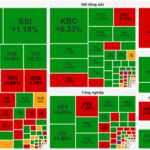
The market closed with the VN-Index down 29.32 points (-1.73%), settling at 1,666.97; while the HNX-Index fell 3.32 points (-1.17%) to 280.67. The sell-off dominated today’s trading session, with 477 decliners against 319 advancers. The large-cap basket, VN30, mirrored the broader market with 24 losers, 3 gainers, and 3 stocks closing unchanged.