The proposed draft of the Personal Income Tax Law (amended) by the Ministry of Finance, which suggests raising the tax-exempt revenue threshold for business households to 500 million VND per year, has garnered significant public attention. This is particularly true among small traders, self-employed workers, and those who sustain themselves through small businesses, street vendors, or family-run shops.
Easing Financial Pressure on Millions of Business Households
Beyond the technicalities of taxation, the figure of 500 million VND represents a policy choice. The government is willing to provide additional financial breathing room to allow business households to recover, stabilize, and grow more transparently.
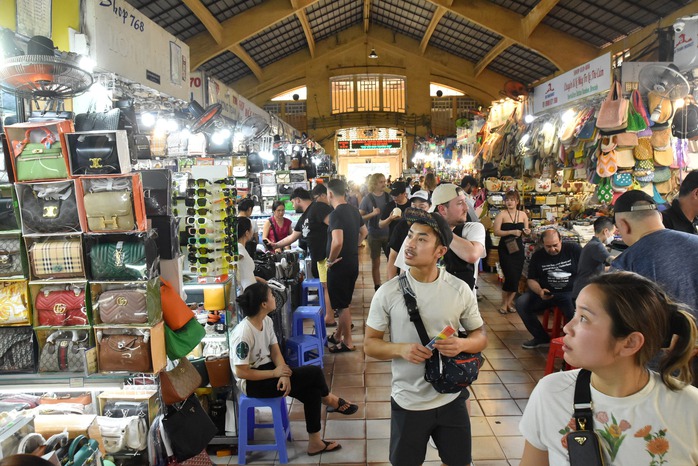
The Ministry of Finance has proposed raising the tax-exempt revenue threshold for business households.
From an economic expert’s perspective, this new revenue threshold is based on both scientific and practical considerations, provided it is carefully designed and implemented.
Firstly, it’s essential to recognize the unique role of business households in Vietnam’s economy and labor market. For years, individual business households have served as a crucial buffer during economic downturns, absorbing workers laid off by companies. Many unemployed individuals have turned to opening food stalls, selling online, providing ride-sharing services, or starting barber shops and repair services.
These ventures not only create self-employment but also generate jobs for family members and neighbors. Despite their small scale and informal nature, business households significantly contribute to GDP, employment, and government revenue.
However, due to their small size and limited resilience, business households are highly vulnerable to cost pressures, including rent, utilities, raw materials, transportation, and loan interest. In today’s rising cost environment, a household with an annual revenue of 100–200 million VND is not as well-off as it may seem. Often, their income barely covers expenses, leaving minimal earnings for labor and family sustenance. Taxing based on a low revenue threshold inadvertently taxes the minimum income needed for labor reproduction and family livelihood.
Vietnam’s current threshold of 100 million VND per year was set years ago when prices, costs, and transaction volumes were much lower. Post-pandemic price shocks have exposed the outdated nature of this threshold, leaving many households with revenues above 100 million VND but minimal profits or even losses.
In this context, raising the tax-exempt threshold to 500 million VND per year is a belated but necessary adjustment. This equates to over 40 million VND per month. Given typical profit margins of 10–15% in sectors like grocery stores, casual dining, and small services, the actual income often matches or slightly exceeds an average urban wage.
Practically, the 500 million VND threshold, if approved, will directly alleviate financial pressure on millions of small business households. The tax exemption provides significant resources for households to offset rising input costs, maintain employment, reinvest in their businesses, and prepare for unexpected shocks like illness, pandemics, or order declines.
Encouraging Record-Keeping and Invoice Retention
On a macro level, raising the tax-exempt threshold has a more important goal: encouraging business households to register formally and report revenues transparently. Knowing that revenues below 500 million VND are tax-exempt, many small traders, online sellers, and shop owners will be more willing to register their businesses, open bank accounts, and issue invoices.

Assoc. Prof. Dr. Ngo Tri Long, Economic Expert.
While the government may not collect taxes immediately, it gains more comprehensive data and a stronger foundation for long-term policy management. Additionally, the reform progresses by taxing income (revenue minus eligible expenses) rather than turnover for households earning 500 million to 3 billion VND annually. This incentivizes larger business households to adopt record-keeping, retain invoices, and transition toward formal business models.
To ensure fairness and prevent abuse, several concerns are valid. First, compared to salaried workers, exempting households with up to 500 million VND in revenue may create disparities. It’s crucial to distinguish between salaries and business revenues. Salaried workers, though lower-paid, enjoy labor contracts, social insurance, and health coverage. In contrast, small business households bear all market risks, with fluctuating incomes and no safety net.
Second, the risk of splitting businesses to stay under the 500 million VND threshold cannot be ignored. A business with billions in revenue might divide into multiple households under family names to avoid taxes. To mitigate this, tax authorities should leverage technology, linking electronic invoices, bank accounts, business registrations, and local data to identify high-risk cases for targeted inspections, avoiding unnecessary burdens on small businesses.
From a labor and social equity perspective, several policy enhancements can be proposed. First, the 500 million VND threshold should be periodically reviewed and adjusted based on price and living cost changes, rather than remaining fixed for years.
Second, sector- or region-specific adjustments could be considered, as profit margins vary widely between a rural grocery store and an urban luxury service.
Third, the government should support small business households in accessing basic accounting knowledge, cost management, and simple phone-based recording apps. This not only improves their financial management but also ensures the practical implementation of income tax on revenues exceeding the threshold.
Finally, effective policy communication is crucial. Labor-focused publications like Nguoi Lao Dong should clarify who is exempt, who must pay, how taxes are calculated, and what procedures apply. They should also reflect the concerns and suggestions of small traders and business households to help authorities refine policies and avoid unintended inequalities.
Still Wondering About Taxable Revenue?
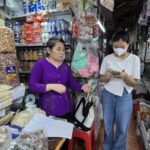
Small business owners express concerns that the current tax threshold does not accurately reflect their actual profits. They propose raising the tax-exempt threshold to a more reasonable level, ensuring a fairer representation of their financial situation.
Finance Ministry: Taxation Not the Optimal Tool to Curb Real Estate Speculation

According to the Ministry of Finance, the taxation of income from real estate transfers requires comprehensive research to ensure alignment with the ongoing refinement of policies related to land, construction, housing, and other associated sectors.
Latest Updates on Taxation of Gold Bullion Transfers

The Ministry of Finance has proposed a 0.1% tax rate on the transfer price of each gold bar transaction. The government will specify the threshold value of gold bars subject to tax, exempting individuals who buy or sell gold for savings or storage purposes (not for business), in line with traditional accumulation practices.
Proposed Business Households Earning Over 500 Million VND/Year to Be Subject to Taxation

The Ministry of Finance has submitted a proposal to the Prime Minister and Deputy Prime Minister Hồ Đức Phớc regarding the draft Law on Personal Income Tax (amended). The proposal suggests raising the tax-exempt revenue threshold for households and individual businesses from 200 million VND to 500 million VND. With this new threshold, it is estimated that 90% of businesses would be exempt from paying taxes.
Tax Experts Warn: Purchases Without Invoices Risk Seizure by Market Authorities if Linked to Counterfeit Goods

Tax experts emphasize that, except for specific cases, all business households are required to have input invoices.