Recently, the Office of the Ho Chi Minh City People’s Committee announced the conclusions of Vice Chairman Bui Xuan Cuong at a meeting regarding the progress of investment research for Group A projects, including the Can Gio Bridge.
For the Can Gio Bridge construction project, the City People’s Committee has tasked the Department of Construction with urgently compiling and finalizing the dossiers for two investment options, to be submitted to the Department of Finance for review.
Option 1 involves public investment, ensuring compliance with procedures for the City Council’s approval of the investment policy at the December 2025 session. A detailed timeline for each task will be developed.
Option 2 proposes a Public-Private Partnership (PPP) model, considering Masterise Group’s proposal, with a targeted groundbreaking date of January 15, 2026.
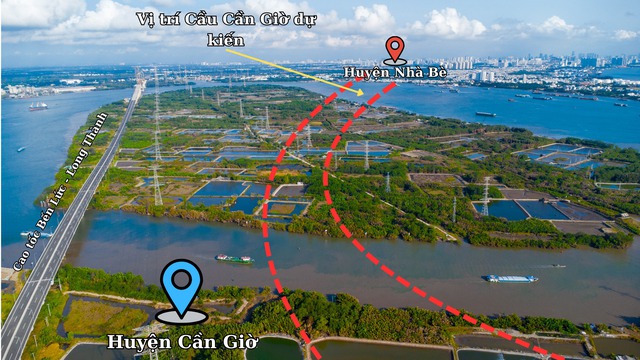
The Can Gio Bridge, spanning the Soai Rap River, is estimated to cost approximately VND 11,087 billion. The 7-kilometer structure includes a 3-kilometer bridge and connecting roads. It will run along Road 15B, intersect Nguyen Binh Street, cross the river, and connect to Rung Sac Road, approximately 2.5 kilometers south of Binh Khanh Ferry Terminal.
This critical infrastructure will link Ho Chi Minh City’s center with Can Gio District and surrounding areas, replacing the existing Binh Khanh Ferry. The bridge is expected to significantly enhance Can Gio’s development by addressing infrastructure bottlenecks.
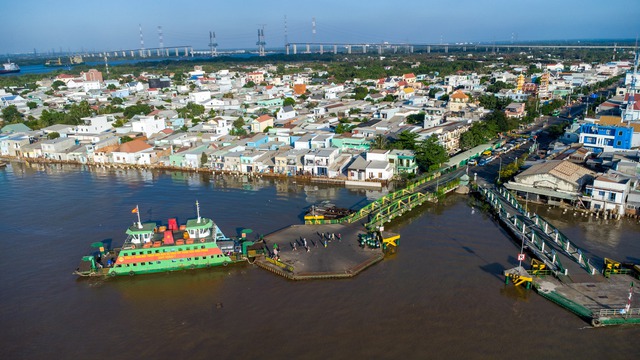
The Can Gio Bridge will replace the current Binh Khanh Ferry.
Regarding the project, Mr. Do Tuan Anh, Deputy CEO of Masterise Group, shared with the media that Masterise Group, in collaboration with Vingroup, is developing a comprehensive transportation network connecting Ho Chi Minh City’s center with the Vinhomes Can Gio megacity. Masterise Group has proposed to the City People’s Committee to become the project’s investor. If approved, construction will begin in January 2026, with completion expected by early 2028.
Mr. Do Tuan Anh added that Can Gio is at a historic turning point as Ho Chi Minh City pursues its “reaching the sea” strategy. For decades, the area’s growth has been hindered by connectivity issues. The bridge will eliminate ferry dependence, reduce travel time from over 2 hours to 40-50 minutes, and connect directly to the Ben Luc – Long Thanh Expressway via the Rung Sac intersection. This will unlock economic and social development potential for the entire region.
The project will also catalyze the growth of the Vinhomes Can Gio seaside megacity, a key driver of Ho Chi Minh City’s new-era growth. It aims to restore the city’s status as a leading economic and tourism hub in the region.
Upon completion, the Can Gio Bridge, along with the Ben Thanh – Can Gio high-speed railway and the sea-crossing bridge, will form an integrated transportation network from Ho Chi Minh City’s center to Can Gio. This will improve mobility and drive economic, social, and tourism development.
Proposing Amendments to Resolution 98 to the National Assembly: Incorporating the Establishment of the Ho Chi Minh City Free Trade Zone
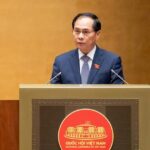
On the afternoon of December 3rd, as part of the 10th session agenda, the Government presented to the National Assembly a draft Resolution to amend and supplement certain provisions of Resolution No. 98/2023/QH15. This Resolution focuses on piloting specific mechanisms and policies for the development of Ho Chi Minh City. A key highlight of the draft is the addition of provisions for the establishment of the Ho Chi Minh City Free Trade Zone.
Vietnam’s Once-Smallest Province Skyrockets with World-Class Airport, Dry Port, and Expressway
This locale is poised to emerge as the new growth epicenter for the Northern region and the entire nation.
Fresh Produce Prices Rise in Ho Chi Minh City, Some as Low as 10,000 VND/kg
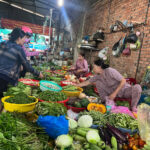
After a period of vegetable scarcity and price hikes in Ho Chi Minh City due to crop damage from floods in key supply regions, the city is now experiencing a resurgence in vegetable supply. Prices have dropped significantly, with some vegetables now available for as low as 10,000 VND per kilogram.
Ho Chi Minh City: Vice Chairman Bui Minh Thanh Appointed as Chairman of the Land Price Appraisal Council
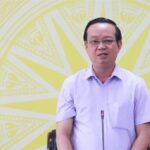
Mr. Bùi Minh Thạnh, Vice Chairman of the Ho Chi Minh City People’s Committee, serves as the Chairman of the Ho Chi Minh City Land Price Appraisal Council.
Prosecution Initiated in Case of ‘Mistakenly Building’ Nearly 50 Houses on Others’ Land in Ho Chi Minh City

Following a thorough collection of information and evidence, the Ho Chi Minh City Police Investigation Agency has officially initiated criminal proceedings for the case of “Fraudulent Appropriation of Property.” This decisive action aims to thoroughly investigate and clarify the actions of Le Van Hoang and his accomplices.