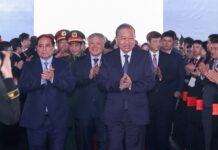
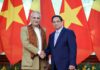
On December 3rd, during the 10th session, the National Assembly adopted the Emergency Situation Law with 419 out of 420 votes in favor. The law, comprising 6 chapters and 36 articles, will take effect on July 1, 2026.

The National Assembly votes to pass the Emergency Situation Law.
According to the law, an emergency situation is a state declared by competent authorities when a disaster or potential disaster poses a severe threat to human life, health, state property, or national security. It also applies to situations threatening public order and safety.
Emergency situations are categorized into three types: disaster-related emergencies, national security and public order emergencies, and defense-related emergencies.
The law outlines the authority for declaring and lifting emergency situations. The Standing Committee of the National Assembly decides on the declaration and termination of such states. Based on their resolution, the President issues orders to announce or revoke the emergency. In cases where the Standing Committee cannot convene, the President may act directly.
The Prime Minister proposes the declaration or termination of emergency situations to the Standing Committee. If the Committee cannot meet, the Prime Minister requests the President to issue the necessary orders.
An emergency situation is lifted when the threat of disaster is eliminated or when national security, public order, and safety are restored.
The newly adopted law also clarifies the authority to implement measures during emergencies.
In critical situations, for the national interest and public safety, the Prime Minister may, with approval from competent authorities, implement measures not yet defined by law to address the emergency. These actions must be reported to the Party, the National Assembly, and the Standing Committee as soon as possible.
The law emphasizes that all measures must be timely, transparent, and proportionate to the situation. Any restrictions on human or civil rights must be necessary, justified, and non-discriminatory.
Quantifying emergency thresholds deemed “unfeasible”
During the legislative process, some suggested adding quantitative and qualitative criteria for declaring emergencies. However, the Standing Committee deemed this unfeasible due to the diverse and unpredictable nature of emergencies.
“In practice, certain disasters or incidents, such as tsunamis or nuclear accidents, require immediate emergency declarations without prior warning. Similarly, national security threats do not follow a graded response system,” the report explained.
The law mandates the Prime Minister to propose emergency declarations to the Standing Committee or the President if the Committee is unavailable.
Given these considerations, the Standing Committee advised against including such criteria in the law.
Chairman of Hanoi May Approve Unlimited Capital Investment Projects
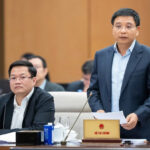
According to the draft resolution, the People’s Council and the Chairman of the Hanoi People’s Committee will have the authority to decide on investment policies and approve investment principles for public, PPP, and private projects, regardless of their capital scale or land use requirements.
Slash Over 15% of Publicly Funded Salaried Positions Within 5 Years
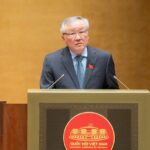
As of now, 146,800 individuals have retired under the policies and regulations governing civil servants, public employees, laborers, and military personnel as part of the organizational restructuring efforts.
Chief Justice of the Supreme People’s Court: Strict Handling of Social Insurance Evasion Cases
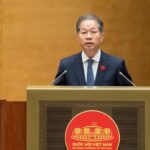
Courts have successfully resolved 92.31% of cases and adjudicated 82.65% of defendants involved in social insurance evasion and other fraudulent, exploitative activities.
Hoang Van Cuong Delegate: Ho Chi Minh City Requires a Truly Superior Mechanism
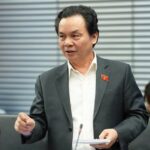
Delegate Hoàng Văn Cường from Hanoi asserts that it is high time to grant Ho Chi Minh City a truly innovative and superior institutional framework, rather than merely compiling minor, piecemeal incentives.
Why Is the Disbursement of Social Housing Credit and Worker Housing Funds Delayed?
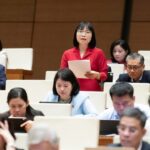
The issue was raised by National Assembly delegate Nguyễn Thị Việt Nga (Hải Phòng) during her feedback on the government’s report regarding the implementation results of resolutions on questioning and supervision in the banking sector.