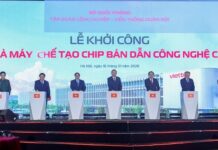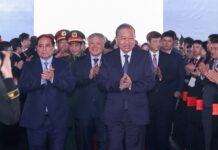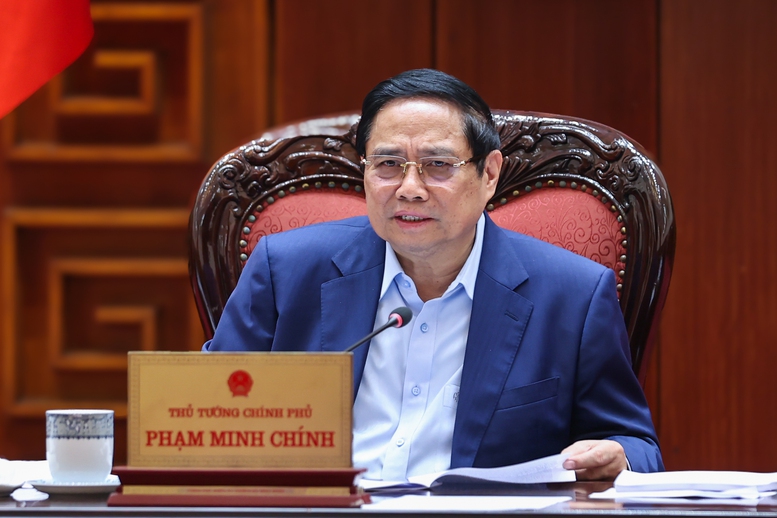
Prime Minister Pham Minh Chinh addressed the Government’s Standing Committee meeting on December 5, 2025. Photo: VGP/Nhat Bac
The meeting was attended by Deputy Prime Ministers, leaders of ministries, sectors, and government agencies.
Regarding the free trade zone project led by the Ministry of Finance, delegates focused on discussing political, legal, and practical foundations; development goals, orientations, principles, establishment criteria, models, tasks, solutions, legal frameworks, and priority mechanisms and policies for the free trade zone.
According to reports and opinions at the meeting, the 10-year Socio-Economic Development Strategy 2021-2030, resolutions, and conclusions of the Politburo, National Assembly resolutions on local development, and development pillars have set out tasks and solutions: Concentrating on building breakthrough, superior, and competitive mechanisms and policies to pilot the establishment of free trade zones.
Currently, there are over 7,000 special economic zones and free trade zones operating worldwide, playing an increasingly important role in the modern economic development strategies of developing and emerging countries. The free trade zone model is now expanding into multi-functional areas for industry, urban development, services, finance, high technology, innovation, and maximizing development resources.
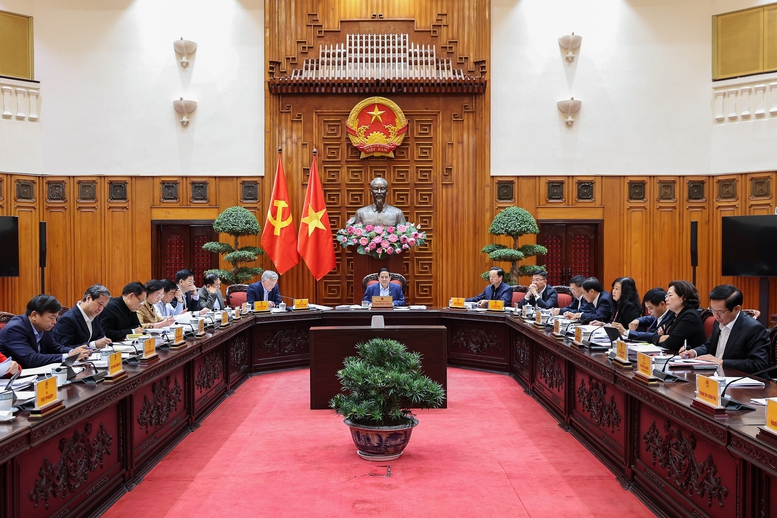
The Prime Minister emphasized clarifying the concept of a free trade zone, its similarities and differences with an international trade center, and the mechanisms and policies for both entities. Photo: VGP/Nhat Bac
In Vietnam, the general legal system does not yet have specific regulations on the mechanisms, policies, management, and operation of free trade zones. Over the years, the National Assembly has issued resolutions on piloting certain special mechanisms and policies for the development of Da Nang and Hai Phong cities, including content on free trade zones.
Therefore, the development of the free trade zone project is urgent and important, requiring immediate implementation to provide a political foundation and eventually institutionalize it into a general legal framework for free trade zones. This will turn free trade zones into new drivers of development, serving as pilot areas for innovative mechanisms, policies, economic institutions, and business environments in Vietnam, aligned with international standards.
The Ministry of Finance plans to establish free trade zones in Da Nang, Hai Phong, and Ho Chi Minh City by 2026. By 2030, the country aims to have 6-8 free trade zones and similar models in localities with favorable conditions. By 2045, Vietnam targets 8-10 internationally standardized free trade zones, competing regionally and contributing 15-20% to GDP.
In his concluding remarks, Prime Minister Pham Minh Chinh praised the Ministry of Finance’s preparation and development of the project, urging the integration of meeting feedback to further refine the proposal for submission to competent authorities, emphasizing speed and quality.
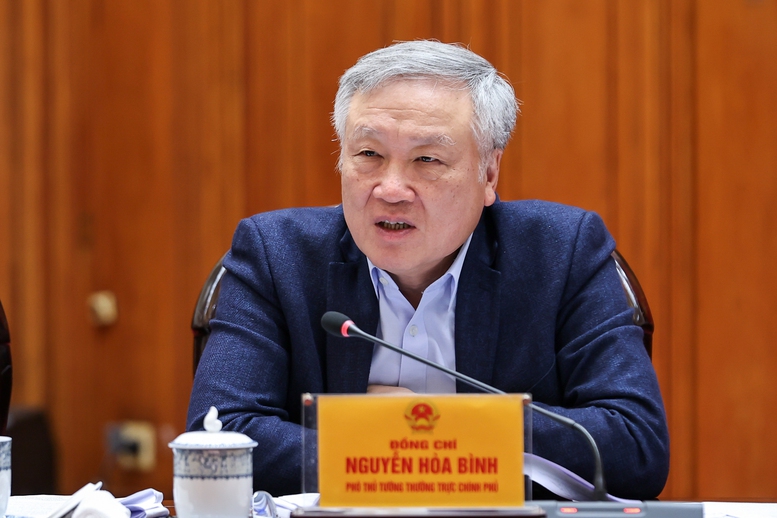
Deputy Prime Minister Nguyen Hoa Binh spoke at the meeting. Photo: VGP/Nhat Bac
The Prime Minister stressed that this is a new initiative, with unified principles but requiring feasibility and effectiveness. The goal is to test policies and contribute to socio-economic development, meeting both immediate and long-term objectives, especially the two 100-year strategic goals.
He emphasized clarifying the concept of a free trade zone, its similarities and differences with an international trade center, and the mechanisms and policies for both entities, urging flexible and creative application of existing regulations.
The selection of pilot free trade zone locations must be balanced across regions, adhering to the pilot spirit (limited in number and duration for evaluation). The Prime Minister directed agencies to learn from international experience and Vietnam’s conditions to develop specific, competitive, and feasible mechanisms and policies without overly impacting the overall investment environment. Policies should include both general provisions and specific adaptations for different zones and localities.
To pilot free trade zones, the Prime Minister outlined tasks to transform principles into policies, planning, infrastructure development, resource mobilization, high-tech application, smart management, and workforce training. He highlighted ensuring progressive social welfare, a clean and green environment, and modern, civilized living conditions, along with a streamlined, efficient, and effective organizational structure, enhanced decentralization, and strengthened supervision and inspection.
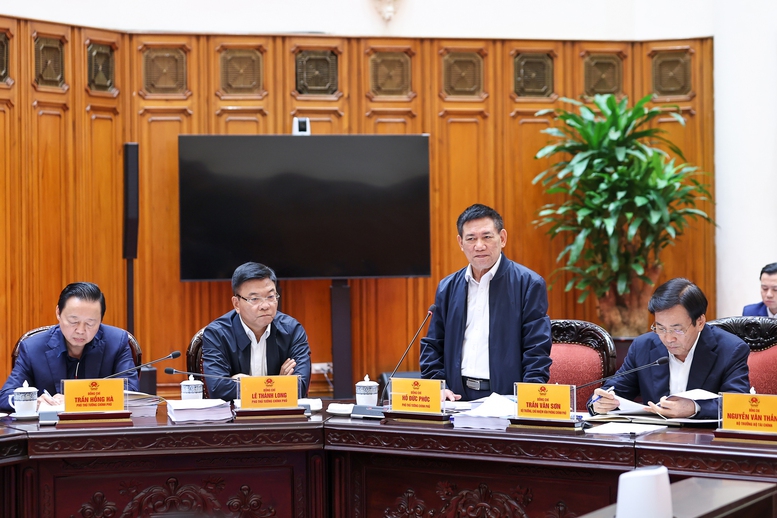
Deputy Prime Minister Ho Duc Phoc spoke at the meeting. Photo: VGP/Nhat Bac
Developing the Dung Quat National Oil Refinery and Energy Center
On the same morning, Prime Minister Pham Minh Chinh chaired a meeting on mechanisms and policies to promote the development of the Dung Quat National Oil Refinery and Energy Center in Quang Ngai Province.
According to reports and opinions, the Dung Quat Oil Refinery is Vietnam’s first oil refinery, located within the Dung Quat Economic Zone. With strategic advantages and developed infrastructure, the zone has become an attractive investment destination, planned as a multi-sector economic zone focusing on oil refining, petrochemicals, heavy industries, and light industries.
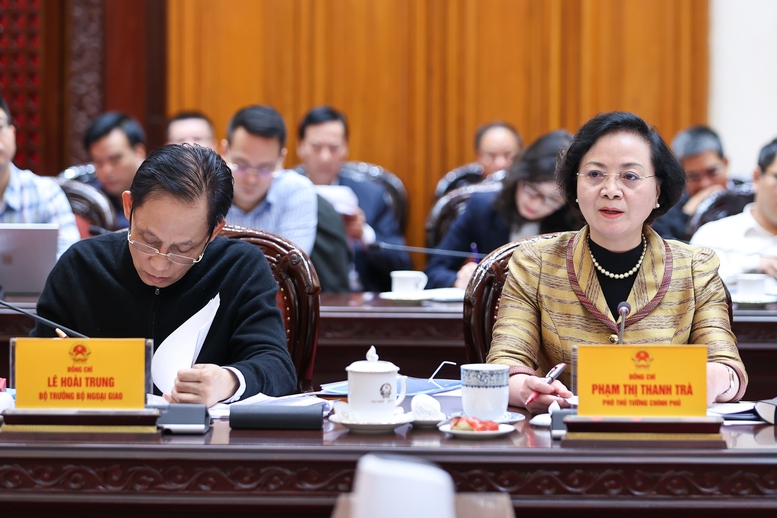
Deputy Prime Minister Pham Thi Thanh Tra spoke at the meeting. Photo: VGP/Nhat Bac
Resolution No. 26 on socio-economic development and national defense for the North Central and Central Coastal regions until 2030, with a vision to 2045, tasked the Politburo with “expanding and developing the Dung Quat National Oil Refinery and Energy Center.”
After hearing reports and opinions, Prime Minister Pham Minh Chinh affirmed that the Dung Quat Oil Refinery, invested and operated by Vietnam, is functioning effectively. He supported its Phase 2 expansion, aligning with the country’s development.
Commending the Ministry of Industry and Trade, relevant ministries, and Quang Ngai Province for their policy proposals, the Prime Minister urged these bodies and Petrovietnam to review existing content and propose new, bold policies for competent authorities.
He noted that policies under the National Assembly’s jurisdiction should be reported for consideration, while those under the Government’s jurisdiction should be proposed for decision-making. Policies within the purview of ministries, sectors, and localities should be proactively implemented. The Prime Minister emphasized the need for a comprehensive plan to ensure the effective development of the Dung Quat National Oil Refinery and Energy Center, meeting rapid and sustainable development requirements, contributing to local socio-economic growth, energy security, and the petrochemical and energy industries. This aims to achieve double-digit growth in the coming years and realize the nation’s two 100-year strategic goals.
Establishment of Free Trade Zones in Ho Chi Minh City, Da Nang, and Hai Phong by 2026
The Prime Minister has called for the development of exceptional, competitive policies to pilot a number of free trade zones.
Vietnam Seizes Unprecedented Opportunity to Realize Bold Ambitions in Air Logistics
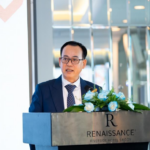
On the morning of December 3, 2025, Ho Chi Minh City witnessed a landmark event: the signing of a strategic partnership agreement between CT Strategies (USA), Saigon Real Estate Management and Investment JSC (SGMI), and Minh Triết Capital. This collaboration aims to revolutionize the aviation logistics sector in Vietnam, marking a significant milestone for the industry’s future.
Prime Minister: Positioning Vietnam as a Leading Logistics Hub in Southeast Asia, Asia, and the World

Speaking at the Vietnam Logistics Forum 2025, Prime Minister Pham Minh Chinh emphasized the goal of sustainably developing a national logistics ecosystem that is “Smart – Modern – Green – Digital – Competitive – Efficient.” With a vision of “looking far ahead, thinking deeply, and acting boldly,” he aims to position Vietnam as a leading logistics hub in Southeast Asia, Asia, and the world. The Prime Minister outlined eight key collective tasks and specific responsibilities for ministries, sectors, and localities.
Prime Minister: Logistics Growth Must Outpace GDP by 1.5 Times, Drastically Cutting Costs
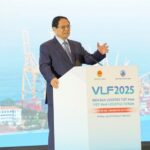
Logistics, hailed as the lifeblood of the economy, has been thrust into the spotlight by Prime Minister Phạm Minh Chính. He has set ambitious targets for the sector, demanding annual growth of 15-16%, a contribution of 6-7% to GDP, and a reduction in logistics costs below the current 16%.
T&T Group and Vietnam Young Entrepreneurs Association Forge Strategic Partnership
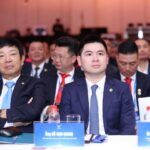
The Memorandum of Understanding signed between T&T Group and the Vietnam Young Entrepreneurs Association will catalyze enhanced connectivity, foster innovation, drive integration, and elevate the competitive capabilities of young business communities nationwide.