According to a proposal submitted by Vingroup to the Ho Chi Minh City People’s Committee, the pre-feasibility study report for the Can Gio – Vung Tau road and bridge connection project is under review. The project is proposed as a Public-Private Partnership (PPP) under the Build-Transfer (BT) contract model.
The report outlines that the project’s starting point is on Bien Dong 2 Road within the Can Gio coastal urban area. The endpoint is at the intersection of Mai Sao – Ben Dinh Road and 30/4 Street in Tam Thang Ward, Vung Tau.
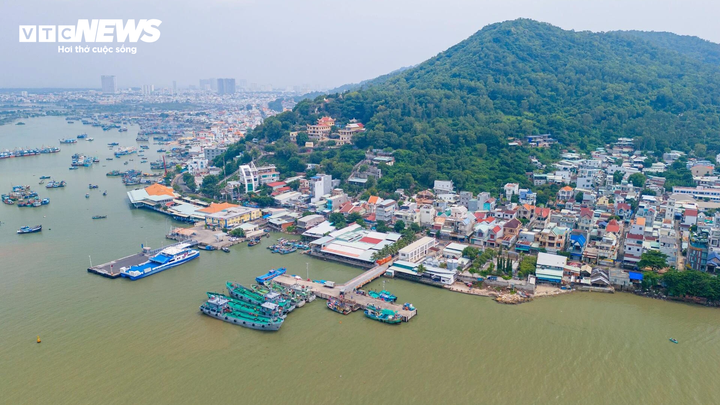
Vung Tau is just 15 km from Can Gio across Ganh Rai Bay. Currently, travel between the two areas relies primarily on the Can Gio – Vung Tau ferry service. (Photo: Luong Y)
The design includes a total length of approximately 14.67 km, with nearly 11 km of sea-crossing bridge featuring 4 vehicle lanes and 2 mixed lanes, designed for speeds up to 60 km/h. The bridge uses a cable-stayed structure with a main span of 600 meters and a 55-meter clearance for large ships.
The 3.8 km approach road is designed for speeds up to 80 km/h, seamlessly integrating with existing and planned road networks.
The route begins in Can Gio, heading southeast across Ganh Rai Bay, with 3.1 km of tunnel, nearly 8 km of bridge, and approximately 3 km of approach road connecting to Mai Sao – Ben Dinh Road, ending at the 30/4 Street intersection.
The preliminary investment is estimated at 104.410 trillion VND. The BT investor will fund the entire project, including land clearance costs, without using the state budget. The government will compensate with land equivalent to the project’s value.
The report proposes a timeline starting in Q1 2026, with completion and operation by 2029.
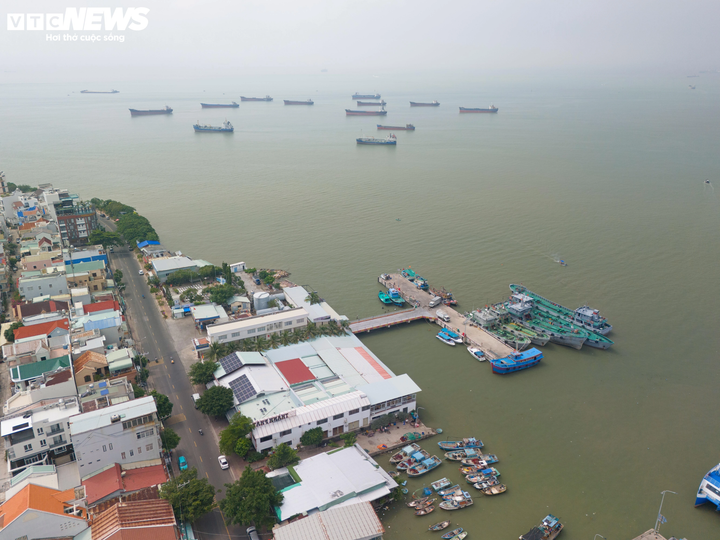
Currently, reaching Can Gio from Ho Chi Minh City and Vung Tau requires ferry travel. (Photo: Luong Y)
The investor highlights the untapped potential of Can Gio and Long Son – Vung Tau in ecotourism, maritime industry, and logistics. However, the lack of a direct transport link forces travelers to detour via National Highway 51 or use the Can Gio – Vung Tau ferry, taking 90-120 minutes.
Upon completion, the Can Gio – Vung Tau road and bridge project will establish a direct coastal connection between Ho Chi Minh City and Vung Tau, reducing travel time to just 10 minutes. This will boost development in Can Gio’s coastal tourism area, Long Son Industrial Zone, and enhance the capacity of the Cai Mep – Thi Vai port cluster, while easing congestion on National Highway 51 and Road 965.
Vingroup seeks to be the project investor, aiming for completion within 3 years. The company urges the city to expedite approval of the pre-feasibility study and allow special investor selection mechanisms to accelerate progress.
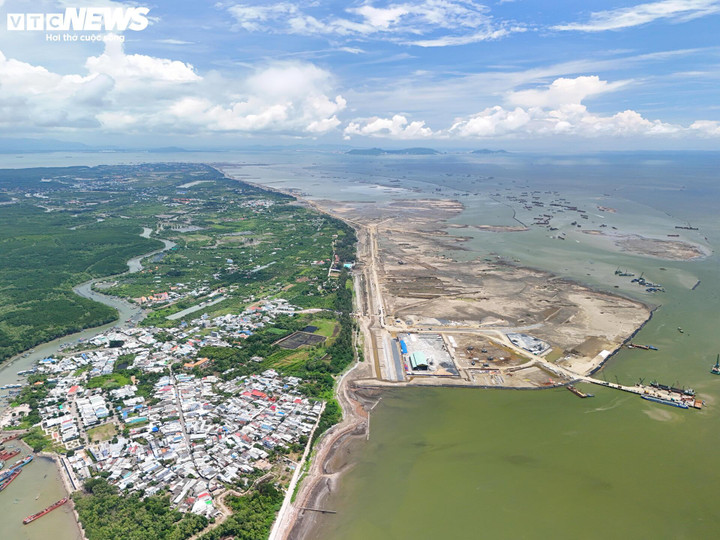
Can Gio is a magnet for investors, featuring the 2,870-hectare Can Gio Coastal Tourism Urban Area, designed for nearly 230,000 residents. (Photo: Luong Y)
Separated by just 15 km across Ganh Rai Bay, travel between Can Gio and Vung Tau currently relies on the Can Gio – Vung Tau ferry, operating daily from 6 AM to 10 PM at approximately 70,000 VND per trip.
Previously, Vingroup proposed to the Ho Chi Minh City People’s Committee to conduct a feasibility study for the Can Gio – Vung Tau sea-crossing road under the BT model.
In early November, the Ho Chi Minh City People’s Committee approved Vingroup’s proposal to study and prepare the investment proposal report for the Can Gio – Ba Ria – Vung Tau sea-crossing road project, subject to further review and approval by competent authorities.
Vingroup will self-fund the investment proposal report, without using the city’s budget. The study results may be transferred to the city as a resource for subsequent project phases if needed.
If the report is not approved by the competent authorities or if Vingroup fails to complete it within 12 months, the research assignment will automatically expire. Vingroup will bear all costs and waive any claims.
The approval letter clarifies that assigning Vingroup to prepare the report does not guarantee its selection as the project investor. After the study, the city will conduct an investor selection process in accordance with the law.
Proposed Clarification: Identifying the Executing Authority for Phú Mỹ 2 Bridge and Two Inter-Regional Projects

The Phú Mỹ 2 Bridge project has been identified as a critical initiative to significantly reduce travel time between Ho Chi Minh City and Long Thành International Airport. It is expected to be presented to the Ho Chi Minh City People’s Council for approval during the upcoming session.
Unveiling Southeast Vietnam’s Crown Jewel: Sơn Hải Group’s Vision for the Most Breathtaking Highway in the Southeast and Central Highlands

The route spans approximately 65.88 kilometers, traversing through Dong Nai Province for about 11.91 kilometers and Lam Dong Province for roughly 53.97 kilometers.
Approved: Investor’s Proposal for Đồng Nai 2 Bridge Project Connecting Ho Chi Minh City
The People’s Committee of Dong Nai Province has officially approved an investor’s proposal for the Long Hung Bridge (Dong Nai 2 Bridge) construction project, to be implemented through a Public-Private Partnership (PPP) model.
Unveiling Vingroup’s 11-km Sea-Crossing Road and Bridge Project Connecting Can Gio and Vung Tau

Vingroup has proposed a groundbreaking PPP project to the Ho Chi-Minh City People’s Committee, structured under a Build-Transfer (BT) contract. The proposed route spans from Bien Dong 2 Road in Can Gio’s reclaimed urban area to the intersection of Mai Sao – Ben Dinh and 30/4 Road in Vung Tau.
Lightning-Fast Development: Billionaire Pham Nhat Vuong’s Vingroup Unveils Plans for Can Gio-Vung Tau Cross-Sea Highway, Slated for Construction Next Year
Experience the future of travel with Vingroup’s groundbreaking Cần Giờ – Vũng Tàu sea-crossing route. This innovative project slashes travel time from over 2 hours to a mere 10 minutes, revolutionizing connectivity between these two vibrant destinations.