




















Gia Lai Accelerates Construction of Quy Nhơn – Pleiku Expressway
The Gia Lai Provincial Project Management Unit for Transport and Civil Works is finalizing the last procedures to approve the technical design and select contractors for Component 1 of the Quy Nhơn – Pleiku Expressway. The province aims to hold a groundbreaking ceremony in celebration of the 14th National Congress of the Communist Party of Vietnam (December 19, 2025).
For Component 2, the province targets approval by December 28, 2025, with construction commencing in March 2026.

AI-generated illustration of the future Quy Nhơn – Pleiku Expressway
Land clearance and compensation efforts are underway, covering over 1,000 hectares and affecting more than 6,600 households and 17 organizations. Gia Lai Province is processing investment procedures for 12 resettlement areas to ensure stable housing for residents. Additionally, infrastructure relocation, including power lines and clean water systems, is being documented.
According to the Gia Lai Department of Construction, sections passing through An Khê and Mang Yang passes present challenging terrain, requiring high technical standards. Following geological surveys, contractors plan to deploy mountain-penetrating drilling robots and advanced construction technologies to ensure safety, progress, and project quality.
Design Overview of the Quy Nhơn – Pleiku Expressway
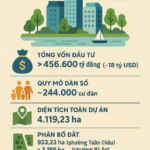
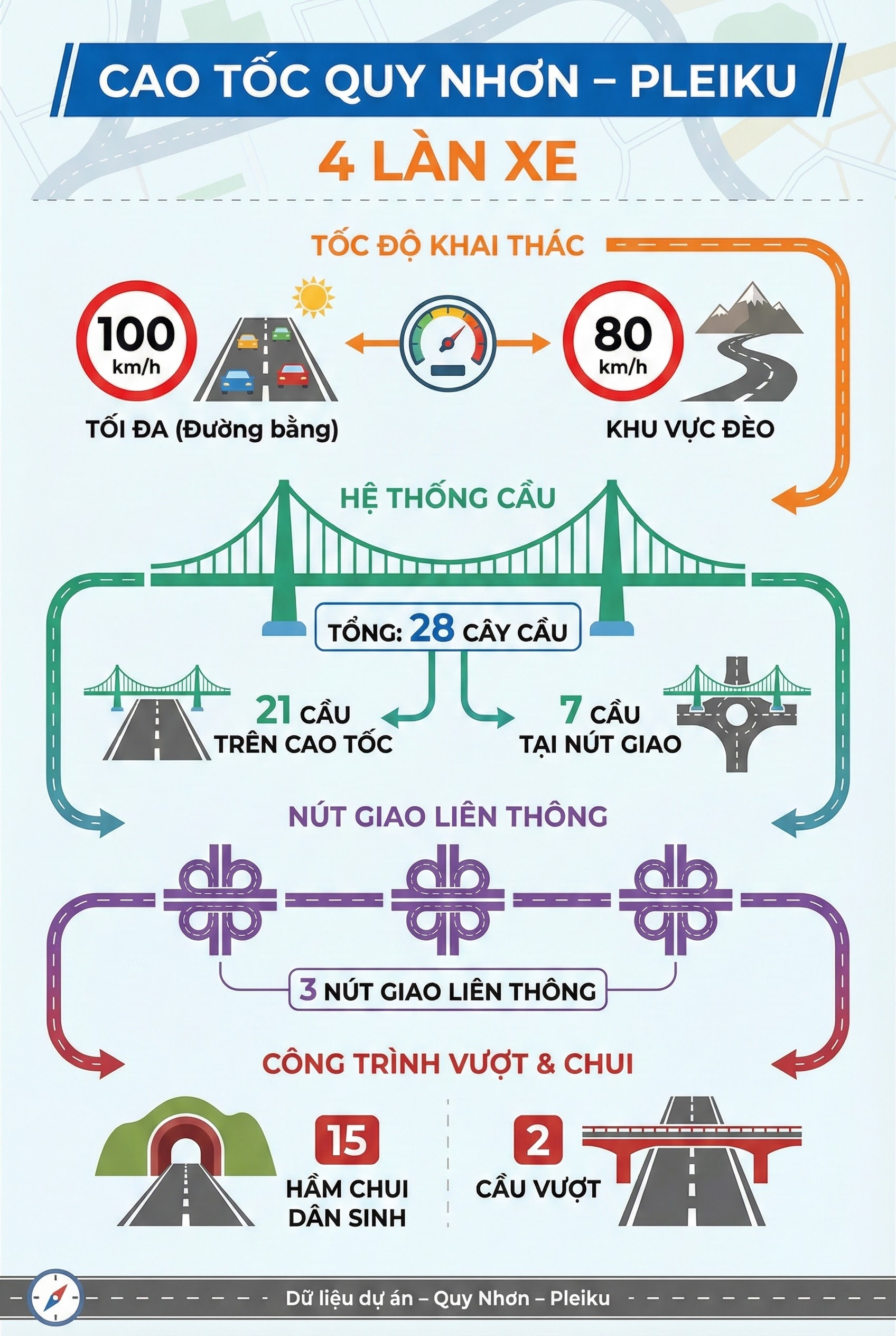
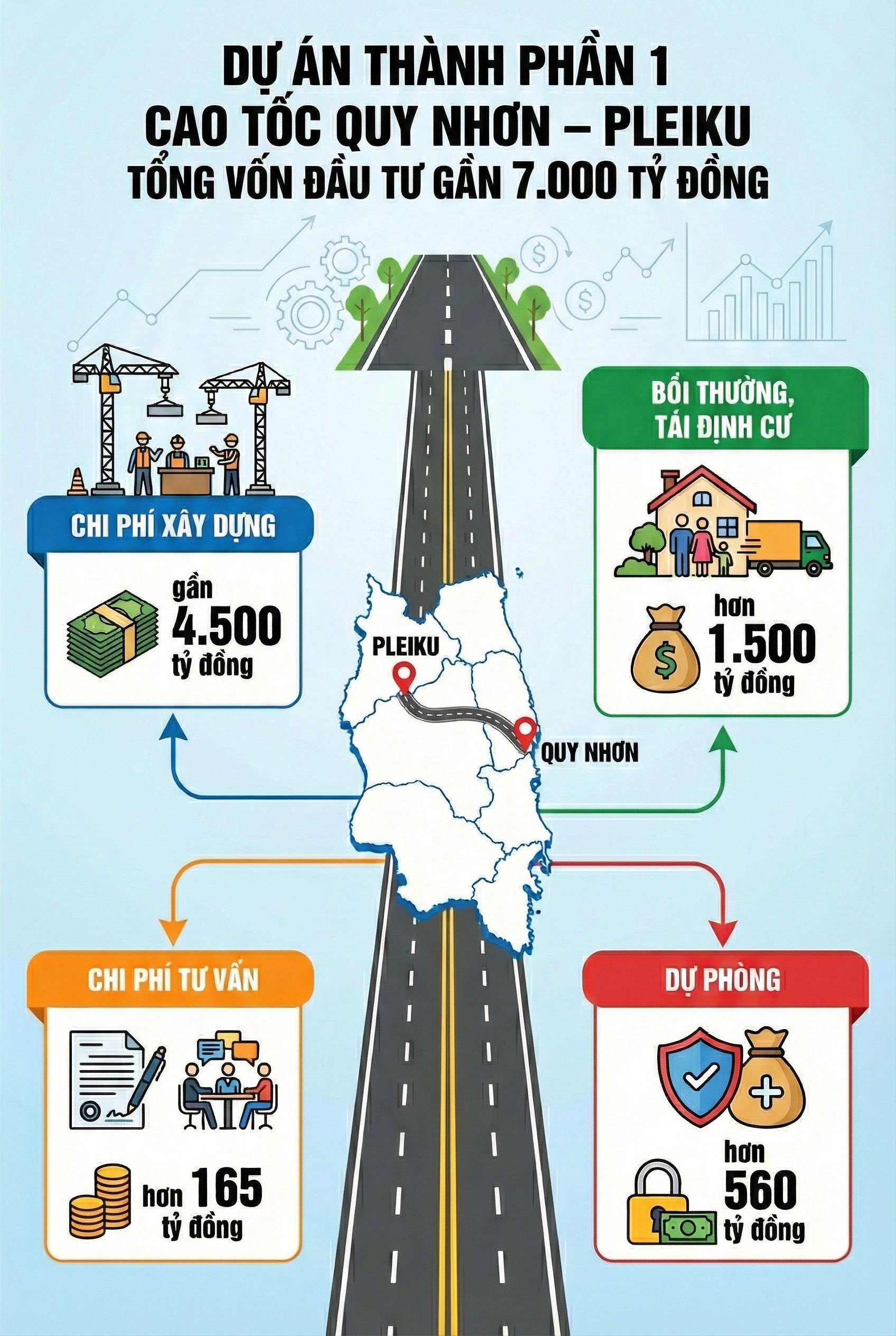
The Quy Nhơn – Pleiku Expressway spans approximately 125 km, traversing 17 communes and wards in Gia Lai Province. The project is divided into three main components, with a total investment of 43.734 trillion VND from central and local budgets, as well as savings.
The project’s consulting units include reputable firms such as Thang Long Construction Corporation, Transport Engineering Corporation No. 4, IDECO Vietnam, and Transport Engineering Corporation No. 5.
In November 2025, the Gia Lai Provincial People’s Committee approved Component 1 of the Quy Nhơn – Pleiku Expressway, scheduled for implementation from 2025 to 2029.
Component 1 spans 22 km, passing through An Nhơn Bắc Ward, An Nhơn Town, and Bình An, Bình Hiệp, and Bình Phú Communes. It begins at Km39+200 on National Highway 19B and ends at the intersection with the western bypass of Phú Phong (Bình Phú Commune).
Notably, the expressway’s sections through An Khê and Mang Yang passes face extremely complex terrain conditions. These are among the most treacherous passes on National Highway 19, characterized by high mountains, steep slopes, sharp bends, and weak soil foundations. As such, these sections are considered the technical highlights of the project, demanding advanced construction solutions, high safety standards, and specialized technologies.
Upon completion, the expressway is expected to become a strategic transportation axis, expanding development space and providing strong momentum for logistics, agricultural product transport, tourism, and trade between the Central Coast and the Central Highlands. This will significantly contribute to the socio-economic growth of the entire region.
Low Compensation Disbursement Rates Among Units in Ho Chi Minh City

Ho Chi Minh City has successfully disbursed VND 36,204 billion in compensation funds for public investment projects in 2025. This significant milestone underscores the city’s commitment to advancing infrastructure and development initiatives, ensuring timely progress and financial efficiency in its public works agenda.
Unveiling the Full Scope of Land Clearance for Hanoi’s ‘Most Expensive Road’ Project
The districts of Ô Chợ Dừa, Láng, and Giảng Võ in Hanoi are entering a critical phase of land clearance for the Hoàng Cầu – Voi Phục project, with efforts underway to engage nearly 2,000 households in land handover before December 15th.
Bustling Activity at the Beltway 3.5 Construction Site as the Project Enters Its Final Stretch

State-of-the-art machinery and a dedicated workforce are currently executing key components of the Belt Road 3.5 project, spanning from Thang Long Boulevard to National Highway 32. To date, the construction unit has successfully completed nearly 100% of the project’s total workload.
Great News for Millions of Residents in Gia Lai Province

The first 22 kilometers of the Quy Nhơn – Pleiku Expressway have been officially approved, with construction slated to commence on December 19th.
Revitalizing Ring Road 2.5: Addressing Repeated Encroachments to Prevent Project Delays

The Ring Road 2.5 project, connecting Dam Hong to National Highway 1, has been under construction and facing delays for nearly a decade. Currently, the project has reached the Dinh Cong Urban Area – National Highway 1 section, but continues to encounter land clearance issues. In some areas, previously cleared land has been reoccupied, further complicating construction efforts.