



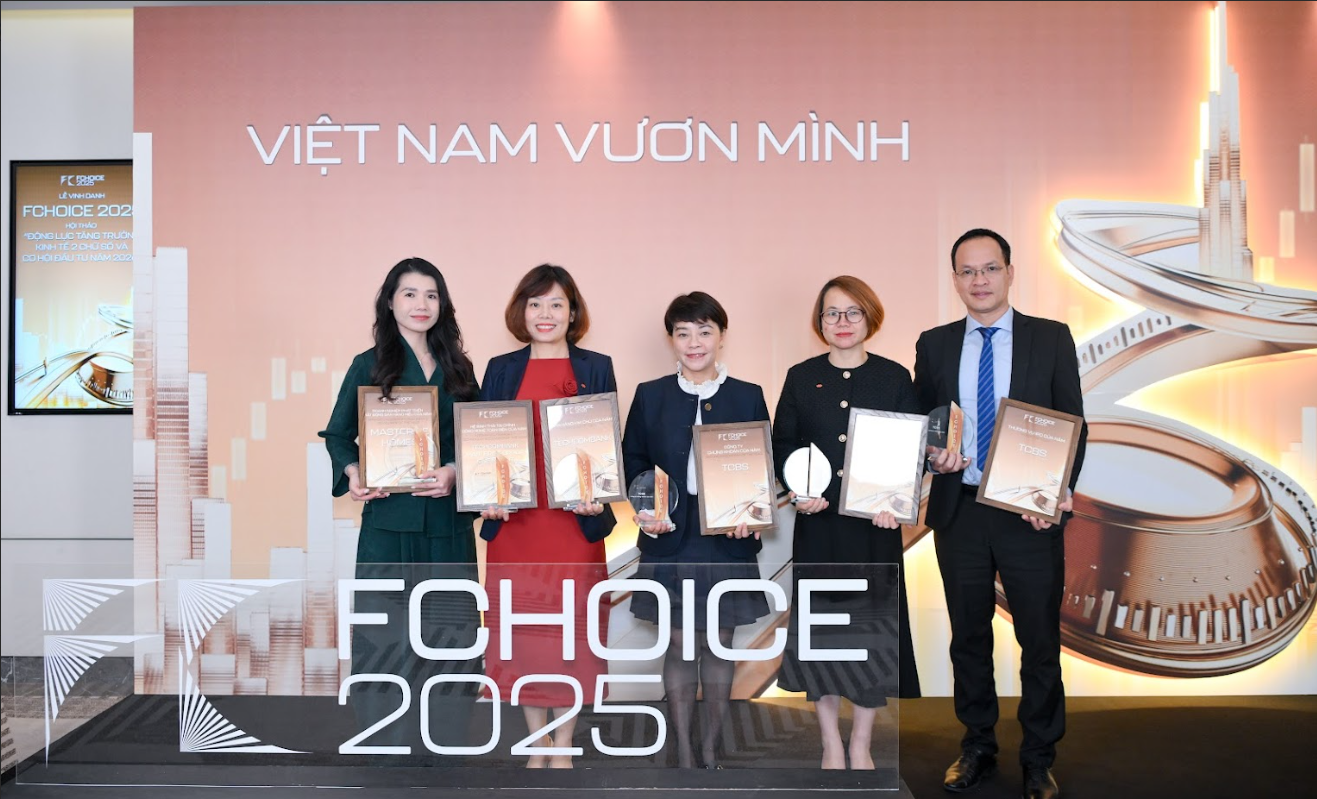








On December 5, 2025, Vietnam Report Joint Stock Company (Vietnam Report) announced the Top 10 & Top 5 Most Reputable Companies in the Pharmaceutical – Medical Equipment & Healthcare – Private Hospital sectors for 2025.

List 1: Top 10 Most Reputable Pharmaceutical Manufacturing Companies in 2025.
Compared to last year’s rankings, there are no changes in the Top 10 list, but there are shifts in rankings and component scores. The top six positions remain unchanged.
OPC Pharmaceuticals moved up to 7th place in 2025, from 8th place last year.
Rohto – Mentholatum ranks 8th, up from 10th last year. TV.Pharm Pharmaceuticals ranks 10th, down from 7th last year.

The Top 5 Most Reputable Traditional Medicine Companies in 2025 remain unchanged from 2024.

In the Top 10 Most Reputable Pharmaceutical Distribution Companies in 2025, the top two positions—Vietnam Vaccine Joint Stock Company and Vietnam Pharmaceutical Corporation—remain unchanged from 2024.
FPT Long Chau rose from 5th to 3rd place, Phytopharma (Central Pharmaceutical Material 2) from 6th to 5th, and Sapharco (Ho Chi Minh City Pharmaceutical Company) from 9th to 7th.

The Top 10 Most Reputable Private Hospitals in 2025 include Vinmec, Tam Anh General Hospital (Ho Chi Minh City), Hoan My, FV Hospital, Thu Cuc, Hong Ngoc, An Sinh, Phuong Dong, S.I.S International General Hospital (Can Tho), and Van Hanh.
Business Landscape in 2025: Growth Amidst Polarization
The first nine months of 2025 paint a picture of growth across the industry, but with significant polarization. According to surveys, 60.7% of businesses reported revenue growth compared to the same period last year, yet only 42.9% saw profit increases, slightly outpacing the 35.7% that experienced declines. Success varies widely, largely depending on investment in technology, management strategies, and policy leverage.
In the pharmaceutical manufacturing sector, recovery is evident after a challenging 2024. Leading companies with well-structured product portfolios achieved double-digit growth, while smaller firms faced profit declines due to rising costs. Pharmaceutical distributors saw revenue improvements, driven by expanded networks and digitalization, particularly in the ETC channel. However, profit margins narrowed as competition from modern pharmacy chains forced distributors to standardize logistics and ensure supply chain transparency.
The medical equipment sector experienced volatile revenue due to reliance on public and private investment cycles, as well as exchange rate fluctuations. Nonetheless, a projected compound annual growth rate of 8-9% from 2026 to 2030 highlights significant potential, especially in diagnostic imaging and testing segments. Private healthcare is emerging as a strategic investment destination, with M&A deals totaling $4.8 billion in the first eight months of 2025. Resolution 72-NQ/TW and land policies have provided a strong impetus, though intense competition is weeding out underperforming providers. Strong brands and specialized expertise are driving growth, while weaker players are shifting from profit to loss. Most businesses (60.7%) anticipate continued market growth but acknowledge fierce competition, necessitating deeper specialization and transparency.
Growth Drivers, Technological Trends, and Adaptive Strategies
Despite challenges from cost volatility and exchange rates, industry players remain optimistic about 2026, viewing it as a selective growth phase. Market expansion is fueled by diversifying healthcare needs (cited by 92.9% of businesses), government support (53.8%), and macroeconomic recovery.
Long-term growth is underpinned by demographic trends: Vietnam’s population is aging faster than any other in Asia, with 16.1 million seniors expected by 2025. High rates of chronic illness among the elderly are driving demand for regular medical services and long-term care. Rising incomes are also encouraging proactive health investments rather than reactive treatments. Medical tourism potential is expanding, with 250,000 international visitors in 2024, attracted by low costs and high expertise in areas like cardiology, IVF, and dentistry.
Technologically, digitalization and artificial intelligence (AI) are seen as transformative, though implementation remains challenging. Currently, 44.6% of companies rate their AI adoption as “moderate,” indicating partial integration. Key barriers include fragmented data infrastructure and high investment costs. However, the amended Pharmaceutical Law (2024) and the rollout of electronic health records are creating a regulatory framework for e-commerce in pharmaceuticals and transparent medical record management.
Another critical trend is the demand for transparency and brand reputation. Amidst rising counterfeit products and intellectual property violations, reputable companies are investing heavily in traceability and international standards, treating transparency as a core brand asset. Media analysis reveals that “Products” and “Image/PR/Scandals” are the most discussed topics, reflecting efforts to build trust through awards and quality certifications. Private healthcare providers are fiercely competing for top medical talent to enhance their reputations.
Finally, health information-seeking behaviors vary sharply across generations. Gen Z favors social media and is beginning to engage with AI (2.0%); Gen Y trusts doctors and experts; while Gen X relies on family and friends and remains wary of new technologies. This diversity requires multi-platform communication strategies: short videos for Gen Z, in-depth content for Gen Y, and traditional channels for Gen X. Combining policy support, technological innovation, and adaptive strategies will be key to thriving in the new growth cycle.
“Pen King” Thien Long Falls into Japanese Hands: Extending the List of Vietnamese Brands Acquired by Foreign Entities

With the announcement from Japan’s Kokuyo Group regarding its acquisition of Thien Long Group Corporation, a beloved Vietnamese stationery brand is set to come under foreign ownership.
RMIT Expert Explores Digital Banking in the New Era: AI Empowers, Enhances, and Personalizes the Banking Experience

Paying for iced tea, parking via QR codes, and settling electricity and water bills through banking apps are becoming the new norms for consumers. This shift not only reflects evolving spending habits among Vietnamese citizens but also marks a significant leap forward for digital banking in Vietnam.
Establishment of Free Trade Zones in Ho Chi Minh City, Da Nang, and Hai Phong by 2026

The Prime Minister has called for the development of exceptional, competitive policies to pilot a number of free trade zones.
CIO Techcombank in the Hot Seat: Leveraging AI to Solve Real-World Challenges

“AI Battle” – the first-ever artificial intelligence competition on national television and the country’s flagship AI program, is nearing the end of its semi-final rounds. In the latest episode, teams tackle the theme “Building a Bank’s Financial Report,” with guest judge Mr. Nguyen Anh Tuan, Director of Technology Division at Techcombank, joining the panel.
Anticipated Catalysts for MCH Stock Post HOSE Listing

Hailed as the “missing piece” of Vietnam’s stock market, MCH shares are taking center stage ahead of their upcoming transfer to the HOSE. With the advantages of the transfer, coupled with a favorable macroeconomic backdrop and strong corporate fundamentals, analysts are confident in Masan Consumer’s explosive growth in 2026 and beyond.