OECD Highlights 2025 as a Year of Strong Economic Rebound for Vietnam
In its December 2nd report, the OECD revised Vietnam’s GDP growth forecast upward to 6.2% for 2026 and 5.8% for 2027.
This positive outlook underscores Vietnam’s macroeconomic stability, even amidst global trade uncertainties.
Vietnam’s Economy Sustains Robust Recovery Momentum
The OECD identifies 2025 as a pivotal year for Vietnam’s economic resurgence, with Q3 GDP surging 8.2% year-over-year.
Key growth drivers include final consumption, fixed asset accumulation, and exports of goods and services.
The labor market remains robust, with unemployment at a record low of 2.2% since Q3 2024. Labor force participation continues to rise, reflecting a stable and expanding job market.
However, the OECD cautions that weakening external demand in 2026 could pressure exports, a critical growth pillar for Vietnam.
On a positive note, private consumption is expected to remain resilient, supported by improving real incomes and employment. However, the planned VAT increase in 2027 may temporarily dampen consumption. Inflation is also projected to rise due to strong domestic demand and the one-off impact of the VAT adjustment.
Public investment, particularly after a period of slow disbursement, is anticipated to remain a key growth driver. The OECD has increased its 2026 growth forecast by 0.2 percentage points compared to its June 2025 report.
Despite global trade volatility, Vietnam’s exports of goods and services continue to surge.
In the first nine months of 2025, export turnover rose by 15.5%, exceeding the 14.2% growth rate of the first half. Exports to the US, accounting for approximately 30% of total exports, increased by 27.7%.
FDI has maintained a steady upward trend since mid-2023, solidifying its role as a critical growth driver. This inflow not only supplements investment resources but also fosters technology transfer, enhancing overall economic productivity.
The OECD anticipates that fiscal policy will continue to support growth, particularly through accelerated public investment, bringing Vietnam closer to its 8% GDP target for 2025.
However, Vietnam’s outlook faces risks, notably the potential weakening of global trade from 2026.
Private consumption, a key pillar, may be temporarily affected by the 2027 VAT adjustment. External risks such as trade policy shifts in major economies, potential US transit taxes, and a tightening global investment environment could negatively impact exports and FDI.
To sustain long-term growth, the OECD recommends institutional reforms focusing on productivity and growth quality.
Key recommendations include: refining market-based monetary policy frameworks to improve capital allocation and financial system resilience; further opening the services market and reducing barriers for foreign investors; enhancing competition between private and state-owned enterprises by improving the business environment and ensuring a level playing field.
Additionally, Vietnam should incentivize the reduction of informal labor to expand social security and overall productivity; and encourage deeper integration of businesses into high-value global supply chains.
Despite a slight growth moderation in the coming years, the OECD ranks Vietnam among Asia’s fastest-growing economies.
This aligns with recent forecasts from major institutions: HSBC raised Vietnam’s 2025 and 2026 growth projections to 7.9% and 6.7%, respectively, the highest in ASEAN. UOB forecasts 7.7% growth for 2025, while Standard Chartered predicts 7.5% in 2025 and 7.2% in 2026.
While global growth slows, Vietnam’s trajectory is distinctly opposite. On December 2nd, UNCTAD’s 2025 Trade and Development Report painted a bleak picture, forecasting global growth at 2.6% for both 2025 and 2026, down from 2.9% in 2024.
The report highlights financial shocks, geopolitical instability, and weakening trade as drags on global growth, despite hopes pinned on emerging technologies like AI.
In stark contrast, Vietnam’s economy has seen consecutive upward revisions and robust growth recognition from international bodies.
As global growth forecasts are repeatedly downgraded, Western institutions have consistently upgraded Vietnam’s outlook. While many economies decelerate, Vietnam maintains significant momentum.
This countercyclical growth positions Vietnam as a rare bright spot in an otherwise gray global economic landscape.
(Source: Sputnik)
PVOIL Establishes Aviation Fuel Trading Company

Vietnam Oil and Gas Group (PVOIL, UPCoM: OIL) has approved a new business establishment plan to enter the aviation fuel market.
Billionaire Pham Nhat Vuong’s Vingroup to Launch Mega Projects in Less Than 20 Days: From Largest-Ever Urban Development to Metro and Steel Plant

On December 19, 2025, Vingroup will simultaneously break ground on four major projects spanning real estate, transportation infrastructure, and steel manufacturing.
Unlocking Opportunities: How Surging FDI Growth Propels Vietnam’s Plastic Industry Forward

Vietnam’s plastics industry is undergoing a transformative phase, fueled by surging foreign direct investment (FDI). This influx of capital is driving both growth and the need for enterprises to elevate their operations to meet international benchmarks. ACB stands as a pivotal partner, empowering businesses to navigate this evolving landscape and seize the opportunities presented by this industrial shift.
TPBank Prioritizes Interest Rate Reduction, Standing Alongside Flood-Affected Communities in Overcoming Challenges

In the wake of devastating storm and flood damage, TPBank has launched a special interest rate reduction policy for customers in the Northern and Central provinces of Vietnam. With a total support limit of up to 4 trillion VND, this initiative demonstrates TPBank’s tangible commitment to sharing the burden and its long-term dedication to standing alongside the community in overcoming these challenging times.
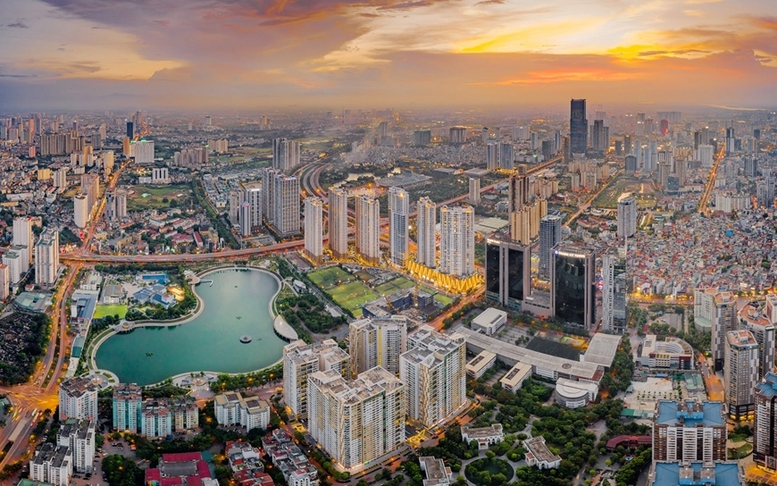
Hanoi Shatters Records, Enters Golden Growth Season

With an estimated GRDP growth of 8.5% for the year, the economy is projected to reach a scale of approximately $63.5 billion, contributing a significant 12.5% to the nation’s GDP.