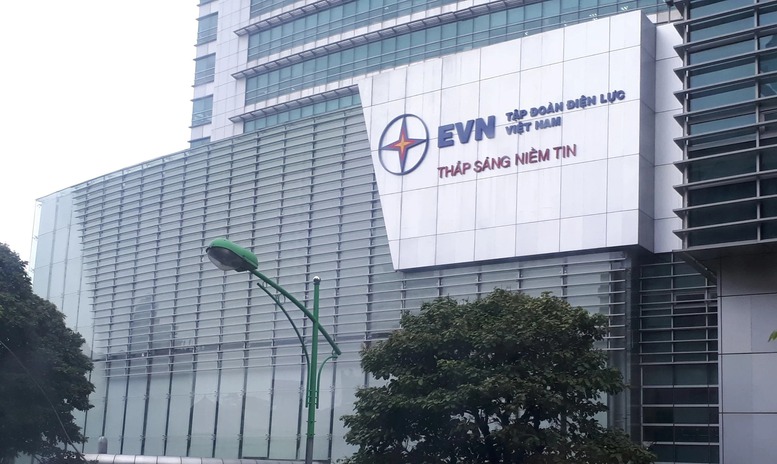
The Ministry of Finance is seeking public input on a draft decree outlining the operational and financial management mechanisms specific to Vietnam Electricity (EVN).
Regulations on Loan Reallocation for EVN’s Debt
Regarding capital mobilization and lending, Article 5 of the draft decree proposes that the Prime Minister authorizes the State Bank of Vietnam to review and approve credit limits exceeding standard thresholds for EVN and its subsidiaries. This ensures sufficient funding for power projects under the National Power Development Plan and provincial plans.
For loans taken out by EVN (excluding ODA loans, foreign preferential loans, or government-guaranteed projects) that are later transferred to subsidiaries or other entities as directed by the state, EVN must negotiate with lenders or guarantors to transfer the contractual obligations to the receiving entity.
If such transfers are not approved, EVN will enter into loan reallocation or debt transfer agreements as required. Projects already under special mechanisms will continue to operate under those terms.
Building on Article 6, Clause 4 of Decree 10/10217/NĐ-CP, the draft also allows EVN to mobilize idle capital from subsidiaries when necessary, based on written agreements between the parties.
Allocation of Exchange Rate Differences to Revenue or Financial Expenses
Under Article 8, the Ministry of Finance proposes that exchange rate differences arising from investments in national power projects be cumulatively calculated and allocated to revenue or financial expenses over a maximum of 5 years (with national key projects allocated according to the debt repayment period). Costs for electricity meters will be allocated over a maximum of 5 years.
The Ministry also allows EVN to expense various repair costs for power lines, substations, power plants, and auxiliary works, such as replacing poles, conductors, upgrading substation capacity, and repairing plant components or infrastructure.
In cases where repair costs result from force majeure events like natural disasters, fires, or pandemics, causing the company to shift from profit to loss, EVN may allocate these costs over a maximum of 3 years.
Additionally, Article 8 permits EVN to use post-tax profits to cover planning, survey, consulting, or scientific research expenses for projects halted or canceled due to policy changes.
If these expenses impact business results, EVN may allocate them over 3 years. Revenue, expense, and other income calculations will comply with current tax laws.
EVN’s Board of Members is authorized to use post-tax profits to address costs related to planning, surveys, consulting, and expenditures for power projects halted or canceled due to policy changes, jurisdictional decisions, planning adjustments, or unsuccessful research and innovation initiatives.
If these costs negatively affect business results, causing EVN to shift from profit to loss, the company may allocate them over a maximum of 3 years from the date they arise. Revenue, expense, and other income calculations for tax purposes will adhere to existing legal regulations.
Who is the Largest Shareholder of the Song Ba Ha Hydropower Plant?
With a chartered capital of 1.242 trillion VND, Song Ba Ha Hydropower Joint Stock Company has consistently delivered strong business performance over the years.
Proposed Regulation for Re-Evaluation of Assets in EVN’s Subsidiary Companies
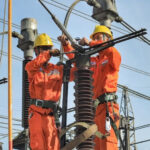
The Ministry of Finance has drafted a Decree outlining the operational and financial management mechanisms specific to Vietnam Electricity (EVN). This includes a proposal to re-evaluate assets of fully EVN-owned subsidiaries, specifically power projects that have reached the end of their depreciation period.
National Housing Fund Operations: Government Releases Detailed Regulations

The Vietnamese government has recently issued Decree No. 302/2025/NĐ-CP, dated November 19, 2025, which provides detailed regulations on the National Housing Fund. This decree also outlines measures to implement Resolution No. 201/2025/QH15, passed by the National Assembly on May 29, 2025. The resolution pilots specific mechanisms and policies aimed at fostering the development of social housing.
Offshore Wind Farm Projects Require Unanimous Approval from Five Ministries

The Ministry of Industry and Trade has proposed stringent requirements for offshore wind power investors, including a minimum charter capital of VND 10,000 billion, a minimum equity capital of 15% of the total investment, and mandatory consensus from five ministries before participating in project development.
Unlock Smart Financial Choices with VIB Credit Card Installment Payments

Unlock the power of your VIB international payment card and transform your spending into a seamless installment plan. With competitive interest rates, cashback rewards, and exclusive offers, Vietnamese users can now manage their transactions effortlessly, all from the convenience of their smartphones. Elevate your financial flexibility today.