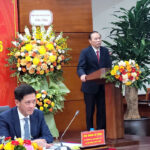





On the morning of December 5th, Prime Minister Pham Minh Chinh chaired a meeting of the Government’s Standing Committee to provide input on a free trade zone proposal, which is set to be submitted to the competent authorities.
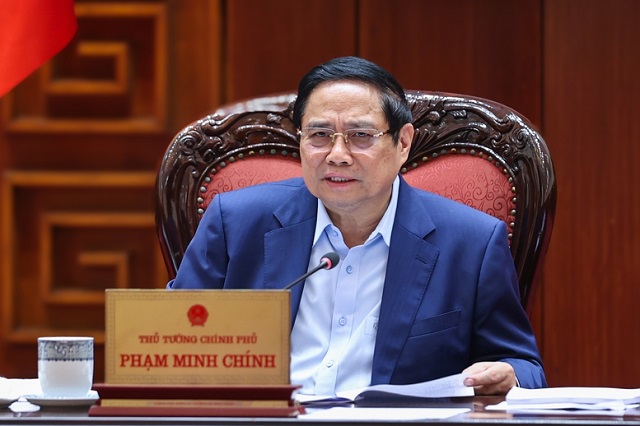
Prime Minister Pham Minh Chinh addressing the Government’s Standing Committee meeting on the morning of December 5th – Photo: VGP/Nhat Bac
|
The free trade zone proposal, led by the Ministry of Finance, focused on discussions regarding political, legal, and practical foundations; development goals, orientations, principles, establishment criteria, models, tasks, solutions, legal frameworks, mechanisms, and priority policies specific to the free trade zone.
According to reports and opinions shared during the meeting, the 10-year Socio-Economic Development Strategy 2021-2030, resolutions, and conclusions of the Politburo, as well as National Assembly resolutions on local development and key pillars, have outlined tasks and solutions. These include concentrating on building breakthrough, competitive, and superior mechanisms and policies to pilot free trade zones.
Globally, there are over 7,000 special economic zones and free trade zones in operation, playing an increasingly vital role in the modern economic development strategies of developing and emerging countries. The free trade zone model has now expanded to include multi-functional areas for industry, urban development, services, finance, high technology, innovation, and maximizing development resources.
In Vietnam, the general legal framework lacks specific regulations on the mechanisms, policies, management, and operations of free trade zones. Recently, the National Assembly has issued resolutions piloting certain special mechanisms and policies for the development of Da Nang City and Hai Phong City, including provisions related to free trade zones.
Therefore, developing the free trade zone proposal is both urgent and crucial, requiring immediate implementation to provide a political foundation and eventually institutionalize it into a general legal framework for free trade zones. This will position free trade zones as new drivers of development and pilot areas for innovative mechanisms, policies, economic institutions, and business environments in Vietnam, aligned with international standards.
The Ministry of Finance anticipates establishing free trade zones in Da Nang, Hai Phong, and Ho Chi Minh City by 2026. By 2030, the country aims to have approximately 6-8 free trade zones and similar models in localities with favorable conditions. By 2045, Vietnam is expected to have 8-10 internationally standardized free trade zones, competing with regional countries and contributing 15-20% to GDP.
In his concluding remarks, Prime Minister Pham Minh Chinh commended the Ministry of Finance for their preparation and development of the proposal. He instructed them to incorporate feedback from the meeting to further refine the proposal for submission to the competent authorities, emphasizing the need for speed and urgency without compromising quality.
Highlighting key points, the Prime Minister stressed that this is a new initiative, with unified directives but requiring feasibility and effectiveness. The goal is to test policies and contribute to socio-economic development, meeting both immediate and long-term objectives, particularly the two 100-year strategic goals.
The Prime Minister advised clarifying the concept of free trade zones, their similarities and differences with international trade centers, and the mechanisms and policies applicable to both. He encouraged flexible and creative application of existing regulations.
Regarding pilot site selection, the Prime Minister emphasized the need for regional balance and adherence to the pilot spirit (limited in number and duration for evaluation). He urged agencies to learn from international experiences and tailor mechanisms and policies to Vietnam’s context, ensuring they are specific, competitive, feasible, and minimally disruptive to the overall investment environment. Policies should include both general provisions and specific adaptations for different zones and localities.
To pilot free trade zones, the Prime Minister outlined key tasks: transforming directives into policies, planning, infrastructure development, resource mobilization, high-tech application, smart management, and workforce training. He also highlighted the importance of addressing population issues, ensuring progressive social welfare, maintaining a clean, green, and modern environment, and establishing a lean, efficient, and effective organizational structure with enhanced decentralization and oversight.
– 14:42 05/12/2025
Japanese Conglomerate Reveals Price Tag for Potential Takeover of Vietnam’s Pen Giant, Thiên Long
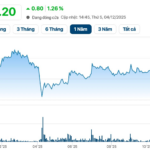
The Japanese conglomerate’s acquisition offer for Thien Long Group surpasses the current market price of TLG on the Vietnamese stock exchange by approximately 28%.
Global Capital Flows Prioritize Markets with Transparency and Strong Governance
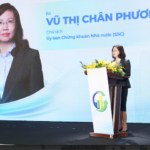
FTSE Russell’s upgrade of Vietnam to secondary emerging market status marks a pivotal phase of growth, demanding heightened transparency and governance. While progress has been made, the ASEAN Corporate Governance Scorecard reveals Vietnam still lags behind regional leaders. As global capital increasingly favors transparent economies, elevating governance standards has become a critical strategy for Vietnamese businesses to seize new opportunities.
Vĩnh Long Launches Construction of VND 2.8 Trillion Đình Khao Bridge on December 19th
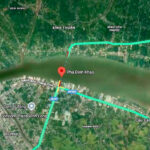
Vĩnh Long officially commenced construction on the Đình Khao Bridge and several other key projects on December 19th, in celebration of the upcoming 14th National Party Congress.
Unleashing Sustainable Value: Bầu Hiển’s Vision for Renewable Energy
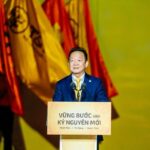
With a forward-thinking mindset, robust capabilities, and a strategic long-term vision, T&T Group swiftly emerged as a powerhouse in the renewable energy sector. Armed with a portfolio of nationally significant projects, the group is committed to sustainable development, actively supporting the government’s pledge to achieve net-zero emissions by 2050.
Electric Bike Battery Life: Dat Bike’s Solution to Cost Efficiency

The cost of battery replacement has long been a significant financial hurdle for electric vehicle users and a complex challenge for manufacturers. However, Dat Bike, a leading electric motorcycle brand, recently made a groundbreaking announcement regarding the longevity of their electric vehicle batteries.