The Ho Chi Minh City Department of Construction has recently submitted a report to the Ministry of Construction, updating the progress of urban railway projects within the city.
Metro Line 2 to Commence Before January 19, 2026
Currently, Ho Chi Minh City is focused on finalizing the adjustment procedures for the Metro Line 2 project (Ben Thanh – Tham Luong) and prioritizing the investment in a railway line connecting Tan Son Nhat and Long Thanh International Airports.
Specifically, the People’s Committee of Ho Chi Minh City is in the process of appraising and approving the adjusted feasibility study report for the project.
Simultaneously, they are collaborating with the People’s Committee of Dong Nai Province to incorporate the Thu Thiem – Long Thanh route into the provincial and city master plans, and to secure approval from the People’s Councils of both localities, designating the Ho Chi Minh City People’s Committee as the competent authority. Additionally, they are considering assigning the investor, Truong Hai Group, to study and implement the Ben Thanh – Thu Thiem and Thu Thiem – Long Thanh railway lines under a public-private partnership (PPP) model.
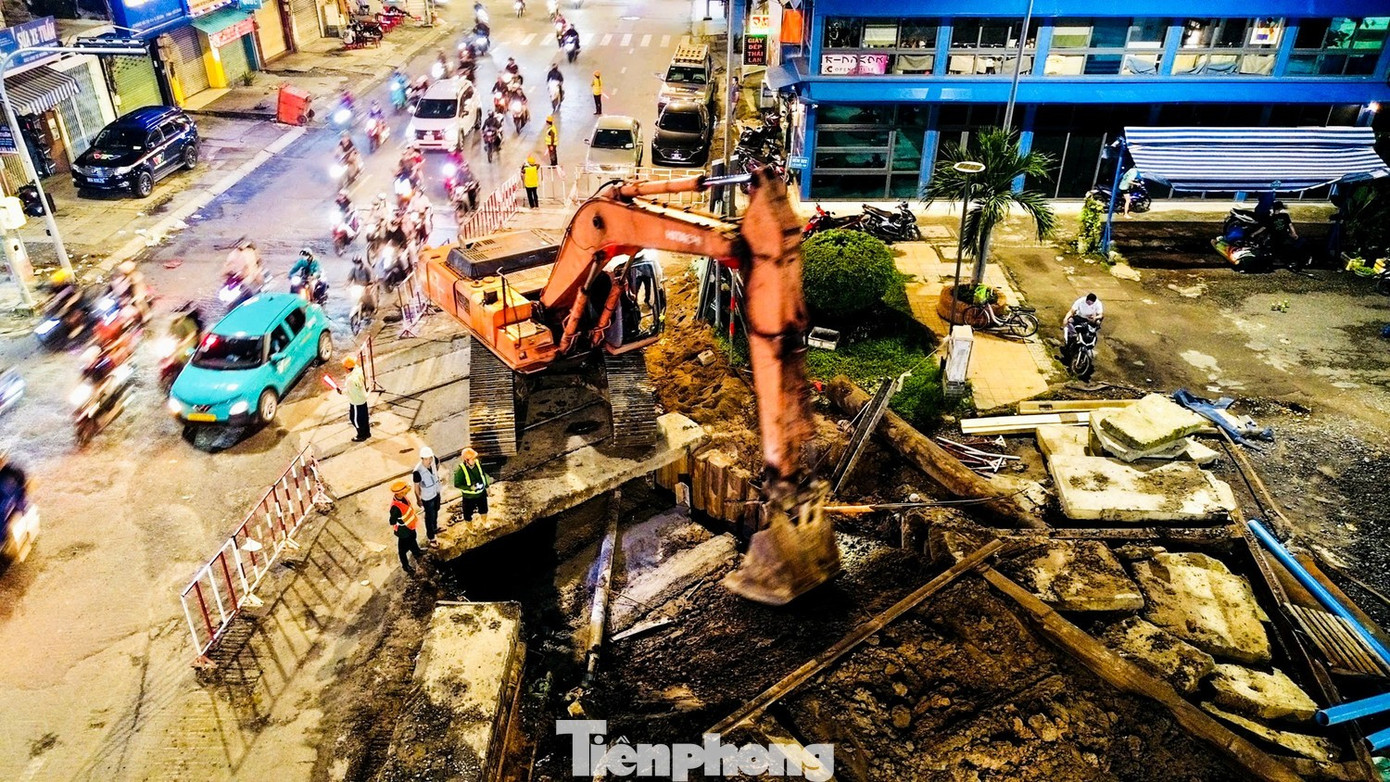
Site preparation for Ho Chi Minh City’s Metro Line 2. Photo: Duy Anh
According to the Ho Chi Minh City Department of Construction, Metro Line 2 is the city’s first project to apply the special mechanisms and policies outlined in National Assembly Resolution 188. The Urban Railway Management Board has appointed a joint international and domestic consulting firm to prepare the adjusted project dossier for appraisal. The People’s Committee has approved the technology plan and is working with the Ministry of Construction to agree on the standards and regulations applicable to the project. The goal is to commence construction before January 19, 2026, in celebration of the 14th National Party Congress, and to have it operational before 2030.
As per the master plans approved by the Prime Minister, the urban railway network of the expanded Ho Chi Minh City region will span over 1,000 km. This includes 12 lines (582 km) in the original Ho Chi Minh City area, 12 lines (305 km) in Binh Duong, and 3 lines (125 km) in Ba Ria – Vung Tau.
The city is currently reviewing the overall master plan adjustment until 2040, with a vision to 2060, to optimize the urban railway network in line with the expanded administrative boundaries. The review includes determining the locations of depots, stations, TOD areas, and urban underground spaces.
Proposing a Central Budget of Over 221 Trillion VND
Regarding the allocation of funds for upcoming railway projects, the Ho Chi Minh City Department of Construction reports that the People’s Committee has submitted Official Dispatch No. 2881 to the Ministry of Finance, outlining the medium-term public investment plan for 2026-2030. The city requests the Ministry of Finance to supplement the central budget with 221,098 billion VND (equivalent to 8.39 billion USD) to meet its needs.
Specifically, the city seeks 209,500 billion VND for urban railway projects under the Ho Chi Minh City Urban Railway System Development Plan (as per National Assembly Resolution 188) during the 2026-2030 period, instead of extending it to 2026-2035.
Additionally, the city proposes an extra 11,598 billion VND to support projects arising from the expanded administrative boundaries, bringing the total requested central budget for 2026-2030 to approximately 221,098 billion VND, up from the previously planned 209,500 billion VND. The Ministry of Finance is currently reviewing and providing feedback on the city’s proposal.
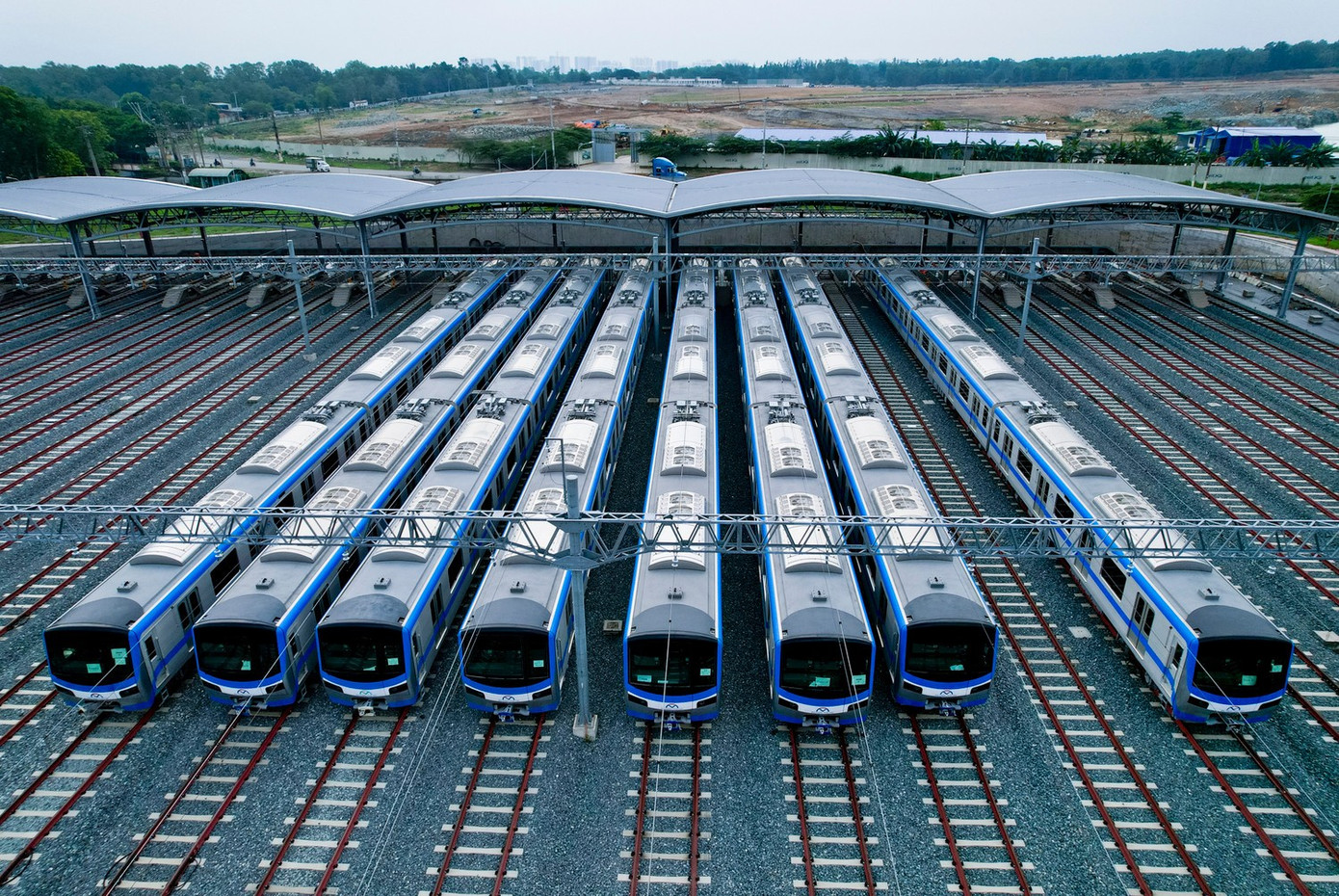
Long Binh Depot of Ho Chi Minh City’s Metro Line 1. Photo: Duy Anh
For the local budget, the People’s Committee estimates a medium-term public investment plan of 975,120 billion VND for 2026-2030, with approximately 123,996 billion VND (equivalent to 4.71 billion USD) allocated for urban railways.
Thus, the total budget for urban railways in the 2026-2030 medium-term public investment plan is expected to be around 345,094 billion VND (equivalent to 13.1 billion USD). The Department of Construction emphasizes the need to mobilize additional resources through TOD land exploitation, local government bond issuance, and private sector investment.
Numerous Businesses Propose PPP Investments in Railway Projects
In line with Resolution 68 of the Politburo on private sector development, the Ho Chi Minh City Department of Construction reports significant interest from businesses in urban railway projects. Many investors have submitted proposals and been assigned to study projects under the PPP model or direct investment as per the Investment Law.
Vinspeed has proposed a project to connect downtown Ho Chi Minh City with the Can Gio coastal urban area. The proposal has been appraised by the city’s Appraisal Council and submitted to the People’s Committee for investment approval and investor designation.
Becamex Corporation has been tasked with studying the investment plan for the Bau Bang – Cai Mep national railway, linking the Southern Key Economic Region with the Cai Mep – Thi Vai deep-water port cluster.
Sovico Group has been assigned to study and propose an investment plan for Metro Line 4 under the PPP model or direct investment. This line serves as the East-West backbone of the city’s metro network.
As mentioned earlier, Truong Hai Group (Thaco) has proposed investing in the Ben Thanh – Thu Thiem and Thu Thiem – Long Thanh railway lines under the PPP model, specifically a BT contract. The People’s Committee is considering approving Thaco as the project investor.
Lastly, Masterise Group has proposed studying the Thu Thiem – Long Thanh metro line (Hiep Binh Phuoc – An Ha section) under the PPP model, also with a BT contract. The People’s Committee is currently reviewing the approval of Masterise as the project investor.
Why Ho Chi Minh City’s Land Database Remains Incomplete
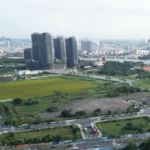
As of now, Ho Chi Minh City has successfully established a comprehensive land database for 3.14 million land plots, ensuring accuracy, completeness, cleanliness, and real-time updates. Among these, 1.76 million plots have been verified with confirmed ownership. However, 689,629 plots remain incomplete due to unresolved discrepancies between land user information and the national population database.
Unlocking Progress: Ho Chi Minh City Resolves Hurdles, Issues Land Titles for Multiple Projects

Introducing a series of prestigious projects now on track for red book issuance, following thorough review by Task Force 1645: the office tower and apartment complex at 39-41-43 Vo Van Kiet Street, Sai Gon Ward; the low-rise residential area in Binh Trung Moi Ward; DEFINE Residence in Cat Lai Ward; and the Sonadezi Huu Phuoc residential zone in Ngai Giao Commune.
Unveiling the Unregulated: A Spotlight on Informal Settlements and Illegal Housing in Ho Chi Minh City
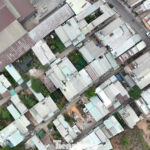
Hundreds of informal settlements, built on agricultural land and existing for years, are predominantly located in the northern areas of Ho Chi Minh City, where a large number of migrant workers reside and work. Residents living in these unnumbered houses are increasingly anxious, especially as similar areas have faced forced evictions.
The Race Intensifies: Dai Dung Group, Deo Ca, and THACO Consortium Revitalized as the $2.1 Billion Metro Line Sets Its Landmark Date
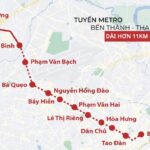
The Ho Chi Minh City Department of Construction has announced that the Ben Thanh – Tham Luong metro line will break ground before January 19, 2026, in celebration of the 14th National Party Congress.
Will the New Land Price List Drive Up Real Estate Values?
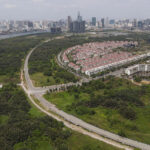
Following the release of the new land price schedule effective from 2026, land use fees, land rent, and compensation costs for site clearance have surged, significantly driving up project development expenses. The supply structure remains imbalanced, heavily concentrated in the high-end segment and large-value properties.