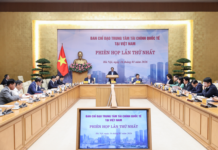










During the government’s regular press conference on December 6th, Mr. Nguyen Tri Duc, Chief of Office and Spokesperson for the Ministry of Construction, addressed questions regarding the reconstruction of homes completely destroyed by storms and floods, as directed by the Prime Minister.
Mr. Duc stated that in 2014, the Prime Minister issued a Decision on policies to support poor households in building storm and flood-resistant housing in the Central region. This policy applies to 13 provinces and cities in the North Central and coastal Central regions (before the merger).
Subsequently, the Ministry issued Circular 16 to guide the implementation of the Prime Minister’s Decision.
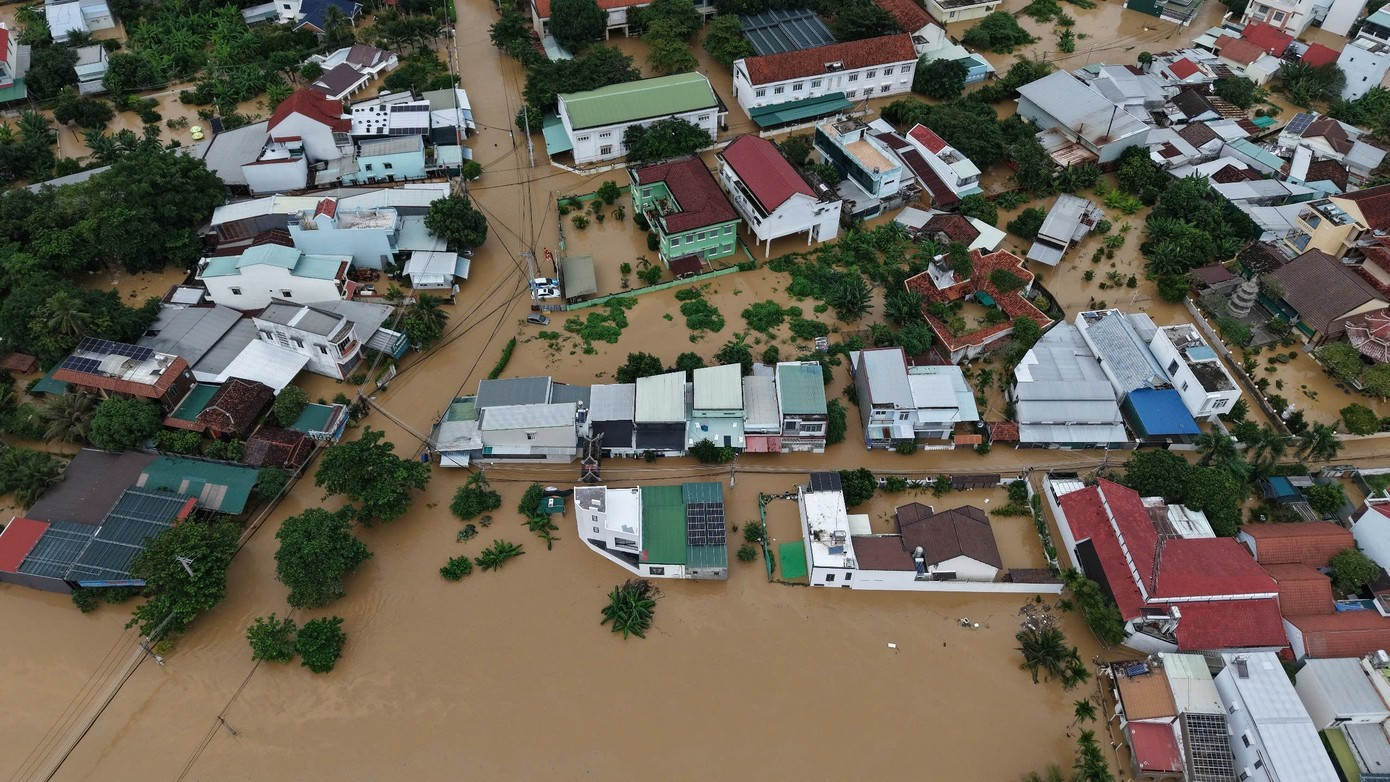
At the government’s regular meeting on December 6th, the Prime Minister emphasized focusing efforts on recovering from storm and flood damage. This includes completing repairs on 34,352 damaged homes and constructing 1,628 new homes for affected residents. Repairs must be finished by December 31st, and new constructions by January 31st, 2026, ensuring “everyone has a home, every family celebrates Tet, and every child experiences joy, leaving no one behind.”
The Ministry of Construction has directed local authorities to design at least three typical storm and flood-resistant housing models. These designs must meet minimum criteria for area, quality, and safety against storms and floods. The models are presented for residents to reference and choose from, without being mandatory.
In addition to these models, local authorities provide specific guidelines for renovating and adding floors to create storm and flood-resistant homes. All localities have designed and published at least three models, with some, like Hue and Thanh Hoa, offering up to 6-8 models. These designs are available on the local Department of Construction’s information portal.
The Ministry of Construction has also tasked the National Architecture Institute with developing a system of safe housing designs to withstand natural disasters from 2007–2023. This includes 176 ready-to-use models for local authorities, featuring designs for disaster-prone areas (Central and Southwest regions), homes resistant to storms, flash floods, and landslides, rural homes by region, and homes adapted to climate change and rising sea levels (details in the appendix).
According to the Ministry of Construction, these models are based on research into natural conditions, cultural practices, and disaster characteristics in affected areas. They comply with current technical standards and regulations.
Many localities have adopted these designs as primary reference materials for guiding housing design, renovation, and support programs for storm and flood-resistant homes. Mr. Duc noted that homes built using these designs have proven safe and resilient against storms and floods.
Assessing Regional Topography
However, in recent years, storms, floods, and heavy rains have occurred across the country with increased complexity and danger. This necessitates new housing designs that better suit current realities.
Therefore, the Ministry of Construction requests that Provincial People’s Committees direct their Departments of Construction and relevant agencies to collaborate with the National Architecture Institute. Together, they should assess regional topography to select and apply appropriate design models as guided by the Prime Minister.
“Implementation must be closely tied to construction planning, rural planning, and regional planning to ensure long-term safety, not just immediate solutions,” stated a Ministry representative.
Since the beginning of 2025, Vietnam has faced severe natural disasters, particularly in the Central region, which has endured consecutive powerful storms, heavy rainfall, and record-breaking floods, causing significant damage.
Meteorological experts suggest that when abnormal disasters defy patterns, weather forecasting should shift to impact-based predictions. Data collection, assessment, and hydrological and climatic forecasting for planning and investment projects must adopt new approaches, models, and calculation methods.
Following the National Assembly’s approval of the National Master Plan Resolution, the Ministry of Construction will adjust the National Sectoral Plan for five areas. For investments, the Ministry requires developers to base their technical solutions on the latest climate change and sea-level rise scenarios, ensuring safety, sustainability, and maximizing investment efficiency.
Why Did Ho Chi Minh City’s Four Key Departments Receive Urgent Environmental Directives?

The Chairman of the Ho Chi Minh City People’s Committee has recently directed various departments and agencies to undertake a series of critical tasks focused on environmental protection, green transition, and sustainable national development.
The Mekong Delta Aims for Water Resource Autonomy in All Adverse Scenarios by 2050
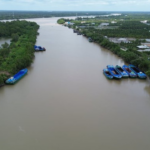
Deputy Prime Minister Tran Hong Ha has signed a decision approving the Mekong River Basin Irrigation Master Plan, spanning from now until 2030 with a vision towards 2050. This plan aims to empower Vietnam’s largest delta region with complete water resource autonomy under all circumstances, effectively managing droughts, saltwater intrusion, and flooding. Ultimately, it seeks to secure sustainable livelihoods for tens of millions of residents.
City to Invest Nearly $430 Million in Flood Control, Climate Resilience, and Infrastructure Upgrades
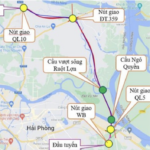
Haiphong City is set to invest nearly VND 10,000 billion in two major initiatives: urban flood control and the construction of Ring Road 3. These projects aim to achieve sustainable infrastructure development and enhance resilience to climate change.
Crafting Climate-Resilient Project Criteria

This criterion will contribute to refining policies related to climate change adaptation and public investment. It will aid ministries, sectors, and localities in clearly identifying the relevance of projects to climate change adaptation goals, providing a basis for selecting well-focused project proposals.
$600 Million in Investment Pledged to Support Sustainable Agriculture in Vietnam’s Mekong Delta

Amidst the challenges of climate change, Vietnam collaborates with international partners to revolutionize agricultural practices and foster sustainability within the Mekong Delta.