Prime Minister Pham Minh Chinh has signed Telegram No. 237, urging the acceleration of public investment capital disbursement in the final months of 2025.
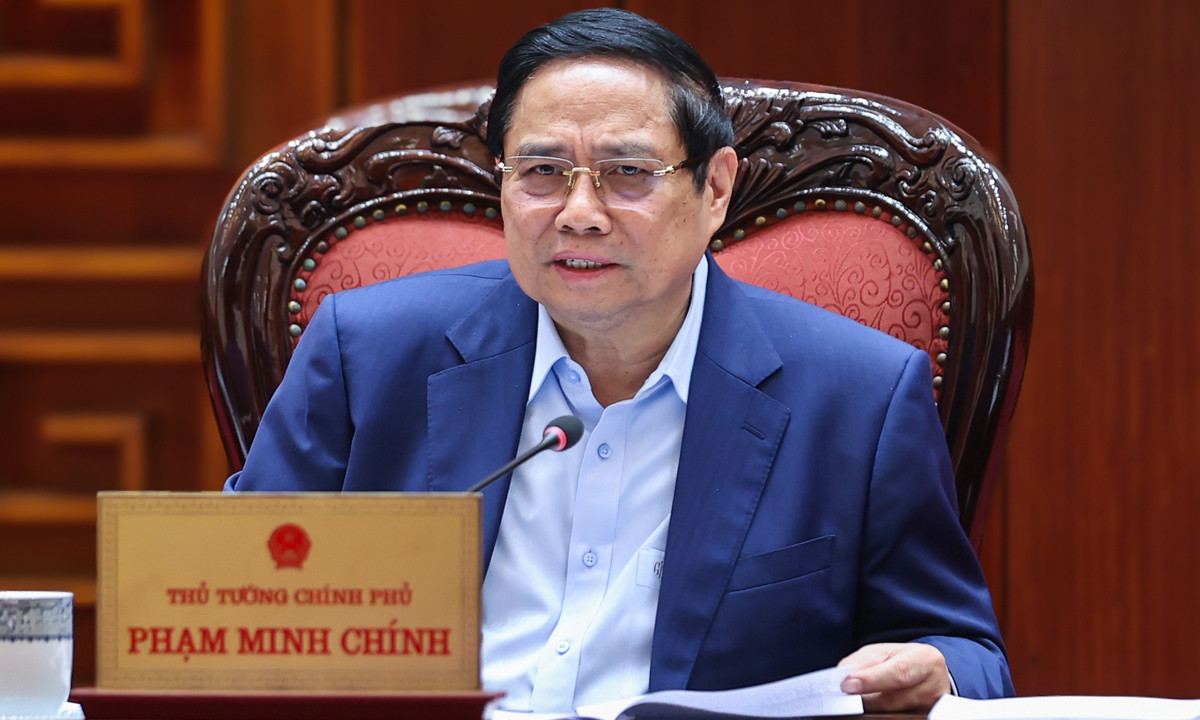
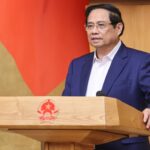
Prime Minister Pham Minh Chinh. (Photo: VGP)
The telegram highlights that public investment capital disbursement in 2025 has shown positive results, with an estimated 60.6% of the assigned plan disbursed in the first 11 months, surpassing the same period in 2024 (58.2%) by approximately 155.7 trillion VND.
The Prime Minister commended 12 ministries, central agencies, and 20 localities for their above-average disbursement rates, especially those affected by floods that still met their targets. However, 22 ministries, central agencies, and 12 localities were criticized for their below-average disbursement rates.
“Although the 11-month disbursement in 2025 is higher than in 2024, it still falls short of the target. With only 55 days left, a significant amount of capital (around 360 trillion VND) remains to be disbursed,” the telegram stated.
To accelerate and strive for 100% disbursement of the 2025 public investment plan, the Prime Minister calls for strong determination, significant efforts, and decisive actions from ministers, heads of central agencies, and chairpersons of provincial people’s committees. They must ensure clarity in assignments, covering six key aspects: person, task, responsibility, authority, timeline, and outcome.
Ministries, central agencies, and localities are urged to promptly allocate the remaining 2025 capital to specific tasks and projects. They should implement decisive measures to expedite the execution and disbursement of public investment capital and national target program funds. Priority should be given to key national investment projects, highways, and inter-regional projects with significant impact.
These entities must proactively address bottlenecks and challenges within their mandates, establishing clear coordination mechanisms among agencies and units to streamline investment procedures.
The Prime Minister emphasizes stricter discipline in public investment disbursement, focusing on land clearance, construction progress, and resolving land and resource-related issues. Strict penalties will be imposed on investors, project management boards, organizations, and individuals deliberately obstructing or delaying capital allocation, implementation, and disbursement.
“Underperforming, sluggish, or corrupt officials causing delays or harassment will be replaced. Negative behaviors in public investment management will be rigorously investigated and punished,” the Prime Minister asserted.
Ministries, sectors, and localities are instructed to assign specific leaders responsible for project progress, ensuring timely issue resolution. Their performance in disbursement will be a key criterion for evaluating their 2025 task completion.
They should immediately review each project’s disbursement progress, reallocating capital from underperforming projects to those with good disbursement and additional capital needs in 2025, within their authority. Enhanced on-site inspections and contractor supervision are also required.
Localities must address land compensation, mining licensing, and material extraction for projects. They should publish local construction material prices as per regulations and closely monitor price fluctuations.
Provincial people’s committee chairpersons are responsible for ensuring timely updates and publication of construction material prices. They must also expedite payment and settlement of completed public investment volumes.
The Ministry of Finance is tasked with digitalizing the monitoring and urging of disbursement progress across ministries, central agencies, and localities. They should report slow-disbursing units to the Prime Minister and propose flexible solutions to meet the 2025 disbursement goal.
Weekly updates on disbursement rates of ministries, central agencies, and localities will be publicly disclosed by the Ministry of Finance.
The Ministry of Construction, in collaboration with relevant agencies, will closely monitor the construction material market, especially key materials, and propose solutions to ensure supply, demand, and price control to the Prime Minister.
The Ministry of Agriculture and Environment will continue to guide and resolve issues related to mining licensing and material extraction for public investment projects, ensuring compliance and efficiency.
The Prime Minister also directs ministries, central agencies, and localities to prioritize 2026 capital allocation for projects with complete investment procedures and disbursement readiness. They should promptly detail the 2026 state budget investment plan upon receiving it.
Proactive planning and solutions are required to address land compensation, clearance, and bidding challenges, accelerating project construction progress.
Stock Market Rebounds to 1,700 Milestone

The VN-Index surged by 50.33 points in the first week of December, reclaiming the 1,700 milestone. Notably, three Vingroup-affiliated stocks alone contributed 23.5 points to this rally, accounting for nearly 47% of the index’s overall gain.
Thai Tycoon Pledges Commitment to Vietnam

At the morning meeting on December 5th, the Minister of Industry and Trade emphasized the desire for ThaiBev Group to engage more deeply in sustainable value chains, rather than merely focusing on market exploitation.
Unlocking Global Capital: Elevating Corporate Governance for International Investment Appeal
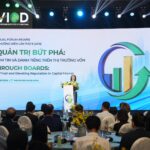
On December 5, 2025, the Vietnam Institute of Directors (VIOD) hosted its 8th Annual Forum (AF8) under the theme: “Breakthrough Board of Directors: Reaching Regional Heights, Building Trust and Reputation in the Capital Market.”
Gold Bullion Transaction Tax: Will Small-Scale Buyers and Savers Bear the Brunt?

A 0.1% tax effectively diminishes the profit margins of short-term traders, scalpers, and speculative flippers.
Catastrophic Natural Disasters Inflict Nearly 100 Trillion VND in Estimated Damages
In his concluding remarks at the November regular government meeting, Prime Minister Pham Minh Chinh highly appreciated and largely agreed with the reports and heartfelt, responsible, and practical opinions of the delegates, which proposed numerous feasible and practical solutions. He tasked the Ministry of Finance and the Government Office with synthesizing and incorporating these opinions, finalizing the reports and draft resolutions from the November session for prompt issuance. Additionally, he directed them to focus on completing the draft Resolution 01 for 2026.