This is the chili pepper plant.
According to the Vietnam Pepper and Spice Association (VPSA), in the first nine months of 2025, Vietnam exported over 2,100 tons of chili peppers, earning approximately $8 million. Laos, the United States, and Cambodia are the primary markets for Vietnamese chili peppers.
With its tropical monsoon climate and fertile alluvial soil, Vietnam enjoys favorable conditions for year-round chili cultivation. The initial investment is relatively low, and the capital turnover is quick.
Since 2022, fresh Vietnamese chili peppers have been officially exported to China, accompanied by strict requirements for phytosanitary inspection and traceability. Surging demand has driven chili prices to record highs in late 2024 and early 2025.
As reported by Dan Viet newspaper, in 2024, chili peppers were priced at 54,000 VND/kg, with the highest price reaching 98,000 VND/kg seven to eight years ago. Currently, chili peppers are priced at 105,000 VND/kg, peaking at 135,000 VND/kg—an all-time high in recent years.
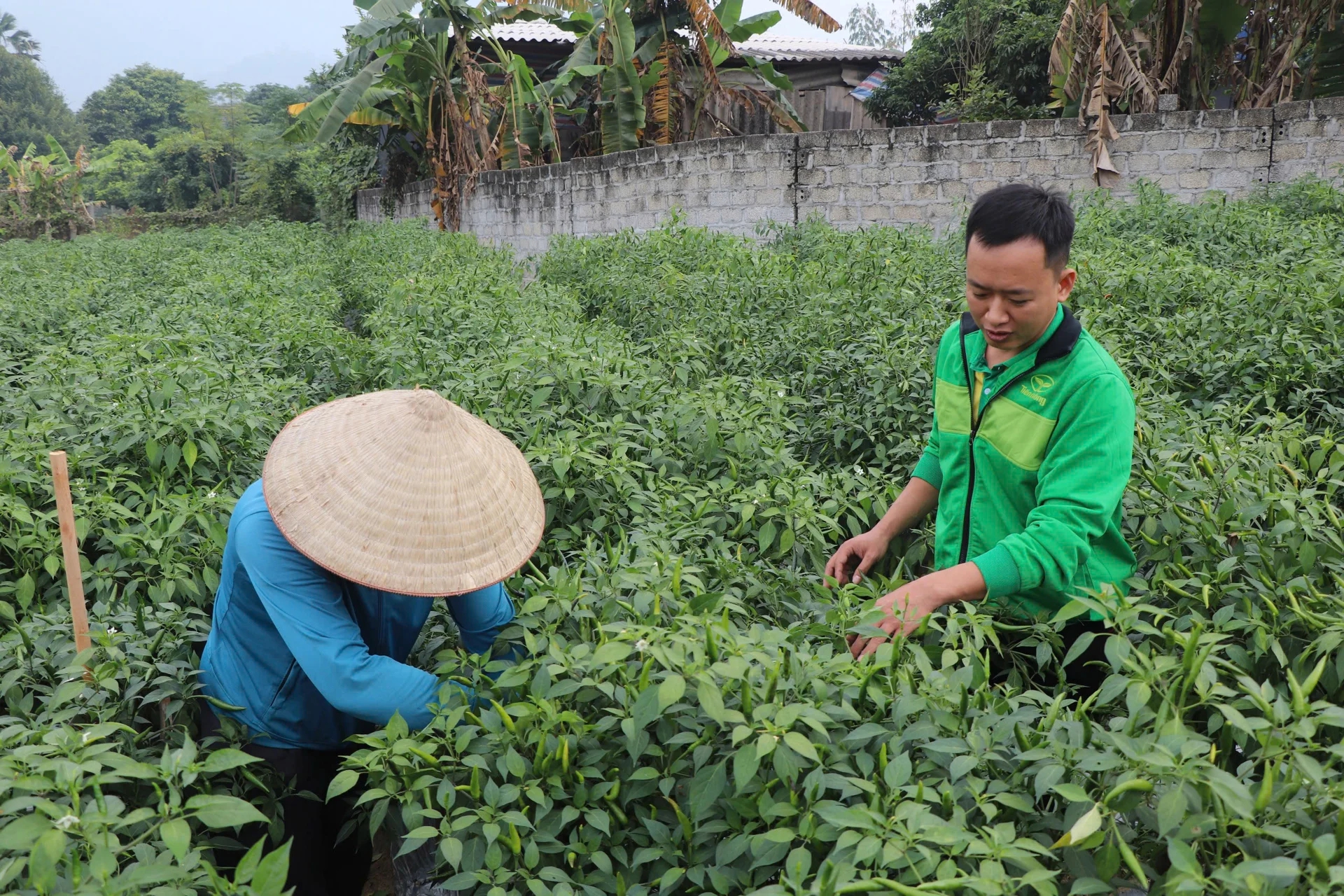
Chili cultivation model in Tuyen Quang.
In Tuyen Quang, many households have reaped significant profits from the high chili prices. Mr. Dam Van Ban (Dong Gieng village, Phu Luong commune, Son Duong district) is one of the most impressive cases. On a 1-hectare plot, he harvested approximately 6 tons of chili peppers—a high yield compared to the average.
With a 1-hectare area, Mr. Ban focuses on sustainable production. He shared, “Small-scale farming only covers labor costs. Expanding to 1 hectare requires a systematic approach: soil improvement, proper fertilization, and disease monitoring. Relying on habits will never yield high productivity”—as reported by Dan Viet newspaper.
By adhering to agricultural officers’ cultivation guidelines and selecting suitable seeds and fertilizers, Mr. Ban’s chili garden thrives uniformly, with healthy plants, strong roots, and robust flowering. The harvest coincided with a market price surge of 100,000–105,000 VND/kg.
With a yield of approximately 6 tons, Mr. Ban’s chili revenue is estimated at 600 million VND. After deducting input costs, the remaining profit far exceeds that of previous rice, corn, or cassava crops.
Experts attribute the chili price surge to a sharp increase in export demand to China and some European countries, coupled with reduced domestic supply due to natural disasters and shrinking cultivation areas.
Sustainable Chili Development
To develop chili cultivation sustainably, the agricultural sector must implement synchronized solutions encompassing seeds, techniques, and markets. First, suitable cultivation areas must be planned to avoid spontaneous expansion. Farmers should use high-quality, disease-resistant seeds and adopt scientific farming practices such as balanced fertilization, efficient irrigation, and crop rotation to minimize pests and diseases.
Biological pest management reduces chemical usage and costs. Additionally, standardized harvesting, sorting, and processing procedures enhance export quality. Completing regional codes, traceability systems, and strengthening enterprise linkages ensure stable outlets for chili farmers.