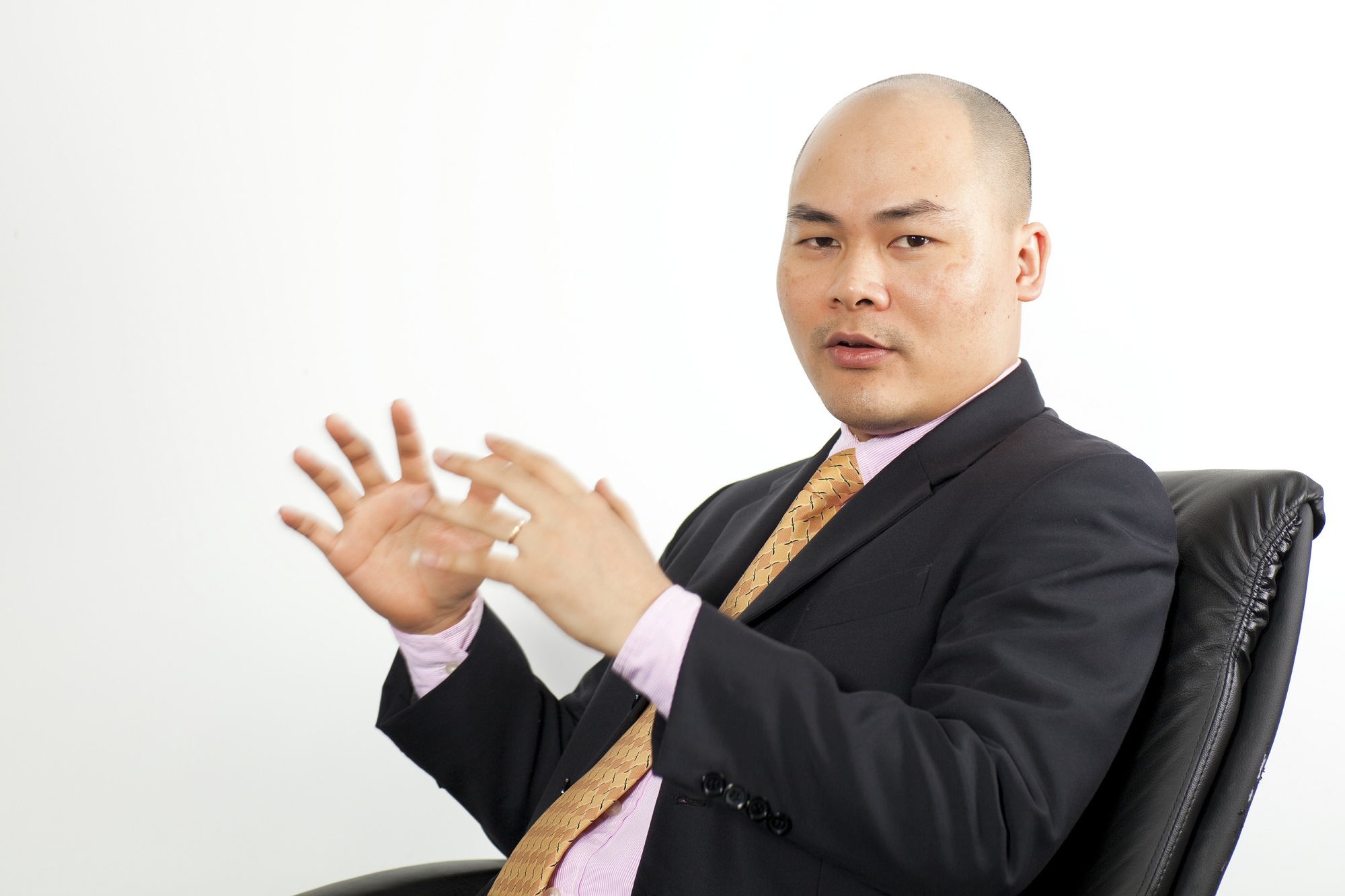
Mr. Nguyen Tu Quang, Chairman of the Board and CEO of BKAV Group
Recently, the Committee on Science, Technology, and Environment, in collaboration with the Ministry of Science and Technology, organized a workshop to gather feedback on the draft amendment to the High Technology Law.
At the workshop, Mr. Nguyen Tu Quang, Chairman of the Board and CEO of BKAV Group, presented several proposals aimed at removing barriers for Vietnamese technology enterprises.
The CEO of BKAV highlighted another significant challenge faced by technology companies: accessing capital to scale up production. Despite substantial investments, these firms struggle to secure bank loans because their primary assets are intangible technologies, which are neither valued nor accepted as collateral.
He proposed the establishment of a Credit Guarantee Fund or a similar mechanism, inspired by successful models in South Korea and China, to convert “intangible assets” (technology) into collateralizable assets. This would enable qualified businesses to access loans for production expansion.
Mr. Quang also advocated for transforming current incentive-based regulations into legally binding requirements with greater clarity.
Instead of merely “prioritizing” domestic products, he suggested that the government should mandate the use of high-tech and strategic products manufactured by Vietnamese companies in public investment projects related to these sectors.
This approach, he argued, would create a stable and reliable market for Vietnamese enterprises.
However, he cautioned that such proposals must strictly adhere to international agreements (FTA, WTO) and apply only to tenders permitted under international law (e.g., those under $1 million).
During the workshop, delegates focused on various topics, including the scope of the law, the implementation of six policy groups, state management responsibilities for high technology and strategic technology, criteria for classifying and incentivizing high-tech product manufacturers, high-tech enterprises, and strategic technology enterprises, regulations for high-tech urban areas and high-tech agricultural zones, and transitional provisions.
Many delegates emphasized the need for clearer definitions of terms such as “high-tech ecosystem,” “high-tech enterprise,” and “strategic technology enterprise.” Some suggested distinguishing between “strategic technology enterprises” and “high-tech enterprises.” Others noted that the definition of “high-tech enterprise” still follows the 2008 High Technology Law’s approach, focusing more on production than research and development.
The World’s Largest Chipmaker’s Exclusive Asian Venture: Vietnam’s Once-in-a-Lifetime Opportunity.

“Mr. Nguyen Tu Quang believes that if TSMC claims they lack manpower, Vietnam should not hesitate to call its best engineers home. Instead of luring them with money, Vietnam should appeal to their patriotism and long-term sustainable advantages.”