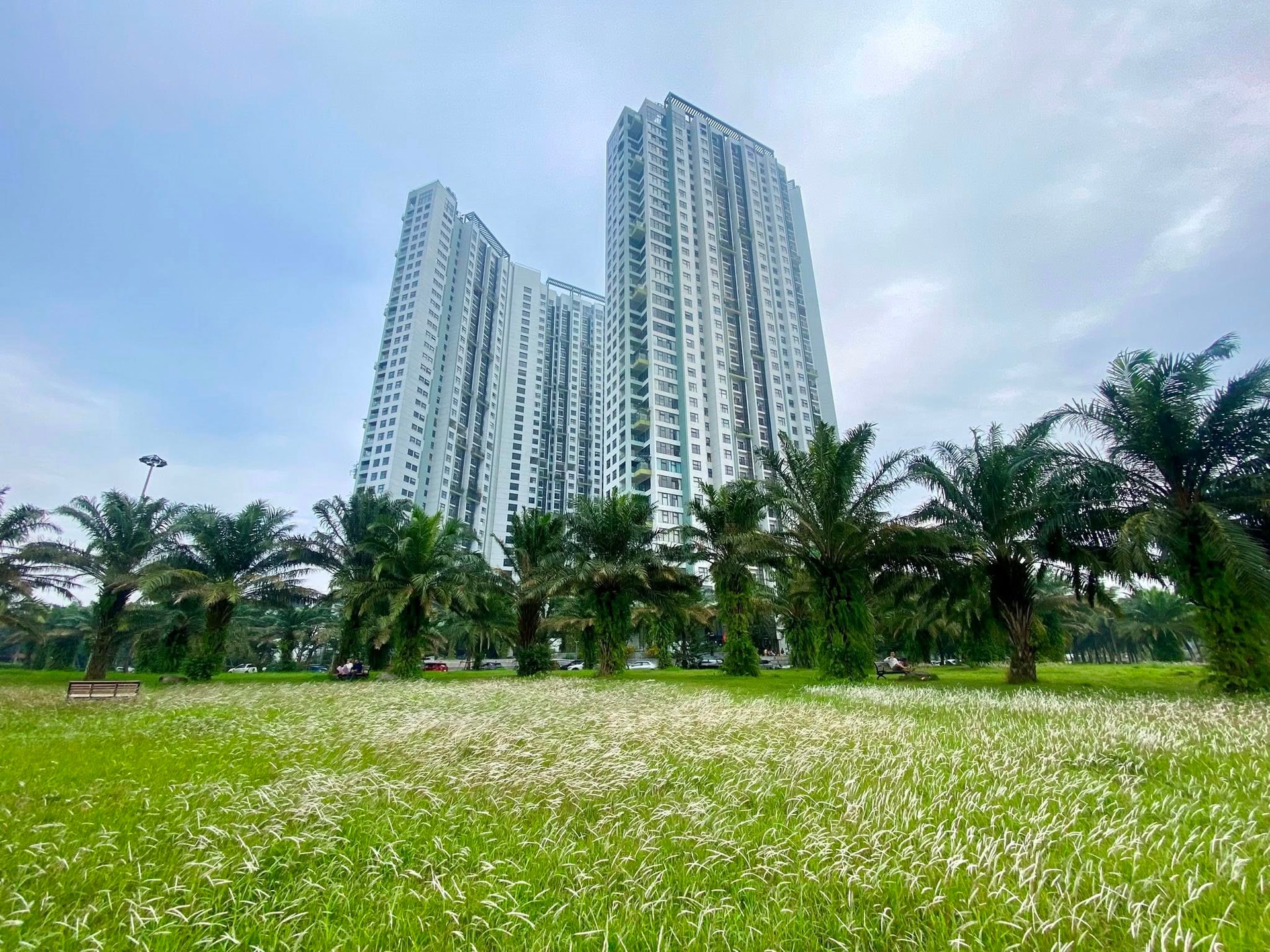
The high-end segment currently dominates the market.
Soaring House Prices
Mr. Pham Xuan, currently working at a military unit in Son Tay (former), along with his wife and young child residing in Tu Liem district, is facing housing difficulties. With a monthly income of approximately 25 million VND and his wife earning around 12 million VND, the family struggles to afford rent while raising their child.
Witnessing their children’s rental struggles, both sets of parents pooled 2 billion VND, hoping to help them purchase a small house in Hoai Duc (former) or Tu Liem. Combined with their savings of 300 million VND, the couple actively sought a modest home.
Through intermediaries, they learned that in Hoai Duc, even a 30m² townhouse with three floors costs at least 3 billion VND, while apartments now average 60-70 million VND/m². Thus, with 2.3 billion VND, they cannot afford even a low-cost apartment.
In Tu Liem, prices have surged further, with secondary apartments ranging from 80-150 million VND/m² and residential land at 300-400 million VND/m². Their limited funds make finding a suitable home impossible.
Advised by friends, they applied for social housing in Hoai Duc but remain uncertain about their chances.
High-End Segment Leads the Market
A MarketTimes survey on housing prices in Tu Liem, Cau Giay, Phu Dien, and Xuan Dinh reveals that while 2024 prices peaked 20-30% higher than 2023, 2025 saw another significant surge.
Since October 2025, newly launched primary projects like Sun Feliza Suites (Cau Giay), The Nelson (Giang Vo), Jade Square (Xuan Dinh), and Matrixone (Tu Liem) have sold rapidly despite prices ranging from 135-180 million VND/m².
In the secondary market, prices rose 5-10% from September 2025. At Iris Garden (Tu Liem), a 103m² three-bedroom apartment now costs 11 billion VND, up from 9 billion VND in April 2025. Similarly, an 86m² unit increased to nearly 9 billion VND from 7 billion VND.
At Home City, a 70m² two-bedroom unit now sells for 8-8.2 billion VND (excluding taxes), up from 7.6-7.9 billion VND in August 2025. Less desirable units also rose by 200-300 million VND, averaging 7.5 billion VND.
At My Dinh Plaza, two-bedroom units increased from 6.4-6.6 billion VND in September to approximately 7 billion VND. A one-bedroom unit at Vinhomes Skylake now costs 7 billion VND (including taxes), a 500 million VND increase from last month.
VARS data shows that in the first nine months of 2025, total market supply exceeded 100,000 units, a 22% increase from 2024. Apartments priced at 80-200 million VND/m² accounted for 42% of Hanoi’s supply, while affordable housing made up only 3%, primarily from social housing projects. Commercial low-cost housing has nearly disappeared.
Savills Vietnam’s Q3/2025 report indicates an average primary selling price of 101 million VND/m².
According to Savills experts, this price surge is driven by the influx of high-end (Class A) apartments. Previously, mid-range (Class B) units dominated, but by Q3/2025, numerous luxury projects within the Ring Road 3 area shifted the supply structure, raising overall prices and reducing mid-range market share. Affordable (Class C) housing remains virtually absent.
Price Hikes Destabilize the Market
At a recent forum on sustainable real estate development hosted by Hanoi Television, Tran Hong Nguyen, Deputy Chair of the National Assembly’s Justice Committee, urged authorities to address soaring housing prices.
“Recent unusual market trends, particularly rapid price increases exceeding real value and income levels, have destabilized the market and strained low-income earners’ access to housing,” Nguyen emphasized.
She stressed the need for authorities to provide satisfactory solutions to these challenges.
Nguyen Van Dinh, Vice Chairman of the Vietnam Real Estate Association, noted that 2025 saw many projects resume, boosting Q3/2025 supply. However, quality issues persist, with a severe lack of affordable housing. The market is dominated by high-end and luxury projects, with only 5-6% being low-cost, mostly social housing.
Notably, some formerly mid-range projects, delayed for years with rising land and borrowing costs, have been reclassified as high-end to cover expenses.
Nguyen Quoc Hiep, Chairman of the Vietnam Construction Contractors Association, attributed price hikes to increased land, labor, and material costs, as well as prolonged construction periods.
“Some projects take 14 years to complete. Who accounts for these extended invisible costs?” Hiep questioned.
Home Prices Skyrocket to Three Times Average Household Income
While average incomes have risen by a modest 6-8% annually, housing prices have surged at a staggering 12-20% per year over the past decade. This persistent disparity has widened the gap between financial means and property values, creating a growing affordability challenge.
Dr. Nguyen Tri Hieu Warns of Bubble Signs in Vietnam’s Real Estate Market

The market is teetering on the brink of a bubble as supply threatens to surge, inventories swell, and housing becomes increasingly inaccessible for the general population.
“Soaring Home Prices Erode Affordability, Posing Risks to the Broader Economy”

Despite a gradual improvement in supply, housing prices remain stubbornly high, with major cities setting new record levels. The widening gap between sale prices and average incomes is making homeownership increasingly out of reach.
Exciting News for Novaland and Homebuyers: 10,500 Land Titles in Ho Chi Minh City Soon to Be Delivered, Multiple Projects Break Free from Stagnation

With decisive government leadership and proactive legal unblocking measures from the Ho Chi Minh City People’s Committee, Novaland is poised to resolve property ownership rights for over 10,500 households and reignite key projects during the 2025-2026 period.
Proposed Implementation of Rental Property Standards

Soaring home prices are putting homeownership out of reach for many. In response, VARS IRE advocates for the establishment of a comprehensive rental housing standard and prioritizes the development of social housing rental models.