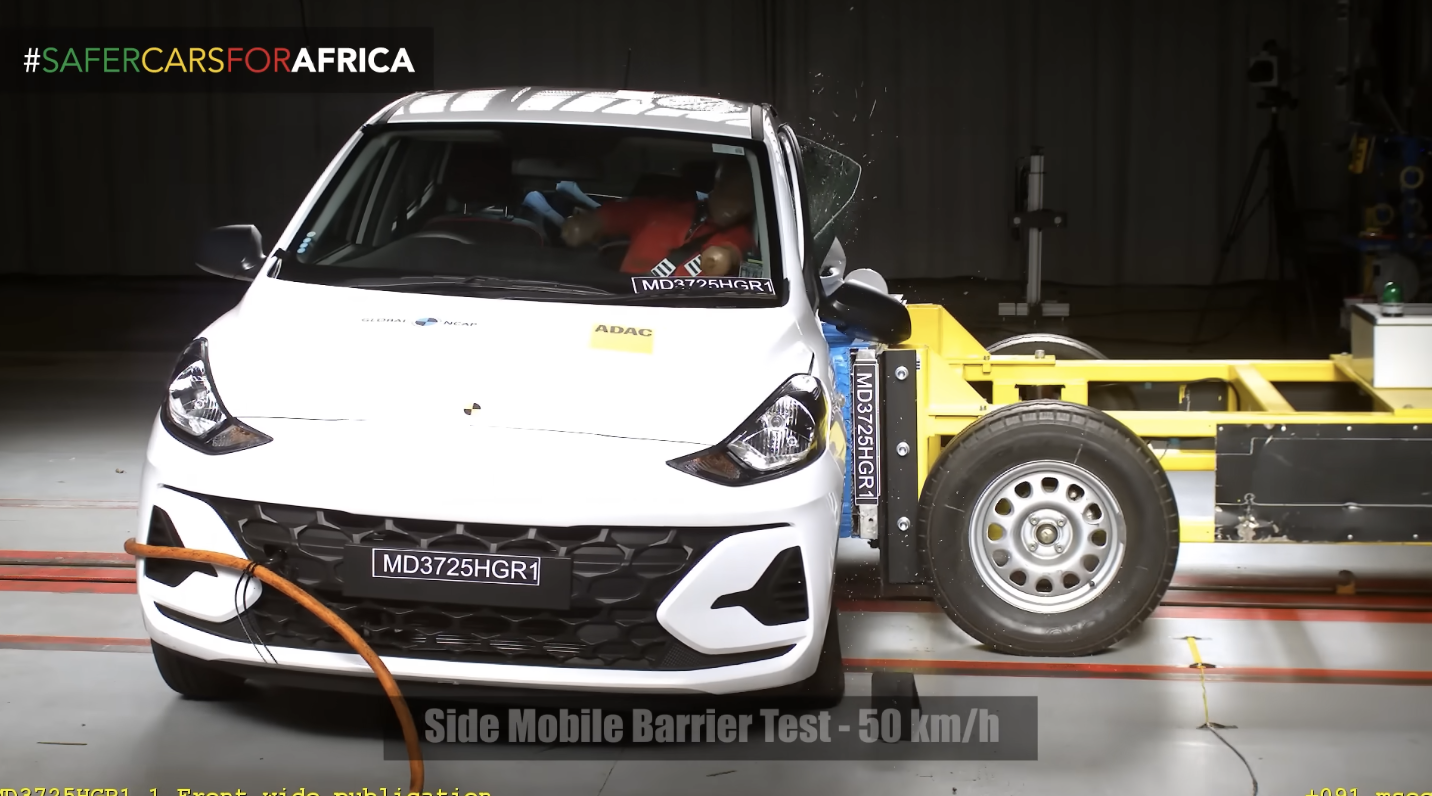
The Hyundai Grand i10 during the frontal crash test conducted by Global NCAP. Image: Global NCAP
In the latest round of tests under Global NCAP’s #SaferCarsForAfrica program, the Hyundai Grand i10 model for the African market has received a startling result: a 0-star rating for adult occupant protection. This marks one of the lowest scores awarded by the organization this year.
According to Global NCAP, the tested Grand i10 was equipped with dual front airbags and a driver seatbelt reminder system. However, the tests revealed that the car’s body structure and footwell integrity were unstable, failing to withstand high-impact collisions. This significantly increases the risk of chest injuries for both the driver and passengers in frontal crashes.
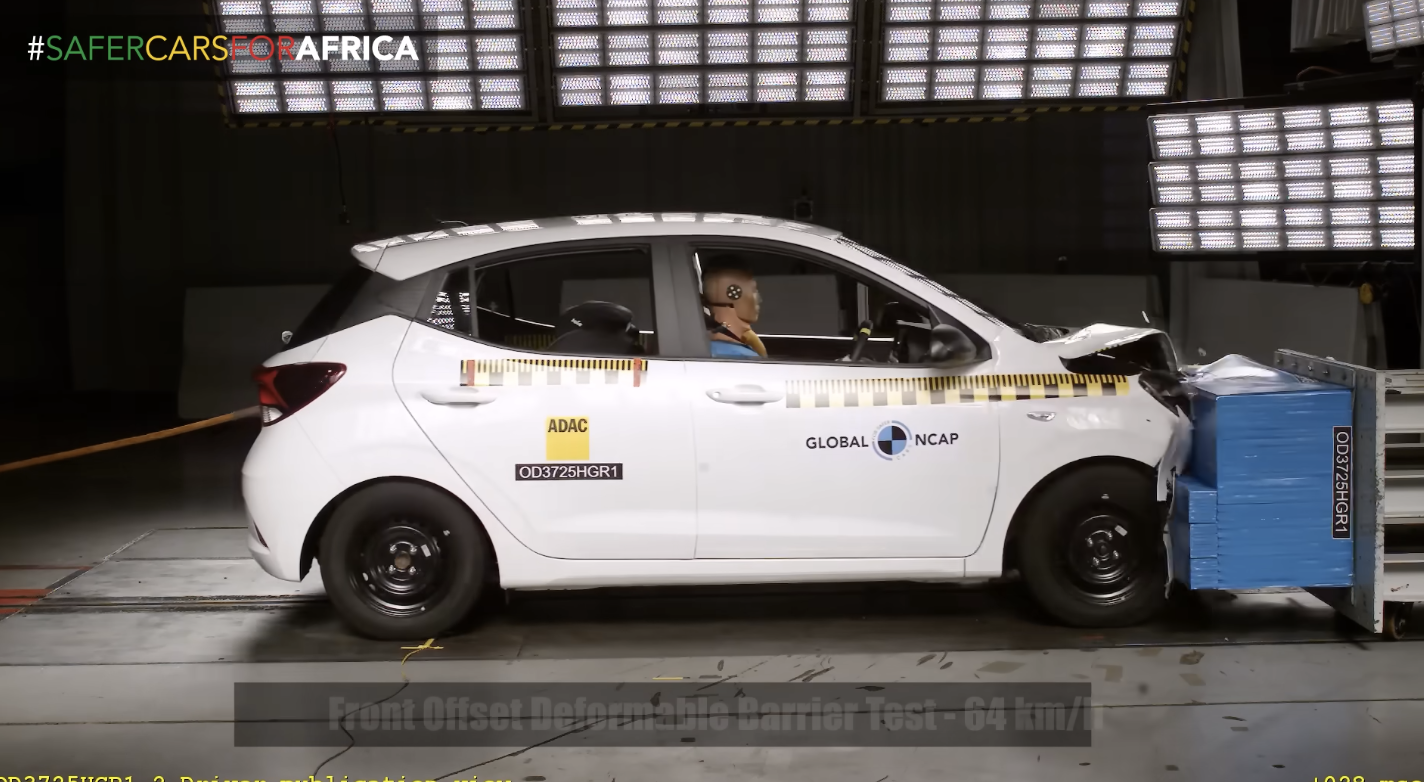
The vehicle’s floor structure was deemed unstable post-test. Image: Global NCAP
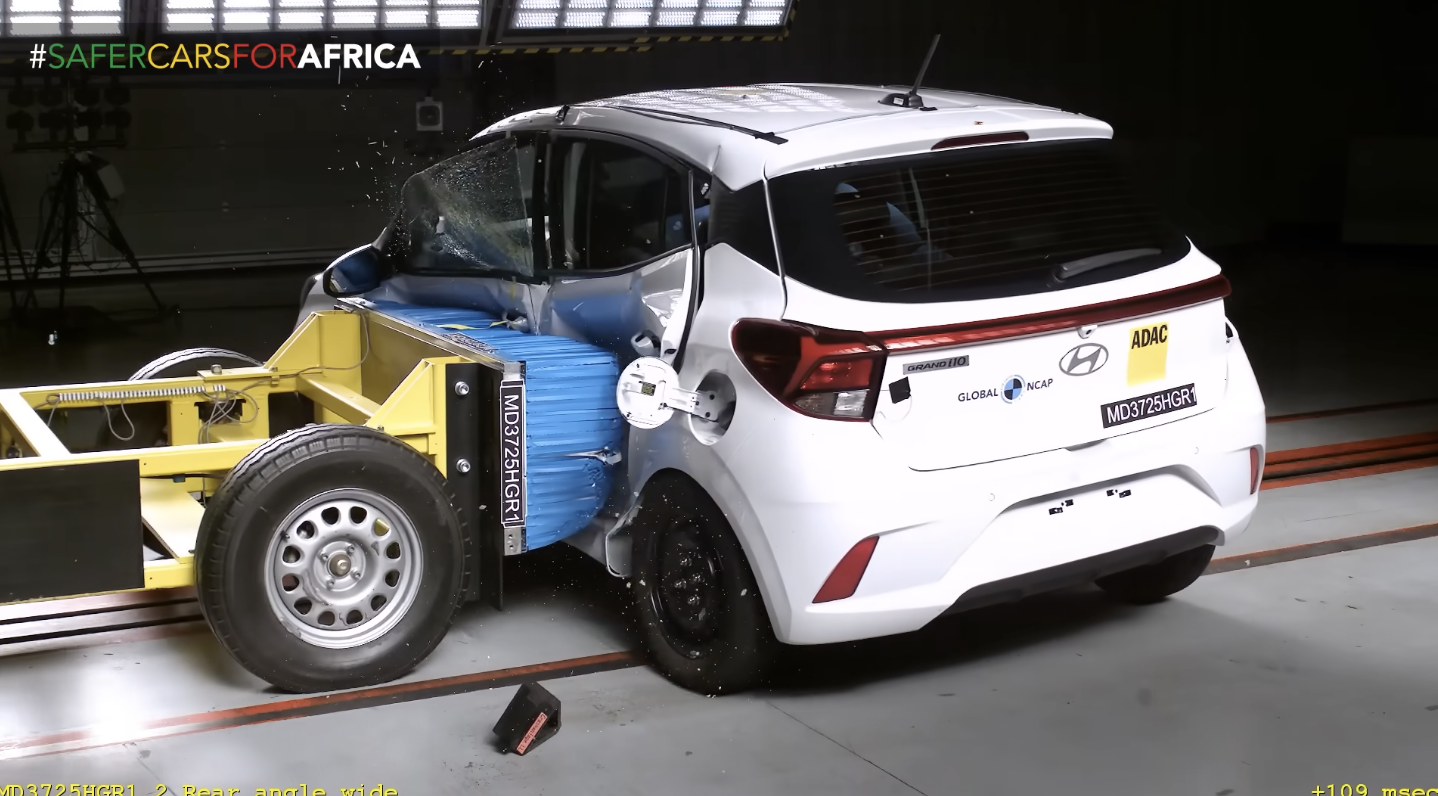
In the side-impact test, chest protection was again rated poorly. The vehicle lacked essential safety features such as side head protection, side airbags, curtain airbags, and electronic stability control (ESC), which are mandatory in many major markets.
Despite these shortcomings, the Grand i10 earned a 3-star rating for child occupant protection, thanks to its compatibility with child seats and the stability of the seatbelt installation system.

The compact car’s interior with basic safety features. Image: Global NCAP
Global NCAP highlights that the Grand i10’s 0-star result underscores the issue of “double standards” in automotive safety: the same model sold in different markets often features varying structural designs and safety equipment. The organization urges automakers to adopt the highest safety standards universally, rather than limiting them to developed markets.
The Automobile Association of South Africa (AA) has also responded to the test results, emphasizing that consumers in the region should no longer be subjected to vehicles with reduced essential safety features. The AA advocates for making electronic stability control and side-impact protection standard across all vehicles sold.
It is important to note that the tested vehicle is unlikely to be the version produced in Vietnam.
Test results indicate very low adult occupant protection. Image: Global NCAP
Low-Slung Car Sales Slump in Vietnam: Mazda3, Grand i10 Struggling, Camry Dominates Nearly Solo
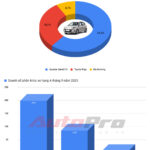
Once the undisputed sales champion for years, sedans are now being overshadowed by SUVs. In September 2025, combined sales across the A, C, and D segments couldn’t even reach 500 units.
The Quiet Disappearance of the Manual Toyota Wigo: Will it Follow the Rush and Yaris in Exit? With a Starting Price of 405 Million, Can it Compete with the i10?
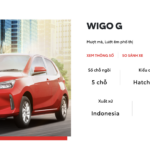
The disappearance of the manual transmission Toyota Wigo is expected to have a significant impact on the car’s sales performance.
The 2024 Sub-500 Million VND Car Models: Which One Steals the Hearts of Vietnamese the Most?
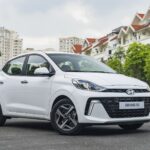
The Vietnamese market is witnessing a surge in popularity of certain car models that offer an incredible blend of performance, features, and affordability. These vehicles, often referred to as the “best bang for your buck,” have captured the hearts of many car enthusiasts in the country. With their impressive specifications and wallet-friendly price tags, they present a tempting proposition for anyone seeking a reliable and exciting driving experience without breaking the bank.
The Little Engine That Could: How This Subcompact Car Model Sells 2,000 Units Monthly, Rivaling the Top-Selling Cars on the Market

This particular model is fast becoming the new “people’s choice” in Vietnam.
The Electric Revolution: A New Wave of Gas-Powered Cars Aimed at the Vietnamese Market, Spanning All Segments, from Budget to Luxury.
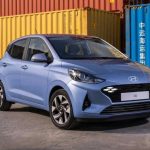
In the gasoline-powered vehicle segment, upcoming models are mostly familiar faces. These include the Hyundai i10, Accent, Kia Sonet, and Nissan Almera, all of which are set to make a comeback.