On December 10th, the National Assembly officially approved the Amended Personal Income Tax Law. The revised law will come into effect on July 1, 2026.
Maintaining the 2% Transfer Tax
One of the most anticipated aspects for citizens is the tax calculation method when selling real estate. Article 14 of the Law stipulates that resident individuals transferring real estate will pay a 2% tax on the transfer price (selling price).
Previously, this issue sparked intense debate when the Ministry of Finance proposed two options, including a suggestion to calculate tax at 20% on profit (selling price minus purchase price and expenses). However, most opinions agreed that determining what constitutes “profit” and “reasonable expenses” is highly complex, time-consuming to verify, and prone to corruption. Therefore, the National Assembly unanimously agreed on the 2% calculation method based on the selling price. This is the current method in use, considered the simplest and most straightforward to implement.
Speaking with Bao Nguoi Lao Dong after the law’s approval, Dr. Pham Viet Thuan, Director of the Institute of Natural Resources and Environment Economics in Ho Chi Minh City, commented: “Maintaining the 2% rate is a safe and familiar option. Although the 20% profit-based method seems fairer (no tax on losses) and is favored by professional investors, for the majority of citizens with infrequent transactions, the 2% method eliminates the need to prove input costs.”

Real estate transactions taxed at 2% of the transaction value
Rental Income: Tax Applies Only Above 500 Million VND
Another notable update brings good news to many property owners: the increased tax threshold for rental income.
Specifically, for individuals renting out real estate (excluding accommodation businesses like hotels and homestays), personal income tax will be calculated at 5% of the revenue exceeding 500 million VND per year.
This regulation is significantly more flexible than previous ones. Its aim is to maximize administrative procedure simplification: landlords with high rental income (above 500 million VND) only need to pay tax on the excess amount, without the need for detailed expense accounting or complex year-end tax settlement procedures.
Good News for 2.3 Million Individuals and Household Businesses: National Assembly Finalizes Tax Exemption Threshold at VND 500 Million/Year
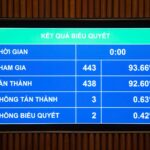
With an overwhelming majority of 438 out of 443 votes, accounting for 92.60%, the National Assembly has officially adopted the amended Law on Personal Income Tax. This revised law comprises 4 chapters and 30 articles, marking a significant update to the country’s tax regulations.
Major Personal Income Tax Rate Changes Effective July 1, 2026
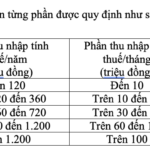
The Personal Income Tax (PIT) regime has undergone significant changes with the passage of the amended Personal Income Tax Law by the National Assembly during its 10th session.
“Finalizing the Tax Threshold for Household Businesses at 500 Million VND”

The threshold for taxable income of household businesses has been raised to 500 million VND per year.
Mandatory Disclosure of Employee Salary Information Under New Regulations

Businesses must take note: starting January 16, 2026, failure to provide employee salary information as required by law will result in penalties.
Gold Bullion Transaction Tax: Will Small-Scale Buyers and Savers Bear the Brunt?

A 0.1% tax effectively diminishes the profit margins of short-term traders, scalpers, and speculative flippers.