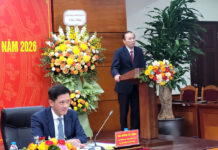
During the 6th session of the Ho Chi Minh City People’s Council, a policy was approved to support the attraction of group tourists attending conferences, seminars, and exhibitions combined with tourism in the city.
The beneficiaries include travel agencies, event organizers, and entities hosting conferences, seminars, exhibitions, and tourism activities that directly bring visitors to Ho Chi Minh City.
According to the regulations, each group must consist of at least 100 guests, stay for a minimum of 3 nights, and, in addition to the conference, seminar, or exhibition program, must have a sightseeing itinerary of at least 2 days in Ho Chi Minh City.
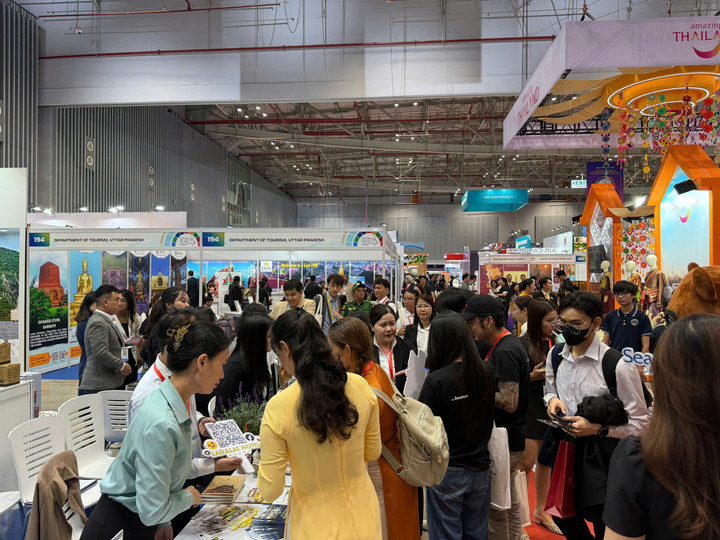
Visitors explore tourism opportunities at the Ho Chi Minh City International Travel Expo held last August.
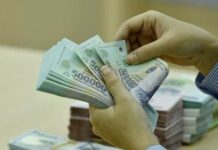
The maximum one-time support is 20 million VND per group, including subsidies for entrance tickets to tourist attractions.
Specifically, groups of 100–450 guests receive a 15% discount on entrance tickets; groups of 451–750 guests receive a 20% discount; and groups of 751 or more receive a 25% discount…
Groups are also eligible for up to 20 million VND in subsidies for renting conference halls or meeting rooms at convention centers or tourist accommodations within the city. This support is calculated as a 15–30% reduction in rental costs, depending on the specific group size.
Additionally, Ho Chi Minh City provides up to 10 million VND per program or group for artistic performances and 1 million VND per gift for souvenirs. Priority is given to locally produced souvenirs.
This support policy is effective from the date of the resolution’s issuance until December 31, 2030.
According to the Ho Chi Minh City People’s Committee, the newly merged city has significant tourism potential, with approximately 681 resources capable of becoming attractive destinations. These are concentrated in the city center, Vung Tau, and Binh Duong.
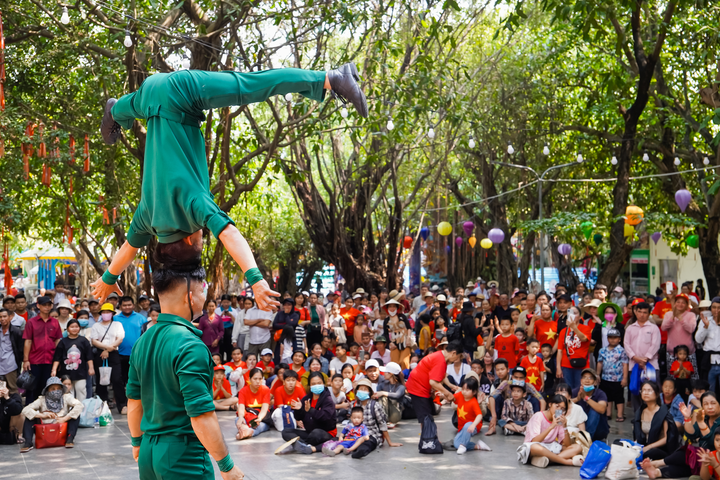
Ho Chi Minh City is a rare “triangle of identity” in the Southeast region, well-positioned to become a comprehensive destination catering to various tourism types.
Ho Chi Minh City is recognized for its “triangle of identity” tourism structure, comprising a modern urban center, Binh Duong with its industrial and craft advantages, and Ba Ria–Vung Tau as a coastal resort area. These three areas complement each other, creating a diverse tourism ecosystem.
As the country’s largest economic and cultural hub, Ho Chi Minh City is well-equipped to develop into a comprehensive destination, serving various tourism types, including leisure, MICE, cultural and culinary experiences, shopping, eco-tourism, and exploration.
Currently, Ho Chi Minh City offers multiple product routes linking the three areas, particularly suitable for short-term visitors. From the city center, tourists can easily connect to Ho Tram, Long Hai, Binh Chau, Con Dao, or explore craft villages, fruit gardens, and riverside eco-zones in Binh Duong within a day.
With its MICE tourism strengths, Ho Chi Minh City can attract business travelers attending conferences and seminars, combining beach vacations or eco-experiences in neighboring areas. This helps extend visitor stays and increase spending.
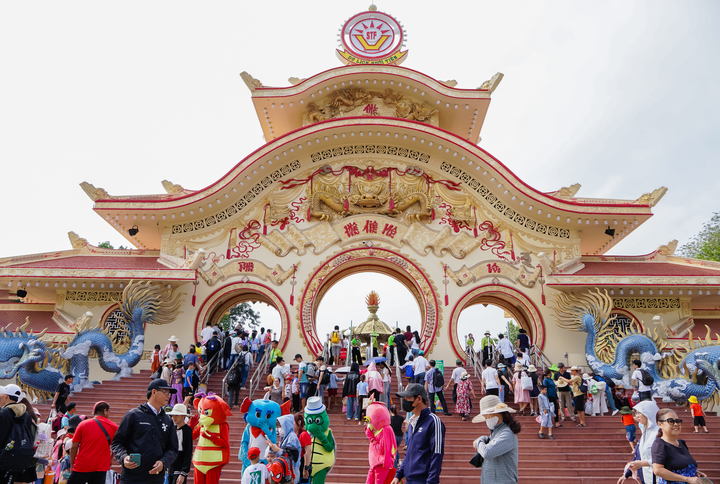
To receive support, groups must have a minimum of 100 participants, a conference program, and meet the required stay and sightseeing criteria.
Ho Chi Minh City currently has over 242 facilities capable of hosting conferences, including 66 venues that can accommodate more than 200 guests. These are distributed across the city center, Binh Duong, and Ho Tram.
According to surveys, international visitors staying in Ho Chi Minh City average 4.04 days and spend approximately 167.2 USD per day; domestic visitors stay for 3.34 days and spend 85.2 USD per day.
The city aims to attract 270 eligible groups by 2030, with a total budget allocation of 11.75 billion VND. This is expected to generate over 2,365 billion VND in tourism spending and contribute approximately 342 billion VND to the budget.
On average, from 2021 to 2024, the tourism sector contributed about 8% to Ho Chi Minh City’s GRDP. Before the COVID-19 pandemic (2015–2019), this contribution was 10.36%, highlighting its role as a key economic sector for the city.
From 2021 to November 2025, Ho Chi Minh City (including Binh Duong and Ba Ria–Vung Tau) welcomed approximately 22.55 million international visitors, with an average annual growth rate of 17.7%; domestic tourists reached about 207.16 million, growing at 14.3% annually.
Tourism revenue in Ho Chi Minh City totaled around 830.2 trillion VND, with an average annual growth rate of 22.6%.
Ho Chi Minh City Approves High-Speed Rail Project Connecting Ben Thanh to Can Gio
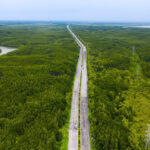
Ho Chi Minh City has officially approved the investment plan for the Ben Thanh – Can Gio railway line, a project spearheaded by Vinspeed. This ambitious initiative aims to commence operations by 2028, marking a significant milestone in the city’s transportation infrastructure development.
Accelerating the Metro Link Between Tan Son Nhat and Long Thanh
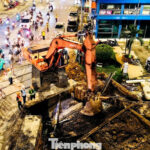
Metro Line 2 (Bến Thành – Tham Lương) is slated to break ground before January 19, 2026. Concurrently, the segments connecting Bến Thành – Thủ Thiêm and Thủ Thiêm – Long Thành are in the investment preparation phase. All three lines are projected to be operational before 2030, establishing a high-capacity, modern transit axis linking Tan Son Nhat and Long Thanh International Airports.
Why Ho Chi Minh City’s Land Database Remains Incomplete
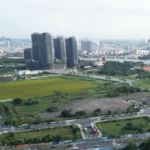
As of now, Ho Chi Minh City has successfully established a comprehensive land database for 3.14 million land plots, ensuring accuracy, completeness, cleanliness, and real-time updates. Among these, 1.76 million plots have been verified with confirmed ownership. However, 689,629 plots remain incomplete due to unresolved discrepancies between land user information and the national population database.
Unlocking Progress: Ho Chi Minh City Resolves Hurdles, Issues Land Titles for Multiple Projects
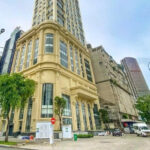
Introducing a series of prestigious projects now on track for red book issuance, following thorough review by Task Force 1645: the office tower and apartment complex at 39-41-43 Vo Van Kiet Street, Sai Gon Ward; the low-rise residential area in Binh Trung Moi Ward; DEFINE Residence in Cat Lai Ward; and the Sonadezi Huu Phuoc residential zone in Ngai Giao Commune.
Unveiling the Unregulated: A Spotlight on Informal Settlements and Illegal Housing in Ho Chi Minh City
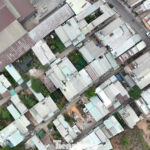
Hundreds of informal settlements, built on agricultural land and existing for years, are predominantly located in the northern areas of Ho Chi Minh City, where a large number of migrant workers reside and work. Residents living in these unnumbered houses are increasingly anxious, especially as similar areas have faced forced evictions.