






Billion-Dollar Boost Positions Dong Hai as a Trans-Asian Logistics Hub
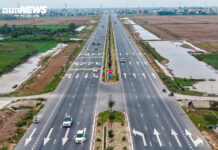
It’s no coincidence that the 419 km railway, designed for speeds of 160 km/h and backed by over $8.3 billion in investment, has received strong government support.
In 2008, the Beijing–Tianjin railway began operations, ushering in a rapid development era for China through this transport model. By 2021, the Laos–China railway had cut transportation costs between the two nations by 40%, increased trade volumes sixfold, and boosted import-export turnover by several dozen times. Notably, Laos’s fruit industry saw a 51-fold increase. Tourism surged, with 48.6 million visitors since its launch.
While the Laos–China railway primarily serves land trade between the two countries, the Haiphong–Hanoi–Lao Cai–Kunming (Yunnan) railway is a cross-border iron-sea transport link. It provides Yunnan Province with the shortest sea access. Goods travel in two directions: either through Vietnam–China trade or via Haiphong Port to directly reach Asian, European, and American markets, and vice versa.
China is Vietnam’s largest trading partner, with a turnover of $260 billion, mainly through northern border gates. Kunming, Yunnan’s capital, has a population of 48 million, equivalent to South Korea’s. Yunnan also connects Southwest China to Southeast Asia. This railway is a strategic move for Vietnam to leverage Yunnan’s logistics potential and enhance trade with Southeast Asia, creating a vast sea and land import-export market. This connection will reshape the Vietnam–China and trans-Asian logistics map for decades.
All these flows converge at Nam Dinh Vu–Dinh Vu–Lach Huyen stations, the railway’s endpoints, located in Dong Hai (Haiphong).
This positions Dong Hai–Hai An as a strategic hub within the golden triangle of infrastructure: international railways, deep-sea ports, and a free trade zone. It already accounts for 70% of Haiphong’s industrial area and is now the North’s first free trade zone, offering superior tax, fee, and development incentives. With its converged infrastructure and open policies, Dong Hai is rapidly becoming Vietnam’s and trans-Asia’s new logistics, industrial, and commercial center. It attracts capital, factories, businesses, distribution centers, and multinationals seeking cost and time advantages.
Lumira Ville – The Global Trade Nexus
The railway passes through 81.66 km of Haiphong with 8 of 31 stations. The final three ports are Nam Dinh Vu, Dinh Vu (Dong Hai), and Lach Huyen. On the map, Lumira Ville is adjacent to Dinh Vu station, with quick access to Lach Huyen (the final station). All goods bound for sea must consolidate at these final stations, making Lumira Ville a critical logistics convergence point.
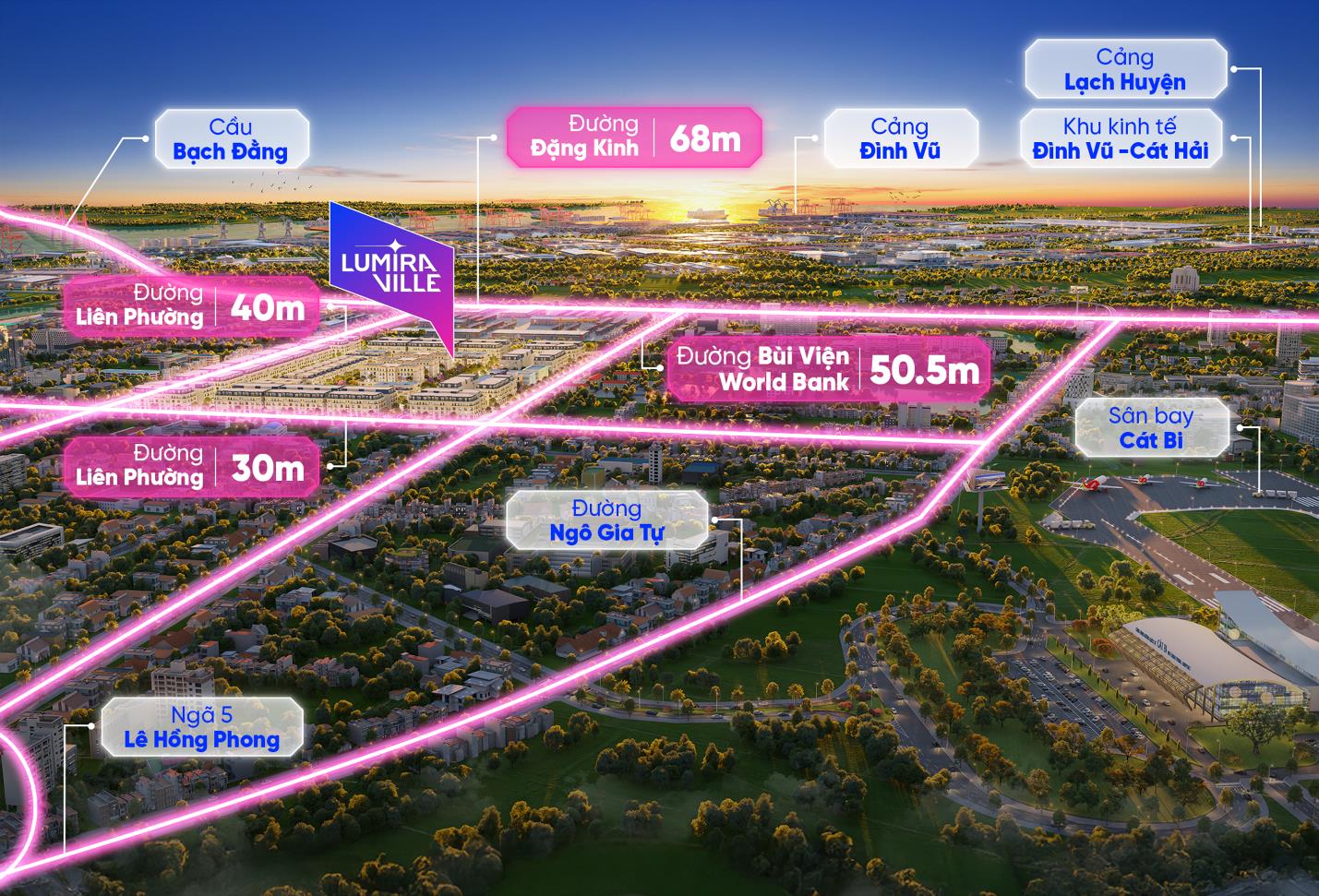
Lumira Ville’s International Logistics Hub Position
Lumira Ville is also within a 1–3 km golden radius of Dinh Vu Port, the Dinh Vu–Cat Hai economic and free trade zone, and 2 km from Cat Bi Airport, offering a triple advantage: port, station, and airport proximity. It’s an ideal commercial hub for investors. The urban area is surrounded by four major arteries: Dang Kinh (68m), Bui Vien (World Bank, 50.5m), and two Lien Phuong routes (30–40m), welcoming tens of millions of visitors annually.
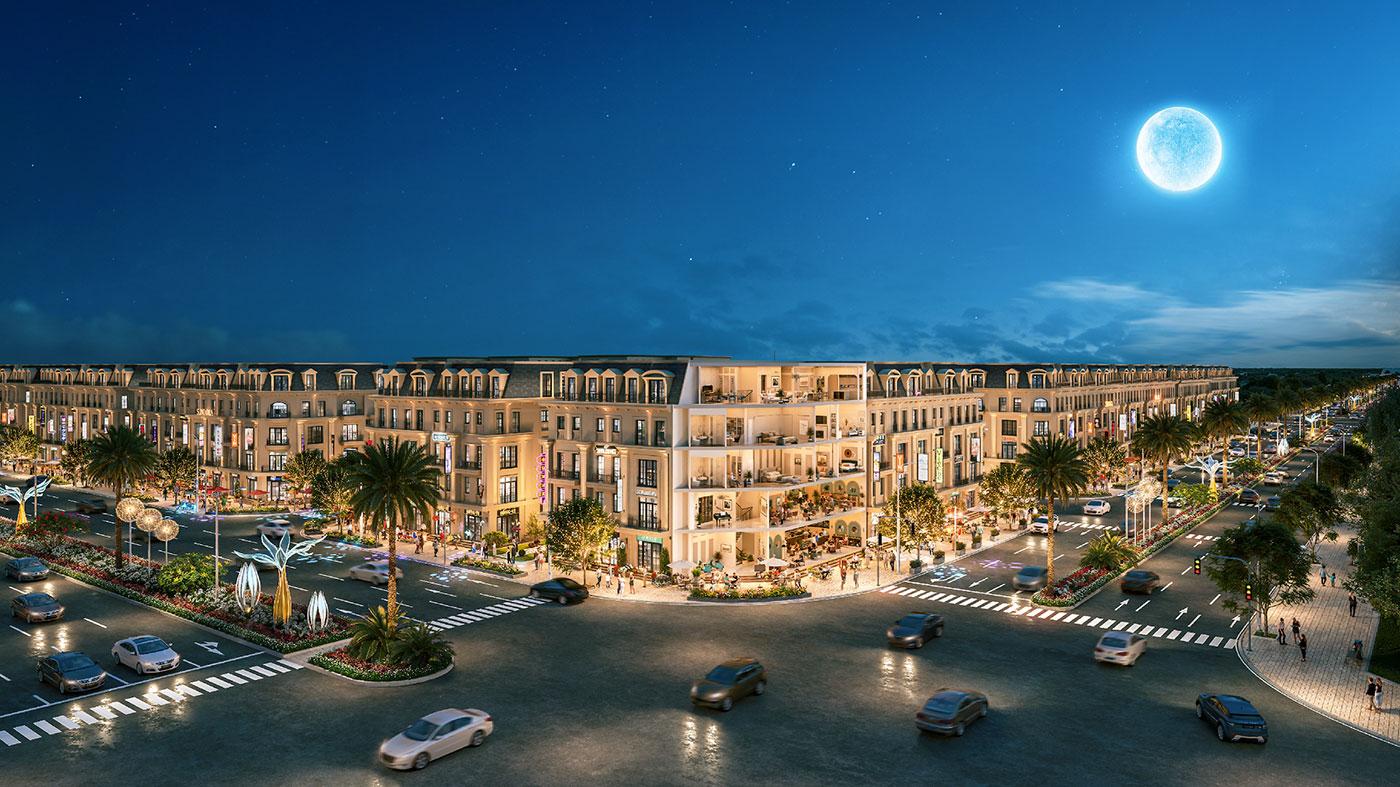
Priced at just $48 million/m², with a 36-month debt and interest grace period, offering 2–3x profit potential
Leveraging its strengths, the project features a 4-story commercial model with 1 mezzanine, 80% dual-frontage units maximizing space and functionality. Its 30 “all-in-one” international-standard amenities and Neo-Classical architecture create a premium living and working environment for international experts and traders.
With the railway’s imminent launch and the newly approved free trade zone, Haiphong’s international ascent is just beginning. This is a golden opportunity to invest in real estate at the best prices.
Why Dong Hai is Emerging as Hai Phong’s New Central Business District (CBD)?

Dong Hai, formerly known as Hai An District, is emerging as the new Central Business District (CBD) not only for Hai Phong but for the entire Northern region of Vietnam. Its unparalleled infrastructure, including an airport, seaport, railway, industrial zones, and a free trade area, sets it apart as a uniquely connected hub unmatched by any other area in the North.
Unveiling Lumira Ville Showhouse: The Missing Piece Transforming Hai An into Hai Phong’s CBD
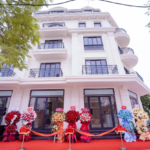
The grand opening of Lumira Ville’s showroom and sales gallery on October 24th not only offers investors a tangible experience but also signifies a pivotal moment in unlocking Hai An’s potential as the emerging CBD of Hai Phong’s super port.