During the Second Session of the 19th Phú Thọ Provincial People’s Council on December 9th, Mrs. Vương Thị Bẩy, Director of the Provincial Department of Finance, provided insights into the management of surplus public assets following the province’s consolidation.
Delegate Nguyễn Thị Ngọc Huệ (Thanh Sơn – Tân Sơn Constituency) raised concerns about the slow progress in reorganizing and managing surplus public assets post-merger, particularly in the central areas of Hòa Bình and Vĩnh Phúc, which risks inefficiency.

Former Administrative Center of Vĩnh Phúc Province.
Mrs. Vương Thị Bẩy, Director of Phú Thọ’s Department of Finance, stated that the Provincial Party Committee and People’s Committee have issued directives and established a task force to review all public assets. After assessing 1,324 properties, 161 were allocated to regional judicial agencies, 576 were repurposed for education, healthcare, culture, and sports, and 583 surplus properties were earmarked for disposal.
Of these, 121 properties were assigned to the Land Fund Development Center for auction or lease, while 462 were transferred to communes and wards for repurposing or efficient utilization. The province aims to finalize surplus asset disposal by 2026, allocating maintenance funds, clarifying unit responsibilities, and urging the People’s Council and voters to enhance oversight.
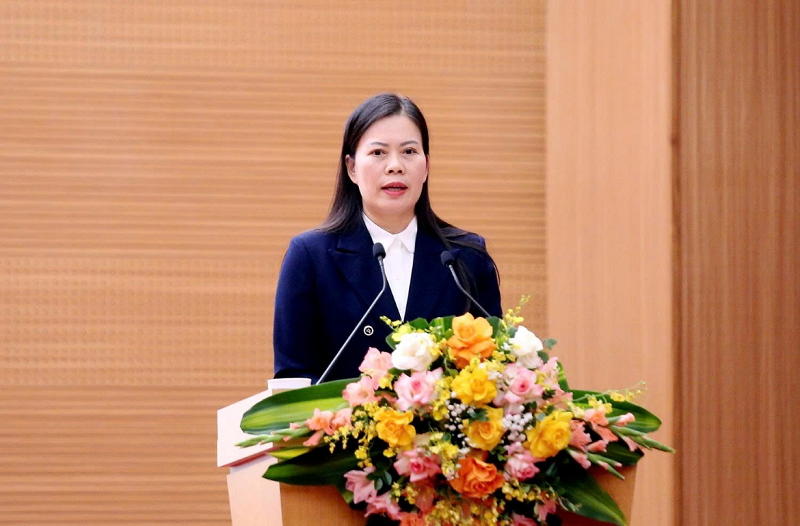
Mrs. Vương Thị Bẩy, Director of Phú Thọ’s Department of Finance, at the Second Session of the 19th Provincial People’s Council.
The Director also addressed strategies to reduce reliance on land revenue, sustainable income growth from production, services, and digital economy, and funding for public lighting in certain communes.
In response to queries about communal-level planning integration into the Provincial Master Plan, Mrs. Bẩy emphasized its importance since the province’s establishment. The plan, based on reviews of the former three provinces’ approved plans, maximizes existing economic corridors and viable orientations while introducing new directions to define the province’s role and development goals by 2030, with a vision to 2050.
The Department of Finance is collaborating with agencies and consultants to refine the proposal, aligning it with the Provincial Party Congress’s resolutions, national, and regional plans, for submission at the upcoming specialized People’s Council session.