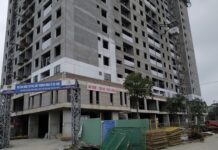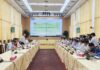





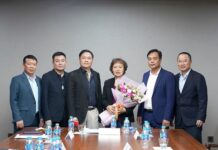







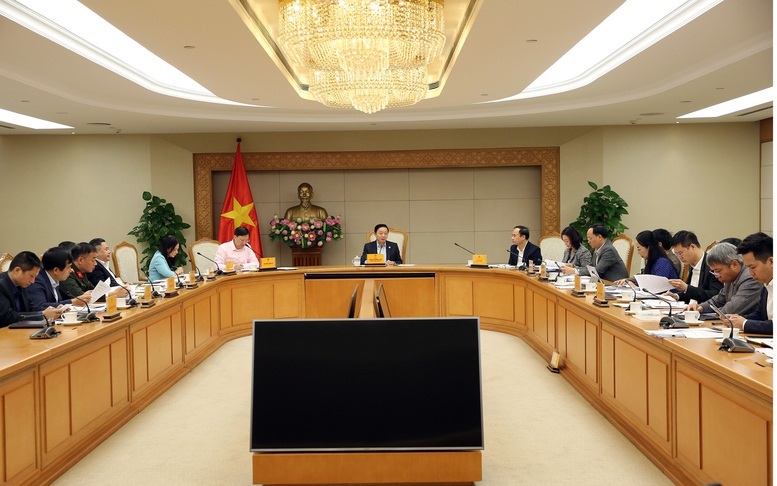
According to the Ministry of Construction’s report, Vietnam currently has 696 social housing projects underway, totaling 637,048 units—Image: VGP/Minh Khôi
|
The Ministry of Construction reports that Vietnam has 696 social housing projects in progress, comprising 637,048 units. Of these, 128,648 units are completed, 123,057 are under construction, and 358,343 have received investment approval. Localities have designated approximately 1,427 sites, covering about 9,830 hectares, for social housing development.
In implementing social housing policies, the Ministry of Construction has collaborated with ministries, sectors, and localities to draft a Government Resolution. This resolution aims to address challenges in social housing development by expediting project timelines, streamlining investment processes, and establishing a comprehensive legal framework. It also seeks to attract more businesses to invest in social housing by offering enhanced incentives.
Expanding Eligibility for Social Housing Purchases
During the meeting, representatives from ministries, sectors, and localities discussed key aspects of the draft Resolution, including: planning and approving social housing projects; expanding eligibility for social housing purchases; and allowing investors to choose applicable legal provisions for construction permits.
The draft Resolution proposes that if an investor suggests a social housing project on land zoned for residential use but lacking detailed or district-level planning, provincial People’s Committees can provisionally decide on critical land-use indicators. This enables investors to proceed with detailed 1/500-scale planning and subsequent project stages. Higher-level plans (district and general plans) will be updated accordingly.
However, meeting participants emphasized that detailed planning for social housing projects must follow the proper sequence: general plan, district plan, then detailed plan. To shorten investment preparation times, Hanoi’s Department of Construction suggested allowing simultaneous execution of district and detailed planning steps, including establishment, appraisal, approval, and adjustments.
Regarding expanded eligibility for social housing purchases, Vice Chairman of Bac Ninh Provincial People’s Committee Pham Van Thinh proposed including households and individuals whose agricultural or production land is reclaimed for social housing projects. This would exempt them from lotteries and income or housing eligibility requirements.
The draft Resolution also suggests allowing social housing project investors to choose between construction permit regulations outlined in National Assembly Resolution No. 201/2025/QH15 on pilot mechanisms for social housing development, or those in Clause 1(c), Article 56 of the amended Railway Law No. 95/2025/QH15, which exempts certain works from construction permits.
Notably, meeting participants urged the Ministry of Construction to reconsider its proposal for developing detached social housing units. They suggested delegating this decision to provincial People’s Committees, based on local conditions, except in centrally governed cities and districts.
Finalizing the Draft Resolution with Two Key Focus Areas
Concluding the meeting, Deputy Prime Minister Tran Hong Ha instructed the Ministry of Construction to refine the draft Resolution, focusing on two main areas: mechanisms for establishing and adjusting detailed plans for social housing projects, and expanding eligibility for social housing purchases.
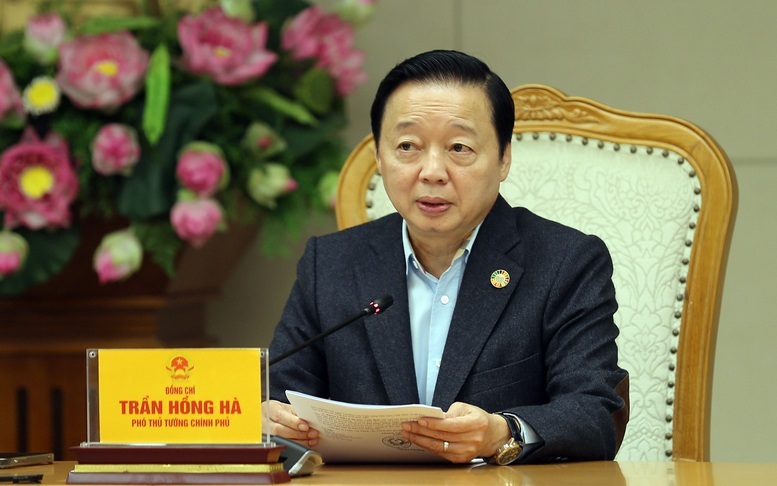
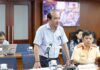
Deputy Prime Minister Tran Hong Ha directed the simplification of social housing purchase approval procedures, emphasizing the need for straightforward and executable documentation—Image: VGP/Minh Khôi
|
For social housing projects with approved investment plans but lacking detailed or district-level plans, simultaneous establishment, appraisal, and approval of district and detailed plans will be permitted. This ensures alignment across planning levels and clarifies approving agencies’ responsibilities. The mechanism aims to resolve challenges in project implementation, particularly regarding adjustments to height, land-use coefficients, and related indicators.
Regarding the proposal to expand eligibility for social housing purchases to individuals whose land or homes are reclaimed for social housing projects, the Deputy Prime Minister noted that this exceeds current legal provisions. Therefore, it must be reported to higher authorities before submission to the Government for consideration.
The Deputy Prime Minister agreed to retain construction permits but integrate investment approval, environmental impact assessments, fire prevention, and construction permits into a single application. This ensures compliance with safety, quality, environmental, and fire prevention standards.
For social housing types, the Deputy Prime Minister mandated adherence to the 2023 Housing Law and detailed planning regulations. Priority will be given to high-rise apartment models with integrated technical and social infrastructure, meeting planning standards. In exceptional cases, such as projects in ethnic minority and mountainous areas, detached housing may be permitted, as outlined by the Prime Minister.
Addressing the simplification of social housing purchase approval procedures, the Deputy Prime Minister called for concise, clear, and executable documentation. Competent agencies will verify eligibility for workers and assume responsibility for their confirmations.
The Department of Construction will compile lists of eligible individuals and forward them to investors for transparent public lotteries. Social housing purchase applications will remain valid for one year; expired applications can be resubmitted with simplified procedures.
– 08:30 09/12/2025
Maximizing Affordability: Ho Chi Minh City Introduces Top-Tier Incentives for Social Housing
Ho Chi Minh City offers substantial support for social housing projects, covering 50% of infrastructure investment costs up to a maximum of 10 billion VND per project. Additionally, the city fully subsidizes all expenses related to investment and construction procedures, including detailed 1/500 planning approvals, environmental permits, feasibility study assessments, and building permits.
Ministry of Construction Addresses Calls for Increased Penalties and Criminalization of Land Violations
Voters in Hanoi are urging authorities to consider increasing penalties, even exploring the possibility of criminalizing violations related to land use, construction order, and environmental regulations, to enhance deterrence and ensure stricter compliance.
Vietnam’s FDI Surge Makes Waves in Emerging IFM Markets

According to the General Statistics Office (Ministry of Finance), foreign investment attraction in the first 11 months of 2025 continued to show positive figures, with registered capital reaching nearly $33.7 billion.
0.1% Tax Levy on Digital Asset Transfers Including Bitcoin, Ethereum, and More

Unlock the potential of your digital assets with clarity on taxation. Earnings from the transfer of digital assets like Bitcoin, Ethereum, and others will be subject to a 0.1% tax rate, mirroring the structure applied to stock transactions. Maximize your returns with this straightforward and equitable approach to digital asset taxation.
ACB Launches Strategic Financing Solutions Amid Vietnam’s Textile Sector Challenges
ACB introduces tailored financing solutions to support Vietnam’s textile and garment sector as it faces market fluctuations while maintaining robust export growth and enhancing its global competitive edge.