Business Households Transitioning to Tax Declaration: Where to Begin?
Observations reveal that many business households are still perplexed by the new tax declaration process. Numerous small traders are uncertain about which revenues to declare and how to input data accurately to avoid errors. Others are anxious about unfamiliarity with e-invoice software or unsure how to issue valid invoices. The fear of making mistakes and facing penalties has slowed adoption, despite widespread implementation of the regulations.
To simplify digital tax compliance, VNPAY offers an all-in-one solution operable on a single device—covering sales management, tax declaration, payments, e-invoicing, and digital signatures. This “all-in-one” approach minimizes steps, reduces costs, and ensures seamless adherence to tax regulations for business households.

VNPAY’s digital solutions streamline tax compliance for business households.
The comprehensive suite includes: sales and tax management software, e-invoicing (VNPAY-Invoice), e-invoice storage on VNPAY Cloud, automated invoice data transmission to tax authorities (VNPAY-TVAN), digital signatures (VNPAY-CA), electronic contracts (VNeDOC), and payment solutions like VNPAY-QR, VNPAY-PhonePOS, and VNPAYSmartPOS for real-time revenue tracking.
The integrated system ensures seamless linkage of sales, invoices, and tax declarations, enabling professional, transparent, and compliant operations aligned with current tax regulations.
Free Digital Tax Compliance Package for Up to 3 Years
To accelerate technology adoption, VNPAY offers a complimentary package valid until 2028. This includes VNPAY-Invoice for e-invoicing, VNPAY-CA digital signatures, VNPAY-TVAN for invoice data transmission, VNPAY Cloud storage, and sales-tax management software—ensuring data security and regulatory compliance. Additionally, VNPAY provides VNeDOC for swift, convenient electronic contract issuance.
Accessible Solutions for Seamless Adoption
Market vendors quickly adapt to revenue reporting, e-invoicing, and digital signatures after brief usage. End-to-end technology support enhances transparency, convenience, and regulatory alignment.

VNPAY also deploys on-site teams to markets for hands-on guidance, system setup, and query resolution, enabling same-day implementation.
Through its integrated solutions and long-term support, VNPAY empowers business households to transition to digital tax compliance, meeting new tax declaration and e-invoicing standards set by authorities.
Tax Expert: Selling 10 Chickens Daily and 30 Bowls of Pho Daily Reaches Annual Revenue of 500 Million VND

The Deputy Secretary-General of the Vietnam Tax Consultants Association suggests that while thresholds of 500 million or 1 billion VND may seem substantial for businesses in remote areas, they are relatively insignificant for those in major cities. Additionally, these thresholds are influenced by the profit margins specific to each industry.
New Proposal Eases Tax Declaration Concerns for Small Businesses Starting January 1, 2026
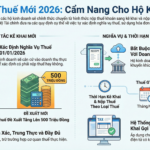
Small business owners who are not yet tech-savvy will receive automated guidance from the system to file their taxes effortlessly.
Latest Update: Ministry of Finance Proposes Principles for Tax Declaration, Calculation, and Use of E-Invoices by Household Businesses and Individual Entrepreneurs

The Ministry of Finance has recently proposed a draft decree outlining regulations for tax declaration, calculation, deduction, and the use of electronic invoices by business households and individual entrepreneurs.
Is Tax Declaration Required for Online Sales When Physical Store Sales Are Slumping?

“As a struggling shop owner, Mr. A. is considering closing his physical store and transitioning to online sales. His pressing question is: ‘Do I still need to file taxes for my business if I switch to selling online, just as I did when operating my brick-and-mortar store?’”
Essential Tax Transition Guide for Small Business Owners
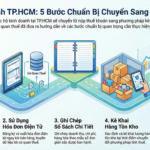
Empower your business with seamless tax compliance. As a sole proprietorship, you can now take control by self-registering, declaring inventory, and opening a dedicated account when transitioning to revenue-based tax filing. Simplify your financial management and stay ahead with ease.