According to JLL, Vietnam’s real estate M&A market in 2025 has seen significant growth, marking a positive shift after a prolonged downturn.
Ms. Le Thi Huyen Trang, CEO of JLL, noted that unlike the previous period, which was plagued by administrative hurdles, this year has witnessed the resolution of many legal bottlenecks and clearer urban planning. These improvements have boosted supply and fostered collaboration within the industry.
Amid tight financial conditions, businesses have turned to M&A strategies as a key solution to sustain growth. Many conglomerates, post-restructuring, have actively expanded their real estate portfolios through mergers and acquisitions.
High-Profile Deals
Notable transactions involving foreign enterprises include CapitaLand Development’s (CLD) $800 million acquisition of The Fulton subdivision in Vinhomes Ocean Park 3.
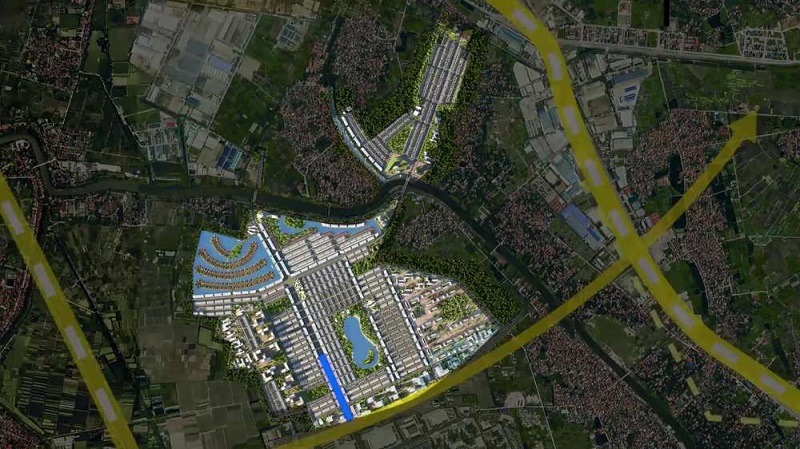
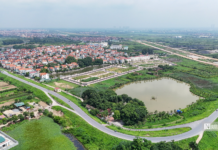
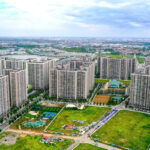
Location of The Fulton in Vinhomes Ocean Park 3.
UOA Group (Malaysia) spent $68 million to acquire a company owning a rare 2,000 sqm plot in the city center. Another Malaysian developer, Skyworld, invested $34 million in a 9,400 sqm plot in Lai Thieu ward, planned for a high-end residential project.
Domestic firms are also active in M&A. Phat Dat stands out with its recent deals, such as acquiring all shares of Dai Quang Minh in AKYN, the developer of a VND 5.5 trillion project on 239 Cach Mang Thang Tam Street. Earlier, they acquired 99% of Bac Cuong, owner of a prime plot on Tran Phu Street (Da Nang), for a minimum of VND 1.1 trillion.
SonKim Land completed the acquisition of a 10-hectare golden land plot on Mai Chi Tho Avenue, previously part of the Saigon Broadway project by Novaland.
Gateway Thu Thiem’s developer, part of Huong Viet Holdings, acquired 42% of Nam Rach Chiec Company from Keppel for VND 2.612 trillion.
A consortium of three domestic investors—Ha Noi An Pha, Imperia An Phu, and Silver Field—spent around $300 million to acquire 70% of Vinaconex ITC, gaining control of the Cat Ba Amatina mega-project.
Other deals include HTV Dai Phuoc and Vinobly’s VND 7.5 trillion acquisition of 70% of Saigon Sports City.
The Race for Land Banking
According to JLL, the real estate sector attracted $2.75 billion in foreign direct investment (FDI), nearly one-fifth of total FDI, with actual disbursements reaching $1.5 billion in the first 10 months, as reported by the General Statistics Office and the Ministry of Finance.
Investment has focused on projects with high legal transparency, particularly commercial land with approved zoning, land-use certificates, and clear construction timelines.
The market shows a clear segmentation between investor groups. Local investors lead in frequency with mid-sized deals, while foreign partners focus on large-scale transactions, especially in high-end housing, integrated urban development, and strategic industrial real estate.
JLL observed that announced M&A deals in the first 11 months of 2025 totaled approximately $2.4 billion. Including unannounced deals tracked by JLL, the total volume is significantly higher.

Residential real estate leads with over 70% of M&A transactions. Commercial and hospitality sectors account for 17.7% and 5.3%, respectively. Data centers emerged as a niche market, representing 3.3% of M&A deals.
This disparity highlights the strong demand for land banking among investors. This trend is critical as clean land supply dwindles and legal procedures become more transparent.
The April 2025 policy allowing non-residential land conversion for commercial housing has opened significant opportunities. This will boost M&A in the housing sector, which faces prolonged supply shortages and high absorption rates.
The office segment shows stark contrasts. Ho Chi Minh City faces severe supply shortages with high occupancy and rising rents, while Hanoi sees strong FDI inflows. Hotel investments yield 8-9%, with M&A transactions totaling $125 million.
Industrial real estate M&A reached $74 million in the first 11 months. Investors increasingly prefer acquiring ready-to-use industrial parks over leasing land for self-construction, saving time and reducing legal risks.
Diverse investment products, such as industrial land funds, pre-built factories, and specialized segments like cold storage and data centers, are creating rich M&A opportunities.
Three Drivers of M&A Growth
According to JLL, legal reforms are pivotal, particularly Resolution 171/2024/QH15, effective from April 2025, allowing flexible conversion of non-agricultural land for commercial housing. Resolution 68 has strengthened the private sector, while the government enhances legal frameworks and capital mobilization mechanisms.
Corporate restructuring is another key driver. Many domestic firms face liquidity challenges and bad debts from the 2020-2022 boom, prompting M&A solutions for financial reorganization and project legalization.
Stable monetary policy, with average lending rates of 7-9%, has created a favorable capital access environment. These rates balance competition between domestic and international investors and encourage long-term capital inflows.
2026 Housing Market Shock: Unexpected Condo and Home Price Predictions
Many experts predict that apartments and single-family homes will be the most promising real estate segments in 2026. While housing supply is expected to surge, strong demand for residential properties will likely drive a modest price increase during the first half of the year.
Vietnam’s Emerging Position in Global Investment and M&A Trends

The foundational elements—legal reforms, sustainable development initiatives driven by domestic entrepreneurs, clean energy strategies, and a vibrant M&A wave—are collectively propelling Vietnam closer to becoming ASEAN’s new capital hub.
National Assembly Enters Final Week of the 10th Session

The week of December 8–11 marks the final sprint of the 10th Session of the 15th National Assembly, with plans to adopt 42 laws and 18 resolutions, alongside key investment policies. This substantial workload caps eight weeks of continuous effort, setting a milestone for the completion of the legislative agenda for this term.
Economic Growth Surge: 20 Out of 34 Localities Achieve 8% Expansion

In November 2025, the Government’s regular meeting assessed the socio-economic situation and results for the month and the first 11 months of the year. The overall trend remains positive, with each month showing improvement over the previous one. Cumulatively, the 11-month performance has surpassed that of the same period in 2024 across nearly all sectors, highlighted by 10 standout achievements.
Vietnam’s FDI Disbursement in the First Eleven Months of 2025 Hits a Five-Year High
According to the General Statistics Office, Vietnam’s realized foreign direct investment (FDI) in the first eleven months of 2025 reached an estimated $23.6 billion, marking an 8.9% increase compared to the same period last year. This represents the highest level of realized FDI in the first ten months over the past five years.