






On the surface, the context of this shock is quite typical. A disappointing business result due to fierce competition in the automotive market, coupled with a failed auction of a prime piece of land despite high expectations. However, concerns arise from insider divestment transactions.
Large sell orders at peak prices have led observers to question whether external shareholders are being treated fairly. Within just a few months, information about the land sale plan raised expectations and created ideal conditions for divestment transactions. Several Haxaco leaders sold millions of shares just before the stock price collapsed.
No one can confirm whether this was a coincidence or a result of information asymmetry. But when doubt suddenly replaces expectation, stock prices often plummet, as trust is the foundation of every market price.
For Haxaco, this isn’t even the first time questions about shareholder conflicts of interest have been raised. A year and a half ago, the company unexpectedly reduced its ownership stake in a subsidiary on the verge of a business boom.
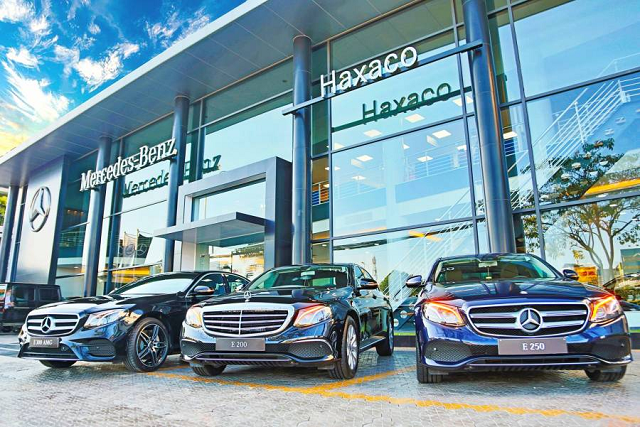
Haxaco’s Mercedes-Benz showroom on Điện Biên Phủ Street, Gia Định Ward, Ho Chi Minh City
|
Shareholder Interests
A year ago, Haxaco was a standout. Its stock performed well in 2024, as the company swiftly pivoted during a challenging period for the automotive distribution sector due to weak demand. The company expanded into selling affordable MG vehicles, targeting a broader market compared to its traditional luxury Mercedes-Benz offerings.
2025 was also expected to be a promising year, but intensifying competition in the automotive market caused MG sales to lose momentum. As a result, Haxaco has reported losses for two consecutive quarters.
However, declining business performance isn’t the only issue. The MG distribution segment is not directly managed by Haxaco but through subsidiaries. The most critical link is CTCP Sản xuất Thương mại và Dịch vụ Ô tô PTM, which signed a strategic partnership with MG’s parent company, SAIC Motor Việt Nam.
Notably, in early 2024, just before MG’s business surged, Haxaco’s ownership stake in PTM plummeted from 98.3% to 51.6%. While PTM’s financial results will still be consolidated into Haxaco’s reports, the economic benefits for Haxaco shareholders have significantly shrunk.
The conflict of interest in this decision is a sensitive issue, yet Haxaco Chairman Đỗ Tiến Dũng only provided an explanation at the annual shareholders’ meeting in March 2025, over a year after the event.
As for PTM, the company was later listed on the HNX exchange by Haxaco’s leadership. Its shares hit the upper limit on its debut in August 2025 but quickly lost half their value afterward.
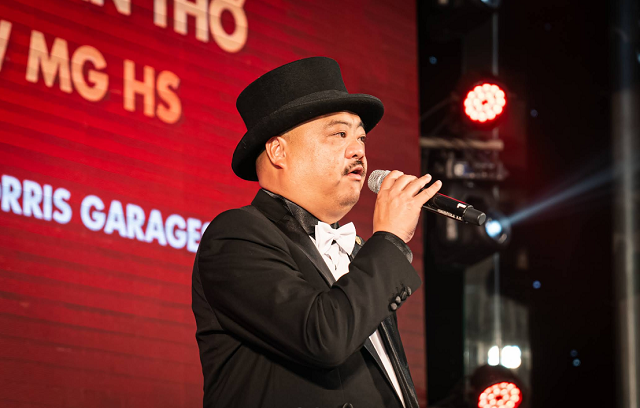
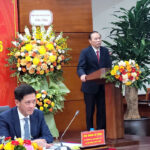
Haxaco Chairman Đỗ Tiến Dũng at an event at the MG Cần Thơ showroom
|
The Waves
Đỗ Tiến Dũng, a Hanoi native, is a seasoned automotive industry businessman. He acquired Haxaco shares on the stock market and successfully restructured the former state-owned enterprise when it was on the brink of bankruptcy.
Since 2016, after the state shareholder SAMCO divested, Mr. Dũng’s family has been the largest shareholder in the company. On Haxaco’s Board of Directors, Mr. Dũng and his wife hold two seats, while their daughter (born in 1995) served as a member for eight years before being dismissed in March 2025. The remaining board members are Haxaco executives with no significant shareholdings. In recent years, some foreign funds have accumulated enough shares to become major shareholders but have never had board representation.
Beyond his business acumen, the market remembers Mr. Dũng for his controversial statements. In 2019, he unexpectedly announced a South Korean conglomerate’s intention to acquire Haxaco, triggering a sharp rise and fall in HAX shares. In 2022, his criticism of stock traders as “parasites” also caused a stir.
In 2025, Mr. Dũng highlighted the value of a prime piece of land in Bình Tân District, Ho Chi Minh City, which Haxaco had acquired, partly by purchasing adjacent land from his wife. In May, Haxaco announced plans to sell the land, causing HAX shares to surge, despite weakening business results. A simple calculation showed that selling the land at the expected price of 180 million VND per square meter could yield hundreds of billions in profit.
During the peak of HAX’s price, several insiders, including the CEO, Deputy CEO, CFO, Board members, and the Chairman’s sister, sold nearly all their shares. A total of 4.16 million shares were sold on the exchange, netting tens of billions of VND.
Just days after this insider selling wave, Haxaco announced the cancellation of the land sale due to a lack of auction participants. The stock price quickly collapsed, and major foreign shareholders like PYN Elite Fund and AFC VF Limited began selling their stakes.
From August 2025 to the present, foreign ownership in Haxaco has dropped from 21% to 7%, with the stock losing 35% of its value.
|
Sharp Rises and Falls
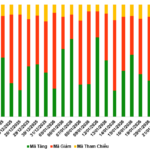
HAX stock trading in 2025 Source: VietstockFinance
|
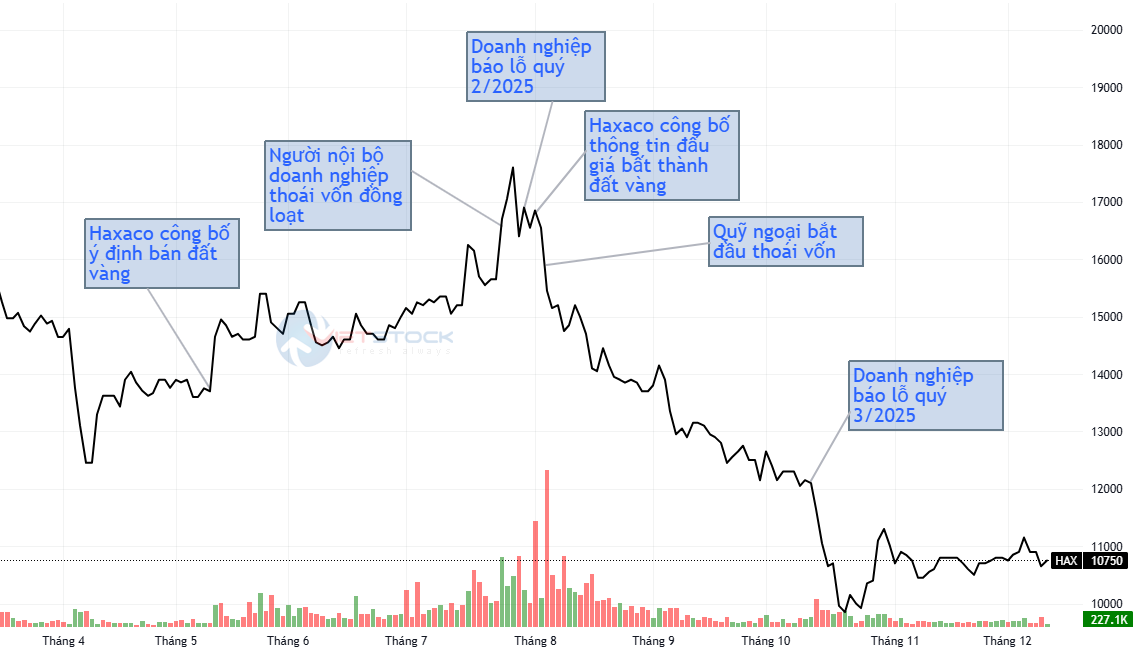
The fluctuations of HAX in response to the company’s announcements have turned the stock into a short-term trading paradise.
In the short term, the market is a zero-sum game—one’s gain is another’s loss. In Haxaco’s case, the primary beneficiaries appear to be insiders who sold their shares at attractive prices.
– 10:00 11/12/2025
Vinasun CEO Registers to Purchase 1.5 Million VNS Shares

Mr. Dang Thanh Duy, CEO of Vinasun, has recently registered to purchase 1.5 million VNS shares, boosting his ownership stake to 7.94% of the company’s capital.
Daughter of PC1 Group Chairman Trịnh Văn Tuấn Completes Acquisition of 4 Million PC1 Shares
Ms. Trinh Khanh Linh, daughter of Mr. Trinh Van Tuan, Chairman of the Board of Directors of PC1 Group, has successfully acquired 4 million shares of PC1, thereby holding 0.973% of the company’s chartered capital.
How Many Shares Does the Family of Bui Thanh Nhon Still Hold in Novaland?
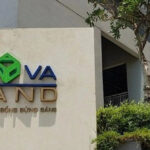
Currently, the total shareholding ratio of Novaland held by the shareholder group related to Mr. Bui Thanh Nhon’s family has dropped below 37%, nearing the critical 36% threshold. This level is essential for the family of Novaland’s Chairman of the Board of Directors to retain their veto power within the company.
Hospital Leader Successfully Acquires 6 Million TNH Shares
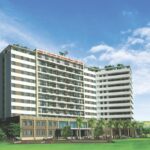
Mr. Nguyen Anh Dinh, Project Director of TNH Hospital, has successfully acquired 6 million TNH shares as planned, thereby increasing his ownership stake to 3.7% of the company’s charter capital.
Daughter of PC1 Group Chairman Completes Purchase of 4 Million Registered PC1 Shares
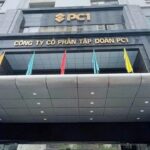
Ms. Trinh Khanh Linh, daughter of Mr. Trinh Van Tuan, Chairman of the Board of Directors of PC1 Group, has successfully acquired 4 million shares of PC1, thereby holding 0.973% of the company’s chartered capital.