Maersk has announced the launch of an electric truck container transportation service in Vietnam, starting early next year. This initiative marks one of the first deployments of heavy-duty, fully electric trucks in the domestic logistics sector.
According to the plan, the electric truck fleet will handle cargo transportation between Maersk’s CFS (Consolidated Freight Station) and major ports in Ho Chi Minh City, including Cat Lai, Binh Duong, and Dong Nai. The company is also collaborating with a local energy partner to establish a charging station located approximately 5 km from the CFS, ensuring uninterrupted operations and minimizing downtime.
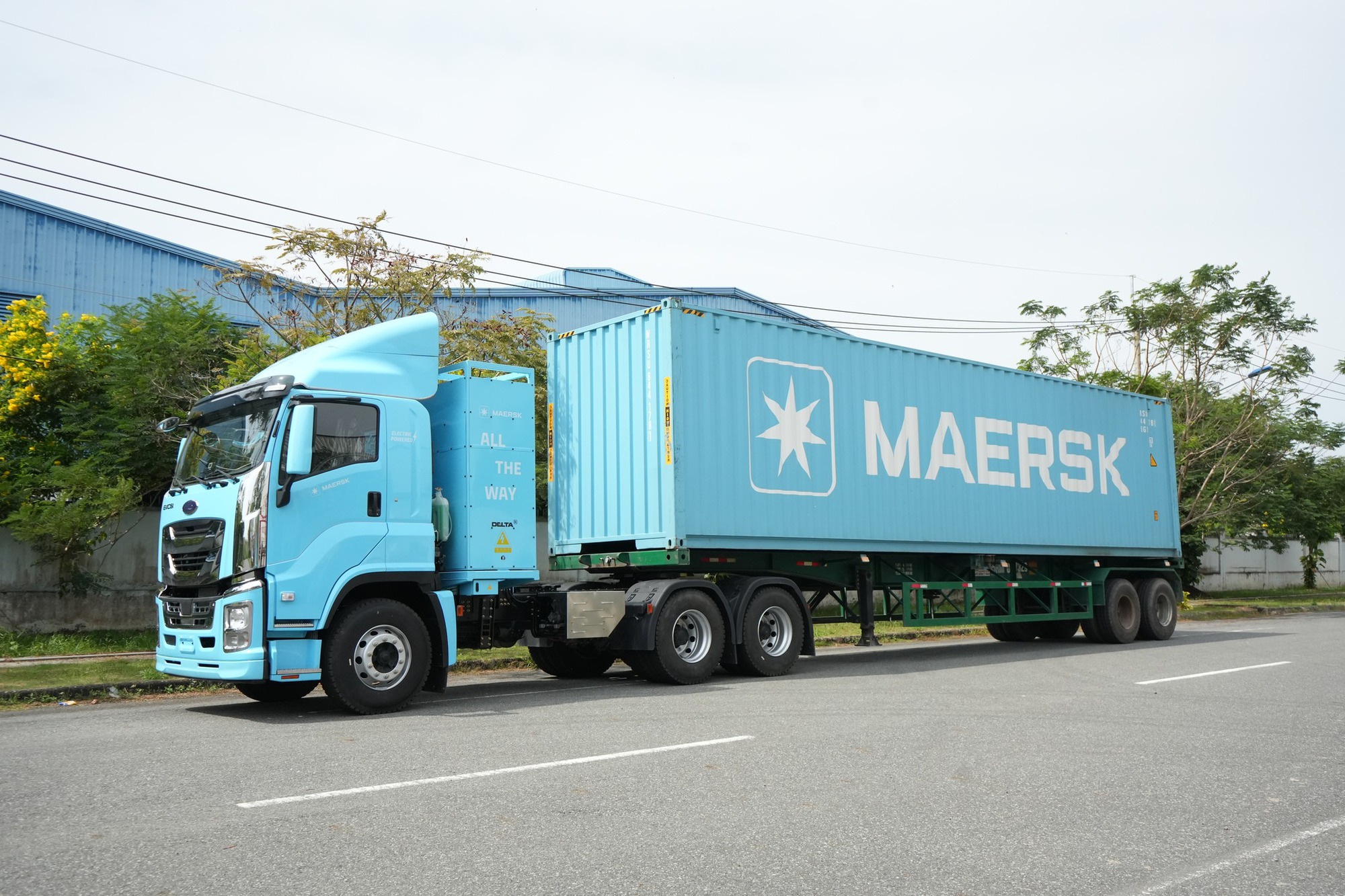
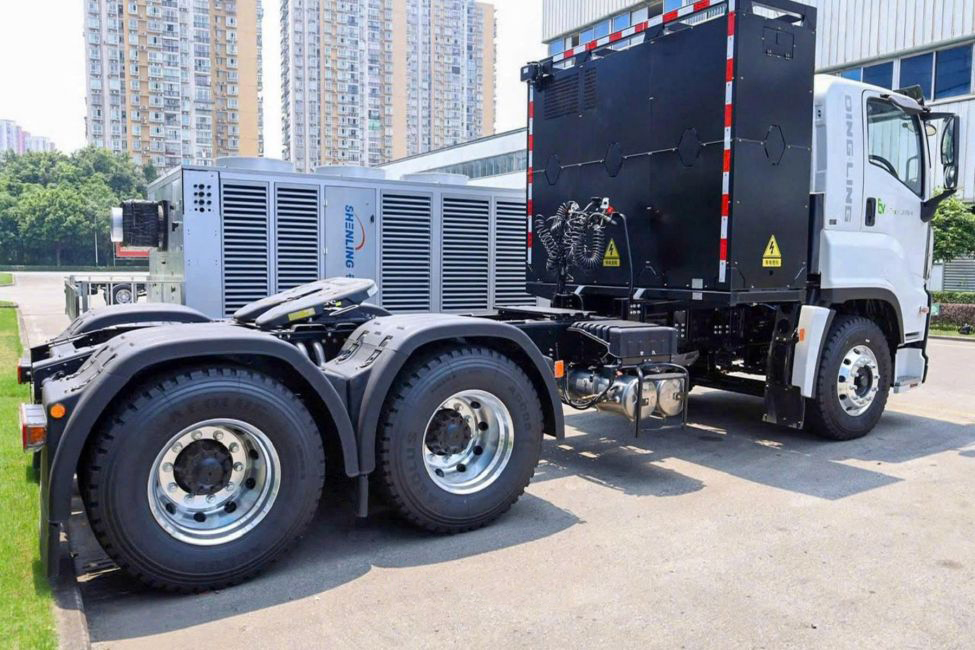
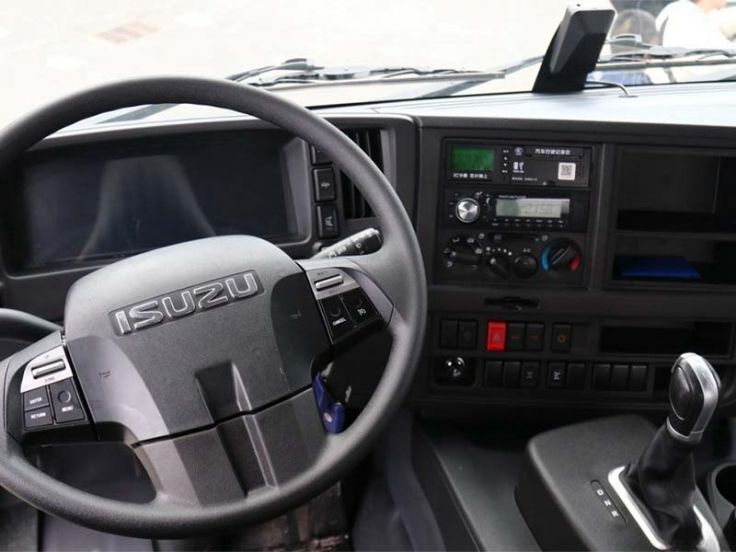
At first glance, it’s nearly impossible to distinguish this electric tractor unit from its conventional counterparts.
The introduction of electric trucks enables Maersk to offer its ECO Delivery Inland service in Vietnam. Customers utilizing this service will receive detailed reports on greenhouse gas (GHG) emissions, catering to the growing demand for ESG reporting in the logistics industry.
Additionally, the absence of an internal combustion engine ensures smoother operation, reduced noise, and lower maintenance costs due to a simpler drivetrain system.
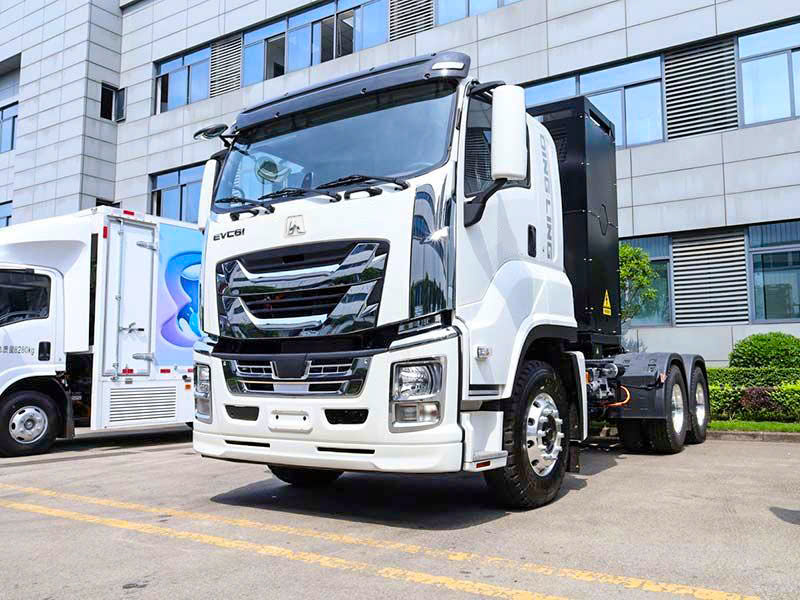
As seen in the published images, Maersk’s electric trucks are the Qingling EVC61, a joint venture product between Isuzu and Qingling of China. The model measures approximately 7.3 meters in length, 2.54 meters in width, and 3.35 meters in height.
The total weight reaches around 25 tons, with a towing capacity of up to nearly 39 tons, depending on configuration and registration standards. The unladen weight exceeds 10 tons, comparable to diesel-powered tractors in the same segment.
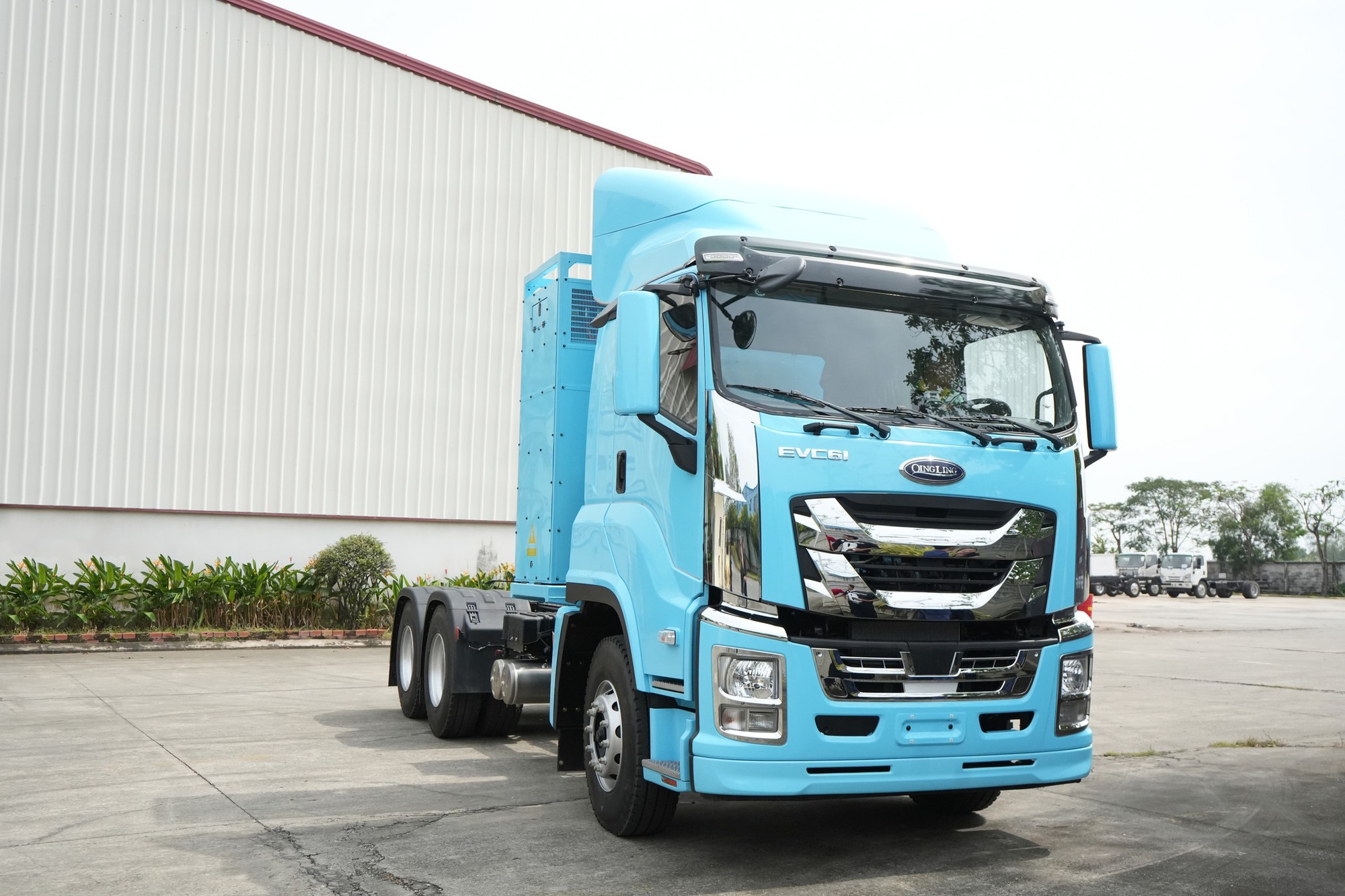
The Qingling EVC61 is equipped with a permanent magnet synchronous motor (PMSM) drivetrain. It delivers a maximum power output of 483 horsepower and a rated power of 322 horsepower. Paired with a 282 kWh or 314 kWh LFP battery, the truck supports fast charging and is available in 4×2 or 6×4 drive configurations, making it ideal for daily, repetitive transport routes.
With a battery capacity exceeding 282 kWh, the EVC61 offers a range of approximately 250–300 km per charge, depending on load and operating conditions.

Unraveling Vietnam’s Logistics Bottlenecks: Prime Minister Highlights Six Critical Choke Points

By 2025, Vietnam is projected to rank among the top 10 emerging logistics markets globally, according to international assessments. However, the country’s logistics sector has yet to fully capitalize on its vast potential and inherent advantages.
Prime Minister: Logistics Growth Must Outpace GDP by 1.5 Times, Drastically Cutting Costs
Logistics, hailed as the lifeblood of the economy, has been thrust into the spotlight by Prime Minister Phạm Minh Chính. He has set ambitious targets for the sector, demanding annual growth of 15-16%, a contribution of 6-7% to GDP, and a reduction in logistics costs below the current 16%.
Global Tech Titan Seeks Vietnam Partnership: Leveraging a Rare Strategic Advantage

To drive sustainable growth, this corporation is executing a bold roadmap.
Global Logistics Leader Expands Investment Partnership in Vietnam
On the morning of November 18, 2025, in Hanoi, Mr. Vincent Clerc, Global CEO of A.P. Moller Maersk (Denmark), along with a high-level leadership delegation, visited and held discussions at Hateco Group, a company actively investing in logistics infrastructure in Vietnam.
Global Logistics Leader Expands Investment Partnership in Vietnam

On the morning of November 18, 2025, Mr. Vincent Clerc, Global CEO of A.P. Moller Maersk (Denmark), along with a high-level leadership delegation, visited and held discussions at Hateco Group, a prominent investor in port infrastructure.