Photo: VGP/Nhật Bắc
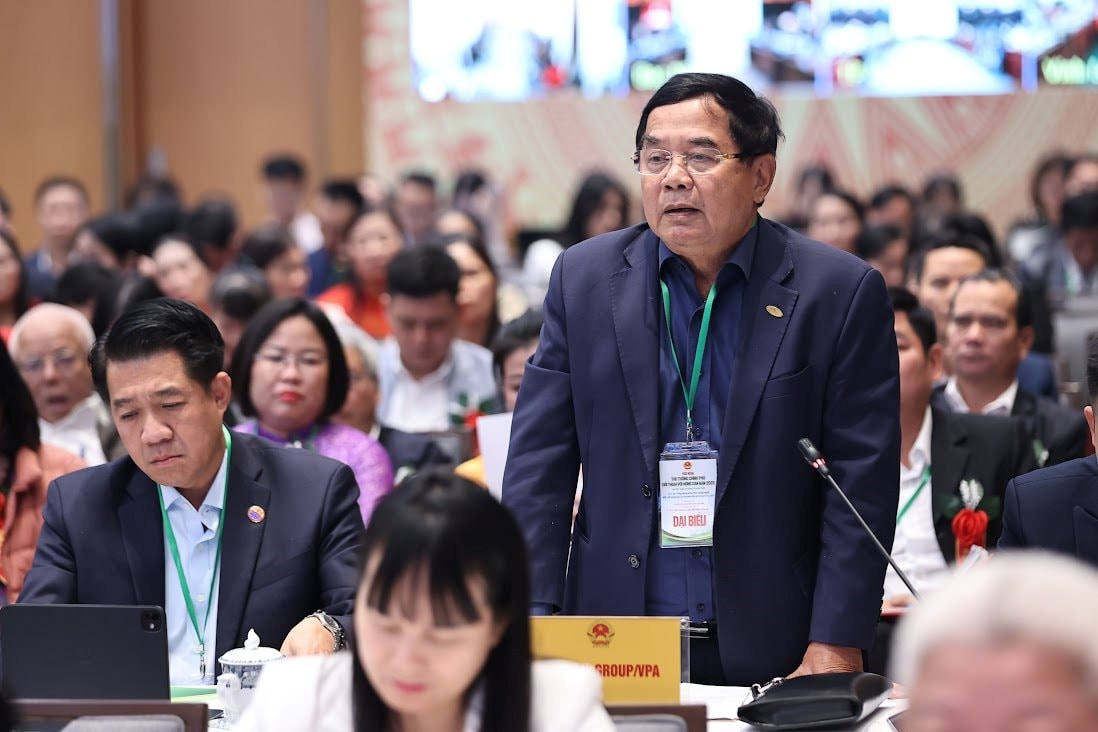
On the morning of December 10, 2025, in Hanoi, the Prime Minister’s Dialogue with Farmers Conference took place, themed: “Application of Science and Technology, Innovation, and Digital Transformation in Agriculture.”
The conference was jointly organized by the Central Vietnam Farmers’ Association, the Government Office, and various ministries, sectors, and localities. It was held in-person at the Government Office and connected online to 34 provinces and cities nationwide.
Speaking at the conference, Mr. Đỗ Hà Nam, Chairman of Intimex Group and President of the Vietnam Organic Association, presented several recommendations to the Prime Minister.
Firstly, Mr. Nam highlighted that Vietnam’s agriculture ranks among the top three globally. In the 1980s, Vietnam had no significant agricultural exports, such as coffee, pepper, fruits, or rice. However, with the introduction of the market economy in 1986, Vietnam has risen to the top after 40 years, significantly improving farmers’ livelihoods, particularly in the Central Highlands and industrial crop regions.
Mr. Nam questioned, “What drove this success?” He attributed it to land ownership for farmers and their autonomy over their land, coupled with the opening of the global market mechanism.
In recent years, agricultural product prices have surged—durian by 3-5 times production costs, coffee and pepper by over 3 times, and rice by more than 2 times. Fruits are expected to see further improvements in the coming years.
However, exports are now challenging due to pesticide and chemical fertilizer contamination. While relevant agencies are addressing this issue, Mr. Nam urged the Prime Minister to accelerate efforts, as declining prices would impact farmers’ livelihoods.
The second pressing issue, according to Mr. Nam, is Vietnamese rice exports. This year, Vietnam exported 8 million tons of rice, potentially ranking second globally. Recently, the Philippines, which imported 4 million tons, has restricted imports for the past three months and plans to reopen for only 300,000 tons in January before closing again.
Mr. Nam warned that this could leave Vietnam with a surplus of 4 million tons of rice in the upcoming Winter-Spring crop, potentially lowering prices and causing difficulties.
He recommended the Government negotiate with the Philippines to reopen its market. Additionally, he proposed allowing large and state-owned enterprises to stockpile rice for six months to stabilize prices and focus on markets in West Asia, such as Iraq and Syria, and Africa.
Last year, Intimex Group signed a government contract with Bangladesh, easing some challenges. Mr. Nam emphasized that continuing such efforts would be highly beneficial.
Minister of Agriculture and Environment Trần Đức Thắng noted recent difficulties in rice exports to the Philippines but assured that the Ministry has engaged with associations and exporters.
Vietnam currently exports rice to nearly 200 countries, with global rice imports totaling around 60 million tons annually. Vietnam exports approximately 8 million tons, so the Philippines’ situation is not overly concerning, though cooperation remains a priority.
The Minister encouraged businesses to diversify beyond traditional markets, focusing on Southeast Asia and Africa. Vietnamese rice is renowned globally for its quality. With the completion of the 1 Million Hectares High-Quality Rice Project in the Mekong Delta (expected to yield results from 2025-2026), Vietnam aims to enter the Japanese market.
Intimex Group was established in 1995 through the equitization of the Intimex Import-Export Company’s branch in Ho Chi Minh City, under the Ministry of Industry and Trade.
Starting with a small team of 91 employees and a charter capital of 14.4 billion VND, Intimex has grown into a leading conglomerate in Vietnam. Its core sectors include processing and exporting agricultural products (coffee, pepper, rice, cashews), importing frozen foods and steel, operating supermarkets, and producing construction materials. Agricultural exports, particularly coffee and rice, are its flagship businesses.
Today, Intimex employs over 1,000 workers, with annual import-export turnover exceeding 1.3 billion USD and revenue surpassing 77 trillion VND. Its operations span the country, with 9 branches and 17 subsidiaries, including one in Singapore.
Intimex operates 13 high-quality coffee processing plants in the Central Highlands and other strategic export regions, with a total capacity of 750,000 tons/year.
Additionally, the group has two pepper processing plants in Bình Dương and Gia Lai (5,800 tons/year), two rice mills in Đồng Tháp (450,000 tons/year), cashew processing facilities in Tây Ninh and Bình Dương, four commercial centers in Đà Nẵng and Nha Trang, two concrete plants (2.6 million m³/year), and a stone quarry in Đà Nẵng (180,000 m³/year).
Intimex’s global reach extends to major markets, including Europe, the Americas, West Asia, the Middle East, China, Japan, South Korea, India, and ASEAN.
The group maintains long-term partnerships with hundreds of international enterprises, including industry leaders such as Neumann Kaffee Gruppe, Nestlé, JDE, Tchibo, Louis Dreyfus, Volcafe, Marubeni, Mitsui, Itochu, Icona, Sucden, Sucafina, Mercon, RCMA, Ecom, Hyundai, and Samsung.
Small Businesses with Annual Revenue Under 500 Million VND Exempt from Personal Income Tax
The National Assembly has approved an adjustment to the tax-exempt revenue threshold for households and individual businesses, increasing it from 200 million VND per year to 500 million VND per year.
Vietnam’s 108-Story Tower Rising from the Sea: Will It Surpass China and South Korea in the Global Top 10?

Vietnam is set to unveil a breathtaking 108-story tower, strategically positioned in a truly unique location.
Vingroup Launches Four Mega Projects Worth Over 100 Trillion VND in Ha Tinh on December 19th
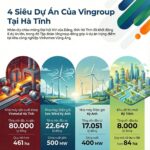
Ha Tinh province is set to launch six major projects simultaneously on December 19th, in celebration of the 14th National Party Congress. Notably, Vingroup leads the initiative with four of these projects.
Effective July 1, 2026: Civil Servants Permitted to Take on Side Jobs and Invest in Business Ventures
The revised Civil Servant Law now permits civil servants to invest, manage, and operate businesses, cooperatives, hospitals, educational institutions, and more.
FPT Chairman Trương Gia Bình Offers Surprise $4,300 Bonus for Employees Who Marry or Have Children in the Next Year
FPT Chairman Truong Gia Binh revealed a long-standing partnership between FPT and Vietnam Airlines, dating back to the 1990s, characterized by strong bonds and mutual affection. Fueled by this deep connection, FPT expressed a strong desire for a strategic alliance, akin to a “merger,” between the two companies.