





















One of the most ambitious solar energy projects in history is quietly nearing its end after just a decade of operation: the Ivanpah Solar Power Facility in California’s Mojave Desert. Once hailed as a symbol of America’s clean energy future, its story is now a cautionary tale.
The $2.2 billion Ivanpah facility promised to power 140,000 American homes and prove that large-scale renewable energy projects could be both viable and revolutionary. Yet, it has become a lesson in timing, technological gambles, and the harsh realities of scaling innovation.
What happens when a futuristic energy idea arrives before its technology is ready?
Ivanpah’s closure isn’t the end of solar power, but it reveals how rapidly industries evolve—and how even bold ideas can be outpaced by economic realities.
To understand Ivanpah, we must return to the late 2000s. America was reeling from the 2008 financial crisis. Unemployment soared, the housing bubble burst, and the administration faced pressure to revive the economy while tackling climate change.
The 2009 American Recovery and Reinvestment Act poured billions into clean energy as part of a historic stimulus. The goal was simple: create jobs, cut emissions, and build a new green infrastructure.
Ivanpah emerged directly from this wave of optimism. BrightSource Energy, led by CEO John Willard, pioneered concentrated solar thermal technology. NRG Energy, under CEO David Crane, saw Ivanpah as a bold bet to reposition itself as a renewable leader. Google invested $168 million.
Together, they proposed a 392-megawatt solar thermal plant, projected to generate 1 million megawatt-hours annually. Backed by a $1.6 billion federal loan, Ivanpah was hailed as both an engineering marvel and a political statement—proof America could build large, clean, high-tech projects.
Construction began in 2010, drawing thousands of workers to the Mojave Desert. But by January 2025, Ivanpah announced its closure, just over a decade after launching…
How Did Ivanpah Work?
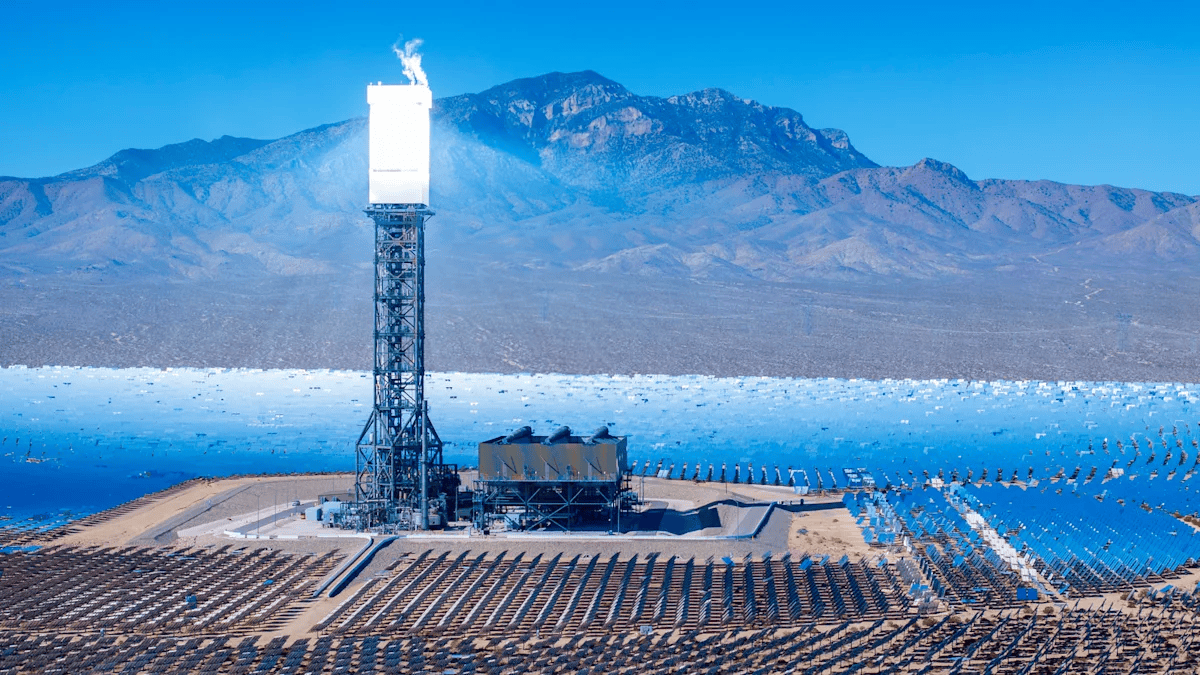
Unlike rooftop solar panels, Ivanpah used concentrated solar power (CSP), a heat-based technology. Over 300,000 computer-controlled mirrors (heliostats) tracked the sun across thousands of acres, focusing sunlight onto boilers atop three 459-foot towers.
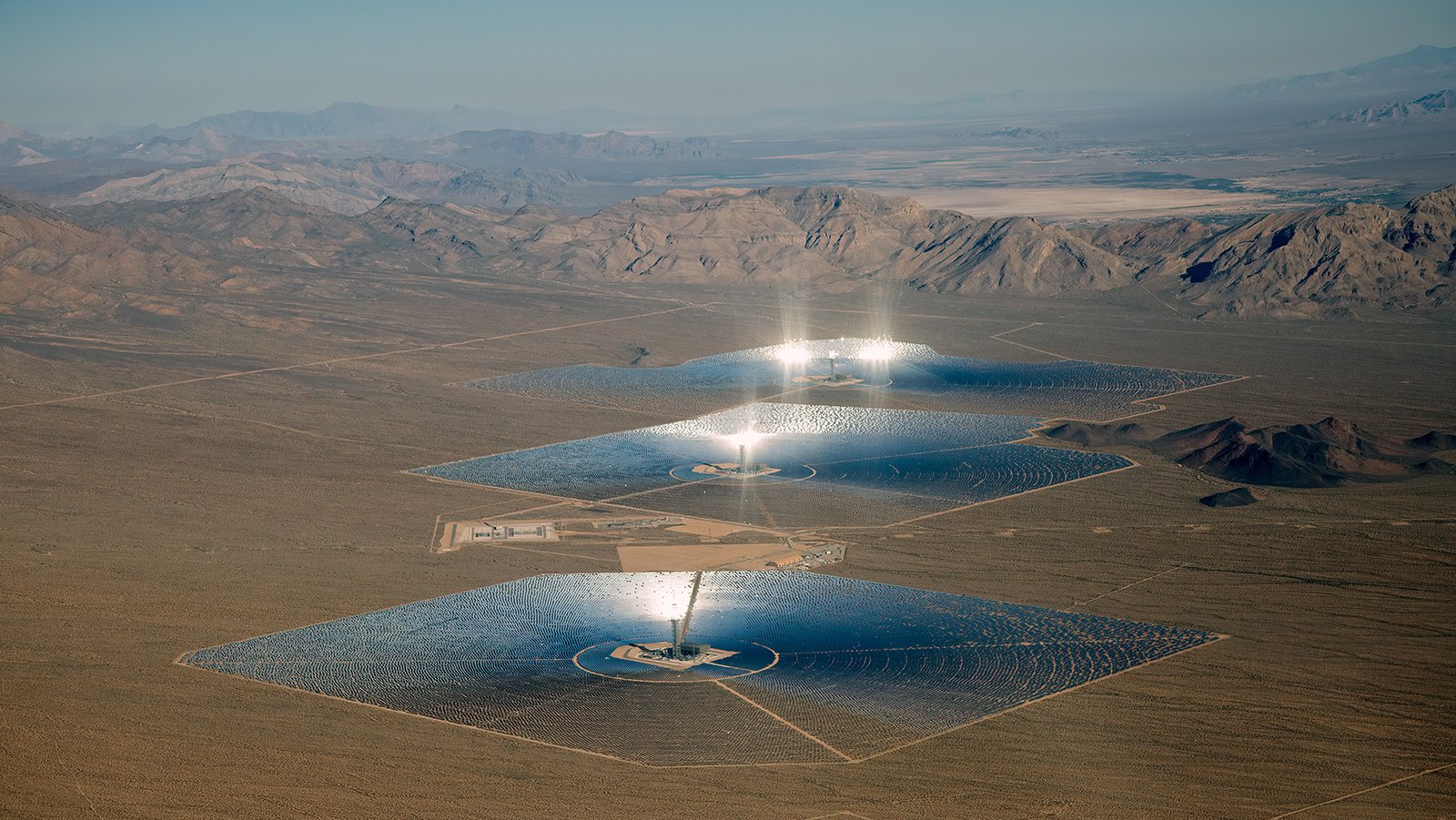
Photo: Photopilot
The concentrated light heated water into steam, driving turbines—similar to coal or nuclear plants, but without burning fuel. Theoretically, CSP offered scalability, promised steadier output than earlier solar tech, and even included natural gas backup for cloudy days.
Utilities like PG&E and Southern California Edison saw it as a stable, carbon-free power source under long-term contracts.
How Did a Billion-Dollar Project Fail?
In theory, it was brilliant. In practice, the world moved faster than the project could keep up.
Ivanpah’s core issue wasn’t just technical—it was economic timing. During its 2010–2014 construction, solar energy underwent a revolution: Photovoltaic (PV) panel costs plummeted 80%, driven by massive Chinese manufacturing. Suddenly, simple PV farms—both rooftop and utility-scale—became cheaper, faster, and easier to deploy than complex CSP systems.

Simultaneously, America’s fracking boom slashed natural gas prices, making gas plants one of the cheapest power sources to build and operate. By Ivanpah’s 2014 launch, it entered a market utterly transformed from its original conception—a slow, capital-intensive project designed for a world where renewables were expensive and needed heavy subsidies. Instead, it faced a world where solar and gas were already cheaper.
Worse, Ivanpah struggled to meet performance targets. In its first year, it produced only two-thirds of promised output, disappointing utilities and giving critics easy ammunition.
Technical challenges compounded issues. Its capacity factor (actual vs. potential output) remained under 30%, far below gas plants’ 60%+. Maintaining 300,000 mirrors in harsh desert conditions proved costly and labor-intensive. Dust reduced efficiency, extreme heat strained mechanical systems, and its massive land use yielded modest output compared to newer PV farms.
Americans questioned why they should support a billion-dollar solar plant that couldn’t deliver as promised.
So, what is Ivanpah’s legacy? In one sense, it failed. It didn’t meet economic or performance goals and couldn’t compete in a rapidly evolving market.
Yet, Ivanpah’s story isn’t about renewable energy’s limits, but about how progress truly happens—through trial, error, and relentless market forces.
VinFast’s Ambitious Expansion: Phạm Nhật Vượng Invests $3 Billion in VinWonders, Vinschool, Vinmec, and Solar Power in the World’s Most Populous Nation
Vingroup has announced the signing of a Memorandum of Understanding (MOU) with the Government of Telangana, India, proposing a phased investment of approximately $3 billion to develop a multi-sector ecosystem within the state.
Foreign Capital Infuses $6.1 Billion into M&A Deals with Vietnamese Firms: GELEX Execs and TTC Chairman Dang Van Thanh Share Insights on Deal-Making Mindset and Skills

The Vietnam M&A Forum 2025 highlights a surge in foreign investment for M&A, driven by attractive valuations and a thriving economy. Meanwhile, domestic leaders like TTC and Gelex are proactively adopting green standards and transparency to seize emerging opportunities.
Vietnam’s Newest Billion-Dollar Startup Launches $8.7 Billion Projects, Matching Combined Capacity of Three Major Hydropower Plants

Since the beginning of the year, VinEnergo, a member company of Vingroup, has consistently emerged as the lead investor in large-scale green energy, infrastructure, and industrial projects across Vietnam.
Hanoi Accelerates Solar Power Adoption to Secure Energy Security by 2045
This marks a pivotal milestone in the capital city’s proactive shift towards energy autonomy and the robust development of renewable energy sources.
Unleashing Sustainable Value: Bầu Hiển’s Vision for Renewable Energy

With a forward-thinking mindset, robust capabilities, and a strategic long-term vision, T&T Group swiftly emerged as a powerhouse in the renewable energy sector. Armed with a portfolio of nationally significant projects, the group is committed to sustainable development, actively supporting the government’s pledge to achieve net-zero emissions by 2050.