In the latest Asian Development Outlook report, the Asian Development Bank (ADB) now forecasts that its 46 member economies will grow by 5.1% this year, up from the 4.8% predicted in September. For 2026, ADB projects these economies to expand by 4.6%, slightly higher than the previous estimate of 4.5%.
Vietnam is among the countries with the most significant upward revisions, from 6.7% (September forecast) to 7.4%. Taiwan’s growth is now projected at 7.3%, a 2.2 percentage point increase from the previous forecast, while Singapore is expected to grow by 4.1%, up by 1.6 percentage points.
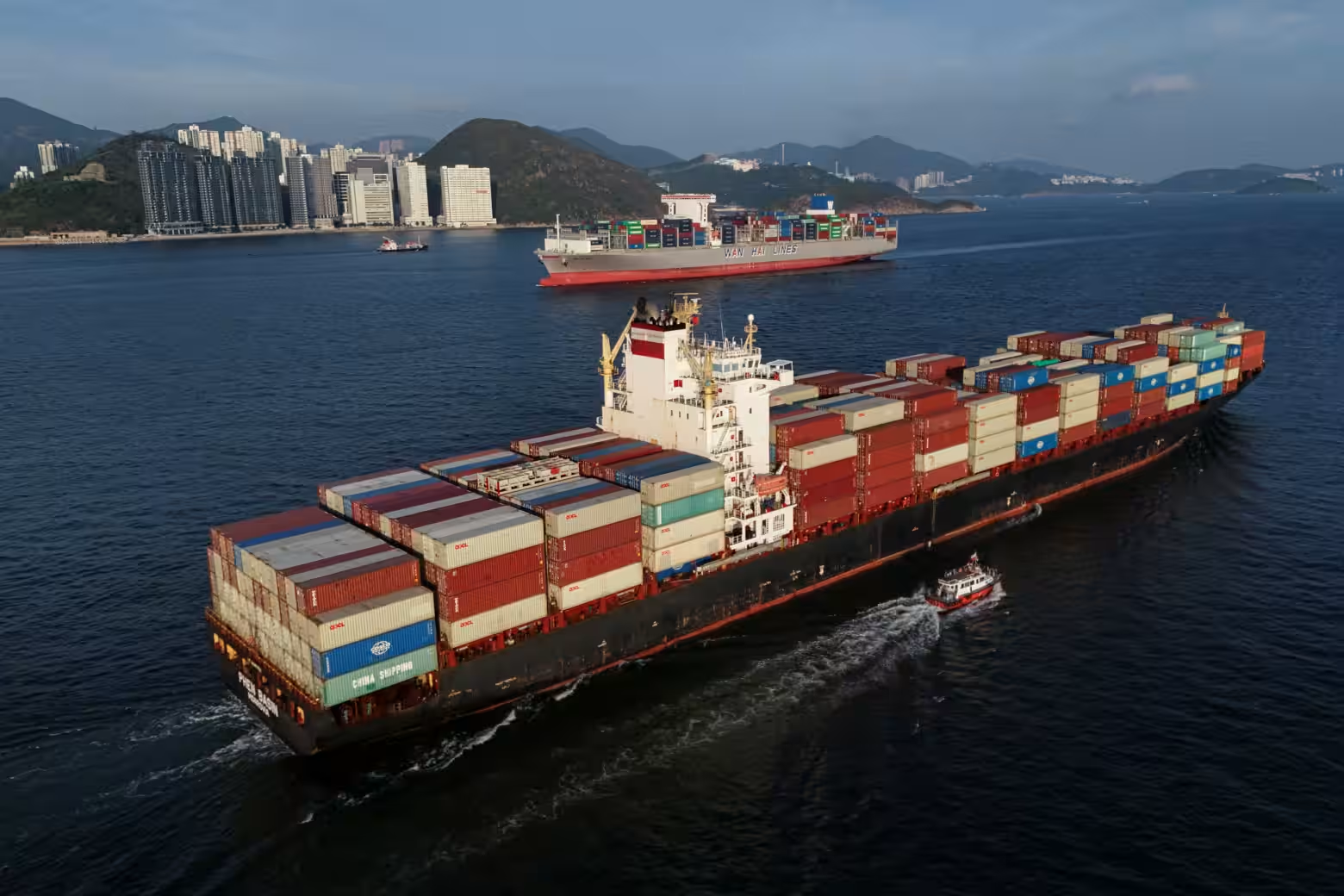
The upward adjustments for countries and regions heavily exporting technology products to the U.S. may indicate that the impact of President Donald Trump’s tariffs has been less significant than initially feared.
South Asia, including India, is expected to lead growth due to robust domestic consumption and positive export figures, according to ADB. The region is forecasted to grow by 6.5% this year, led by India’s projected growth of 7.2%.
However, uncertainties stemming from President Trump’s retaliatory tariffs continue to negatively impact Asia’s economic outlook.
“The potential re-escalation of tariff tensions and policy uncertainties, coupled with heightened financial market volatility, are major concerns that could adversely affect exports and investment,” ADB noted. “Sharp asset price fluctuations may also increase debt risks, leading to capital outflows and debt repayment challenges.”
ADB acknowledges that while trade concerns have eased following the U.S. reduction of tariffs on China, risks remain high. “Uncertainty persists regarding sector-specific tariffs on pharmaceuticals and semiconductors, as these measures have not been formally implemented,” ADB stated.
Nevertheless, the lending institution highlights that economic growth across Asia continues to demonstrate resilience. “Exports remain strong, supported by high demand for electronics and semiconductors, as well as diversified export markets, which help mitigate the impact of U.S. tariffs,” the organization noted.
ADB reported that exports from high-income technology-exporting countries increased by 22% in October compared to the same period last year. The primary driver was Taiwan, a global semiconductor hub, where export revenues surged by 49% due to strong global demand amid the artificial intelligence (AI) development race.
On a broader scale, Asia’s improved growth prospects are attributed to India’s impressive performance, which partially offsets China’s slowdown. In the world’s second-largest economy, the real estate crisis continues to pressure economic activity, “reducing fixed asset investment and slowing infrastructure and manufacturing investments,” according to ADB.
Looking ahead to 2026, East Asia is forecasted to grow by 4.1%, although China is expected to grow by only 4.3%, down from this year’s projected 4.8%. ADB warns that “resurgent tariff tensions, trade policy uncertainties, and heightened financial volatility remain key risks.” Additionally, geopolitical pressures and China’s sluggish real estate market could further weaken the region’s outlook.
Southeast Asia is projected to grow by 4.4% in 2026, slightly lower than this year’s 4.5% forecast. However, ADB remains optimistic despite the slight downgrade, citing “strong third-quarter results in Indonesia, Malaysia, Singapore, and Vietnam, though persistent risks to growth include climate-related disruptions and domestic political developments.”
“Southeast Asia continues to show resilience, with prospects hinging on sustained policy support and flexible economic strategies,” the bank concluded.
According to the bank, monetary easing cycles are ongoing in many emerging Asian economies, as inflation has either declined or remains within target in 13 out of 17 countries. This opens up expectations for greater policy flexibility, particularly as the U.S. continues its trend of lowering lending rates.
– 10:48 10/12/2025
Gia Bình International Airport: A National Growth Catalyst and Breakthrough Hub

The years 2025-2026 herald a transformative era for Vietnam’s aviation industry, as pivotal national infrastructure projects enter a phase of aggressive implementation. Gia Binh International Airport (Bac Ninh), the largest private airport project in Vietnam’s history, has received unanimous investment approval from the National Assembly. This landmark development will solidify Vietnam’s position on the regional and global aviation map.
Province with Per Capita GRDP 1.6 Times the National Average Aims to Become a Centrally-Governed City by 2030

On the afternoon of December 10th, during the 8th session of the 19th term of the People’s Council of Bac Ninh Province, Chairman of the Provincial People’s Committee Pham Hoang Son delivered a speech clarifying several issues related to the content of inquiries. He also addressed the socio-economic development tasks for 2025 and outlined the goals, tasks, and solutions for 2026.
Unlocking Thousands of Stalled Projects Nationwide: Implementing Resolution 170 Across Vietnam

On the morning of December 8th, during the 10th session of the 15th National Assembly, under the chairmanship of Vice Chairman Nguyễn Đức Hải, the National Assembly heard the Government’s Proposal and the Economic and Financial Committee’s Verification Report. These documents pertain to a draft resolution expanding the scope of Resolution No. 170/2024/QH15, dated November 30, 2024. The resolution addresses specific mechanisms and policies to resolve difficulties and obstacles related to projects and land issues identified in inspection conclusions, audits, and court rulings in Ho Chi Minh City, Da Nang City, and Khanh Hoa Province. The expansion aims to apply these mechanisms to similar legal situations nationwide.
Ho Chi Minh City’s Economy Outpaces National Average Growth Rate

By 2025, Ho Chi Minh City’s GRDP is projected to reach a staggering 2.74 quadrillion VND, accounting for 23.5% of Vietnam’s total GDP. This economic powerhouse is also expected to boast an impressive per capita GRDP of approximately 8,066 USD in the same year.
VinFast Achieves Milestone: Propels Ha Tinh to Top Rank in North Central Vietnam

Spanning a vast 360,000 square meters, our state-of-the-art facility boasts a designed capacity of 200,000 vehicles annually, translating to an impressive average production rate of 35 vehicles per hour.