NASA is revolutionizing mineral exploration with AVIRIS-5, an advanced imaging spectrometer capable of detecting mineral traces from the stratosphere. Compact yet powerful, this microwave-sized device maps lithium-rich rocks and other critical minerals with unprecedented detail.
Mounted on NASA’s high-altitude ER-2 research aircraft, AVIRIS-5 surveys the American West at 60,000 feet. From this vantage point, it captures faint spectral signals reflected from geological surfaces—data that eludes conventional instruments. Each pixel contains a detailed light spectrum, enabling scientists to identify mineral compositions like fingerprints.
This initiative, a collaboration between NASA and the U.S. Geological Survey (USGS), marks the largest aerial mineral mapping effort in U.S. history. It’s part of Earth MRI, a comprehensive program modernizing geological maps to identify critical mineral reserves for energy, manufacturing, and national security.
In its first year, AVIRIS-5 logged over 200 flight hours scanning Nevada, California, and other Western states. A standout discovery was hectorite—a high-value lithium clay—found in waste from an abandoned California mine.
This is significant as lithium is among the 50 minerals deemed critical to U.S. supply chains. Stratospheric detection offers a novel approach, accelerating resource assessments amid surging global demand for lithium in batteries and clean energy.
According to NASA JPL Earth System Scientist Dana Chadwick, AVIRIS-5’s applications extend beyond minerals. It can enhance land management, assess snowmelt water resources, and monitor wildfire-prone areas.
The sensor’s breakthrough lies in its doubled spatial resolution, capturing 30 cm details from over 17 km. Each flight generates vast datasets of imagery and per-pixel spectral reflections, providing superior geological insights.
AVIRIS-5’s technology builds on innovations from NASA JPL’s Microdevices Laboratory, using prisms, diffraction gratings, sensor arrays, and “black silicon”—an ultra-light-absorbing material—to minimize noise and maximize precision. Similar sensors have supported missions mapping Mars’ crust, Titan’s lakes, and lunar water.
Since the first AVIRIS in 1986, the series has studied volcanoes, disasters, wildfires, crops, and more. AVIRIS-5 extends this legacy with an unprecedented project backed by the U.S. Bipartisan Infrastructure Law.
Over four years, the GEMx program aims to help communities repurpose old mines, identify new mineral reserves, and mitigate risks like acid mine drainage.
With AVIRIS-5, lithium mapping is just the beginning. NASA envisions it transforming Earth observation—one spectral dataset at a time—through the sharpest imagery ever captured from the sky.
Revised Title:
Adjusting Exploration and Mining Plans for Select Mineral Deposits in Thai Nguyen, Lao Cai, and Dong Nai Provinces
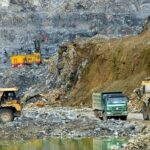
Deputy Prime Minister Tran Hong Ha signed Decision No. 2581/QD-TTg on November 24, 2025, approving the adjusted master plan for the exploration, exploitation, processing, and utilization of mineral resources in the following areas: the Nui Phao tungsten mine in Thai Nguyen province, the Ta Phoi copper mine in Lao Cai province, and the Tho Son and Thong Nhat bauxite mines in Dong Nai province. This adjustment is part of the broader master plan for mineral resource exploration, exploitation, processing, and utilization for the period 2021–2030, with a vision extending to 2050.
Encouraging Australian Businesses to Invest in Renewable Energy in Vietnam
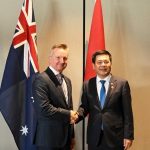
Minister of Industry and Trade Nguyen Hong Dien has highlighted Vietnam’s strengths in terms of population, high energy demand, and natural advantages for solar and wind energy production as potential investment opportunities in the energy sector for Australian businesses.