Illustrative Image
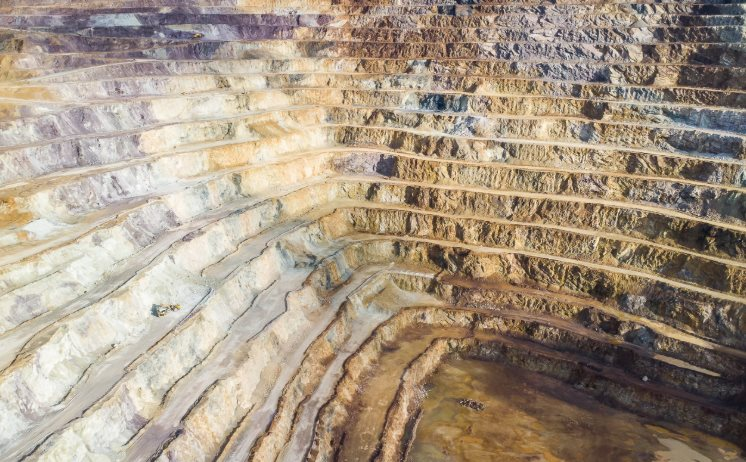
Malaysia, the world’s second-largest rare earth refining hub after China, faces challenges in optimizing its supply chain to fully capitalize on economic opportunities, according to a recent report by the Institute of Strategic and International Studies Malaysia (ISIS Malaysia).
During a press briefing this week, ISIS Malaysia highlighted that while Malaysia excels in refining rare earth ores, it lags in producing high-value derivatives such as magnets and rare earth-dependent components.
The policy report titled “From Mine to Magnet” warns that establishing a closed-loop supply chain could contribute an estimated RM91.9 billion (USD22.4 billion) to GDP and create approximately 96,900 jobs by 2050.
China currently controls nearly 90% of global rare earth refining and has tightened exports of permanent magnet technologies and critical elements. This move is seen as a response to U.S. semiconductor restrictions, directly impacting renewable energy, robotics, data centers, and defense manufacturing sectors. Consequently, nations are seeking to diversify supply chains beyond China.
“Malaysia plays a pivotal role in the global rare earth ecosystem as one of the few nations outside China with large-scale refining capabilities,” stated Danielle Heinecke, Australian High Commissioner to Malaysia. She emphasized that Australia and Malaysia are strategic partners in building sustainable and diversified critical mineral supply chains.
Australian mining company Lynas operates the largest rare earth separation facility outside China in Gebeng, eastern Malaysia, processing up to 22,000 tons of rare earth oxides annually. This has positioned Malaysia as the world’s second-largest refiner and a key ally for the U.S., Japan, and Australia in reducing reliance on China.
However, the report cautions that administrative barriers between federal and state authorities are hindering Malaysia’s ambitions to develop a globally competitive industry. Deputy Minister of Investment, Trade, and Industry Liew Chin Tong affirmed that the ban on raw rare earth exports since January 2024 aims to boost domestic processing but acknowledged it as just the beginning of a long journey.
Teoh Lay Hock, technical advisor at the Malaysian Chamber of Mines, warned that overly rigid export bans could stifle exploration. “Without the ability to sell, no one will invest in extraction. We don’t advocate for unrestricted exports, but a total ban would paralyze the industry,” he told Nikkei Asia.
Environmental constraints further challenge the sector. According to Sallehuddin Mohamad, Director-General of Malaysia’s Department of Minerals and Geoscience, only 18%-19% of Malaysia’s rare earth reserves are located outside forest reserves and environmentally sensitive areas, necessitating careful expansion planning.
A significant milestone is Lynas’ partnership with South Korea’s JS-Link to build a 3,000-ton-per-year permanent magnet manufacturing plant. Malaysia’s sovereign wealth fund, Khazanah Nasional, is also seeking partners in metallurgy and magnet production. Malaysia has signed critical mineral memorandums with the U.S. and elevated its strategic partnership with Australia in this sector.
Despite these advancements, the report stresses that neutral policies alone are insufficient without coordinated federal-state governance. “The next decade will determine whether Malaysia transitions from mining to magnet manufacturing and competes globally,” said ISIS Malaysia Chairman Faiz Abdullah.
Source: Nikkei
Volkswagen’s Affordable Electric Vehicle Set to Launch Globally
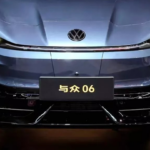
Volkswagen is making a significant investment in China, aiming to develop new electric vehicles that will reduce costs by 50% compared to other regions.
BRICS Nation Invests $1 Billion in Rare Earth Development, Aiming to Reduce China Dependence and Attract U.S. Interest with World’s 5th Largest Reserves
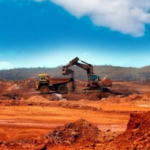
The vast majority of viable rare earth mineral deposits are concentrated in the southern regions of this nation.
Russia Faces New Asian Competitor Amid Customer Loss: Covertly Shipping Over 200,000 Barrels of Oil Daily to China via Third Parties
This nation is currently under sanctions imposed by the United States.
Where Does Vietnam Rank on the Latest Global Map of Rare Earth Reserves?
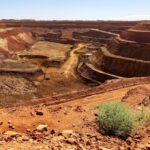
Vietnam boasts a larger reserve of rare earth elements than both the United States and Thailand.
Humanoid Robot Production Costs Slashed by 70% – Build One for Just $13,000-$26,000

In an optimistic scenario, the humanoid robot market could reach a staggering $260 billion by 2035.