Hanoi Considers Optimal Plan for the Red River Scenic Boulevard
The Hanoi Department of Planning and Architecture has submitted a report to the City People’s Committee regarding the plan, location, and alignment of the Red River Scenic Boulevard. According to the report, Option 1 places the main road primarily outside the riverbank, closely following the water’s edge, with a total length of 87.17 km, including 44.5 km on the Right Bank and 42.67 km on the Left Bank.
The road is designed with 6 lanes, incorporating bridges, tunnels, and embankments to minimize impact on the terrain. Accompanying it is an 85 km monorail with a design speed of 80 km/h, consisting of 8 cars capable of carrying approximately 1,200 passengers. The monorail is positioned on the median strip between existing or planned roads to reduce land clearance and enhance accessibility to riverside communities.
However, Option 1 is criticized for its potential issues related to hydraulics and flood safety. The road’s intrusion into the riverbank area could raise the Red River’s water level by approximately 14 cm, altering flow velocities by 0.2–0.4 m/s along the entire route. Additionally, the extensive use of elevated structures may fragment the riverside landscape, obstruct views, and negatively impact the local environment.
Option 2 primarily follows the existing dyke alignment from Hong Ha Bridge to Me So Bridge, with a total length of 80.5 km (44.8 km on the Right Bank and 35.7 km on the Left Bank). The road features 6 lanes, with a cross-section ranging from 54–80 meters. The at-grade design dominates, with tunnels only in complex areas. The elevation aligns with the natural terrain, with riverbank sections raised by approximately 0.5 meters, averaging 11.5–12 meters.

AI-generated mockup of the Red River Scenic Boulevard project (conceptual video).
Unlike Option 1, Option 2 does not include a monorail. Instead, the urban rail network will be further studied for underground implementation, ensuring regional connectivity with neighboring provinces like Hung Yen and Phu Tho. This approach is deemed more rational, avoiding floodplain interference while aligning with urban transport development goals through 2030, vision 2050.
The comprehensive assessment indicates that Option 2 effectively meets flood safety and dyke protection requirements. In terms of transportation, the dyke-adjacent alignment improves connectivity with riverside communities, enhances longitudinal-transverse network integration, and reduces pressure on existing roads.
Regarding landscape, following the natural terrain facilitates the creation of a cohesive riverside urban space, harmonizing with parks, green corridors, and high-rise complexes as per the Red River urban development vision.
Based on these analyses, the Department of Planning and Architecture recommends the Hanoi People’s Committee adopt Option 2 as the basis for subsequent research phases.
Government Leadership Praises Red River Scenic Boulevard Project
The Standing Committee of the Government concluded that the Red River Scenic Boulevard project aligns with the capital’s development direction, significantly contributing to the growth of Hanoi, the Red River Delta, and the nation. It aims to create the “Red River Miracle” to achieve the 11% growth target for 2026–2030.
Thus, the Standing Committee approved Hanoi’s proposal to study and invest in the Red River Scenic Boulevard project.
The Government emphasized that the boulevard’s implementation must achieve the goals of being civilized, green, clean, beautiful, safe, modern, and internationally prestigious. The project space should be designed holistically, harmoniously utilizing land, water, underground, and elevated spaces to transform the Red River into a gentle, more beautiful driver of socio-economic development.
The Government directed Hanoi to strive for a December 19, 2025 groundbreaking and a February 3, 2030 completion, coinciding with the 100th anniversary of the Communist Party of Vietnam—a symbolic milestone for the capital’s development.
According to the Hanoi Department of Construction, the Red River Scenic Boulevard is one of five strategic axes outlined in the Capital Master Plan. This mega-project covers approximately 11,000 hectares, spanning 40 km along the Red River through 16 wards/communes inside Ring Road 4, impacting 40,000 residents, with preliminary investment estimates exceeding 400 trillion VND.
Revitalizing Hanoi: Demolition Commences for Lake Hoan Kiem Development Project
Four agency headquarters are currently being demolished to make way for a transformative project: a vibrant square, a modern TOD park, and a revitalized area surrounding Hoan Kiem Lake.
Where Essence Meets Vitality: Shaping the Energy of Life

Following the launch of One Era, the joint venture real estate developer—comprising four international urban development masters—unveiled the “Discover Your Essence” online experience.
Ho Chi Minh City: Premium Property Supply Concentrates in the Hands of Industry Giants Masterise Homes, Gamuda Land, and Dat Xanh Group
The Ho Chi Minh City market has witnessed a stark polarization in the high-end and luxury segments, with over 80% of new supply being spearheaded by Đất Xanh Group, Gamuda Land, and Masterise Homes.
Unlocking the “Red River Miracle”: Deo Ca Proposes Two Bold Strategies for Vietnam’s $13 Billion Mega-Project, Drawing Insights from China’s Water Management and South Korea’s Han River Success
The Deo Ca Pass has outlined two strategic plans, both prioritizing the development of transportation infrastructure as a precursor. This approach aims to unlock urban development opportunities and catalyze socioeconomic growth.
Metro Bến Thành – Cần Giờ Sets Record: Investment Conditions Fulfilled in Just 2 Months
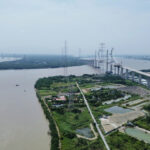
On December 19th, construction will commence on the Bến Thành – Cần Giờ Metro line in Ho Chi Minh City, Vietnam. This project sets a remarkable record for completing investment conditions in just two months.