













Hoa Binh Heavy Disabled Veterans Company, a renowned enterprise associated with the esteemed entrepreneur “Beer Road,” unveiled the results of its multi-layered “Highway and Urban Railway” model test at 321 Vinh Hung (Hanoi) on December 11, 2025.
This groundbreaking urban infrastructure model, a first in Vietnam, seamlessly integrates highways, urban railways, commercial spaces, and social housing on a single structural axis. The testing was conducted by the Center for Science, Technology, and Investment Consulting at Da Nang University of Technology, under the supervision of Professor and Doctor Nguyen Lan.
The load test results demonstrated exceptional performance. With a configuration of one urban railway lane and one motor vehicle lane, the structure withstood earthquakes exceeding level 8 and repeated 250-ton impact forces ten times, surpassing Vietnam’s standard of 180 tons. The measured deflection was less than 1 mm, significantly below the standard 12.5 mm. In a 2-lane railway and 2-lane vehicle configuration, the structure maintained its strength and earthquake resistance while reducing deflection to 0.5 mm.
The model’s standout feature is its 4-layer structure, constructed, assembled, concreted, and tested within just 10 days. Measuring 31 meters in length and 21 meters in width, the project required a maximum of 50 workers. The structure boasts a lifespan of over 150 years, significantly exceeding Vietnam’s 100-year standard.
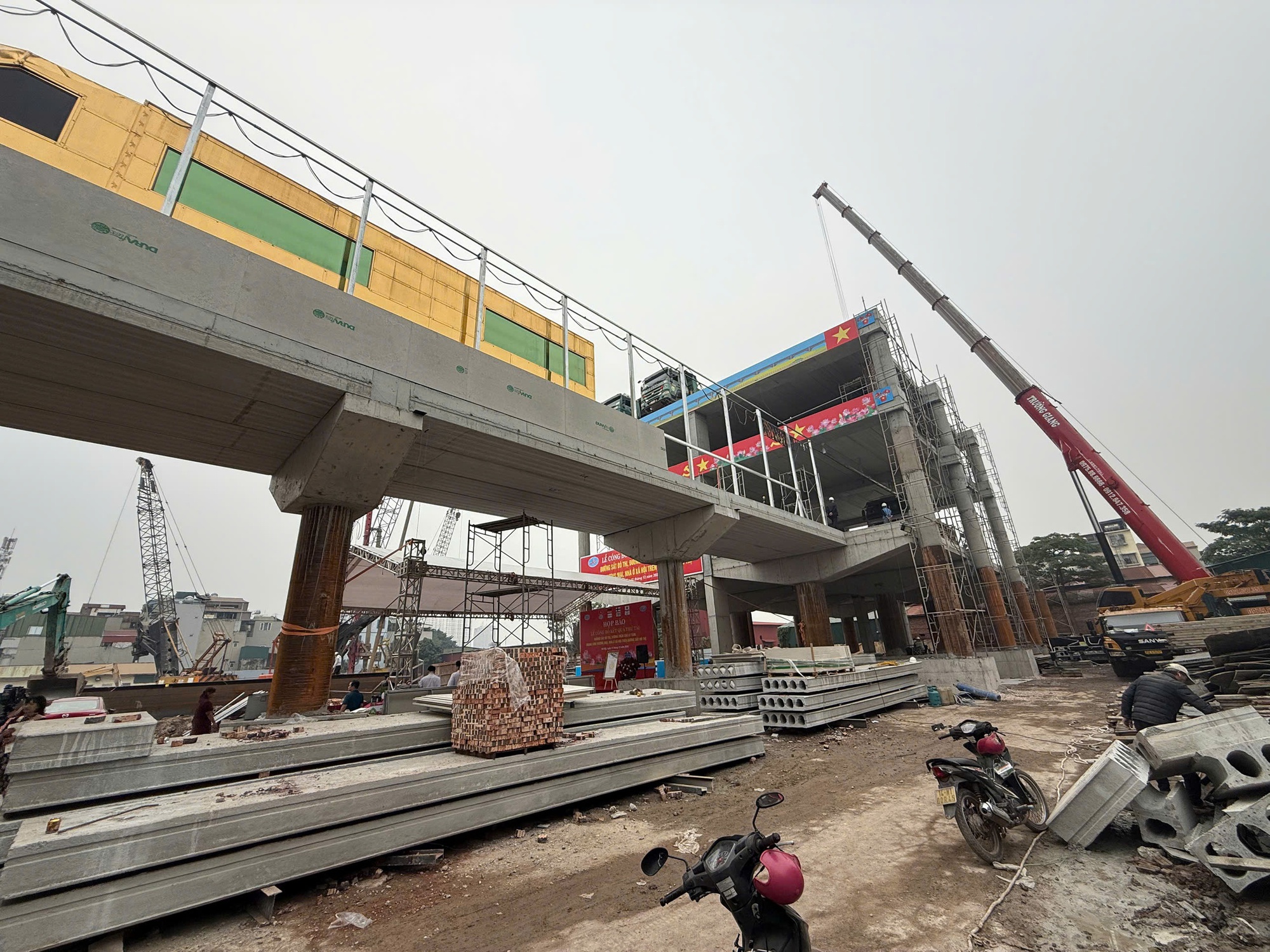
Hoa Binh Heavy Disabled Veterans Company introduces the multi-layered “Highway and Urban Railway” model.
Chairman of Hoa Binh Group, Nguyen Huu Duong, explained the layout: Layer 1 houses rainwater drainage systems. Layer 2 accommodates a 2-lane urban railway or highway alongside commercial facilities. Layer 3 is dedicated to the urban railway, while layers 4, 5, and 6 feature social housing, fully compliant with Vietnam’s fire safety and noise standards. With vehicles passing below, the recorded sound level is under 35 dB, well below Vietnam’s 51 dB night-time limit.
The chairman emphasized that this model offers the fastest construction, lowest investment, and highest environmental friendliness among global highway and urban railway projects. The technology has been patented in Vietnam and is pending international registration in Europe and beyond.
Following the successful load test, Mr. Duong plans to propose a pilot project to the Central Steering Committee for Science, Technology, Innovation, and Digital Transformation. The proposed route spans 32 km from the National Convention Center to Lang – Hoa Lac, with a 20-meter median.
The company estimates constructing 3 to 5 residential layers above the route, providing 60,000 to 100,000 social housing units. Traditionally, Hanoi would allocate 62 trillion VND and 5-7 years for this project. However, this model reduces construction time to approximately one year, requires no state budget, and could generate 3 trillion VND in VAT from social housing sales.
The anticipated selling price is 25 million VND per square meter, with construction costs around 12 million VND. The difference covers road construction expenses, resulting in units starting at just over 1 billion VND.
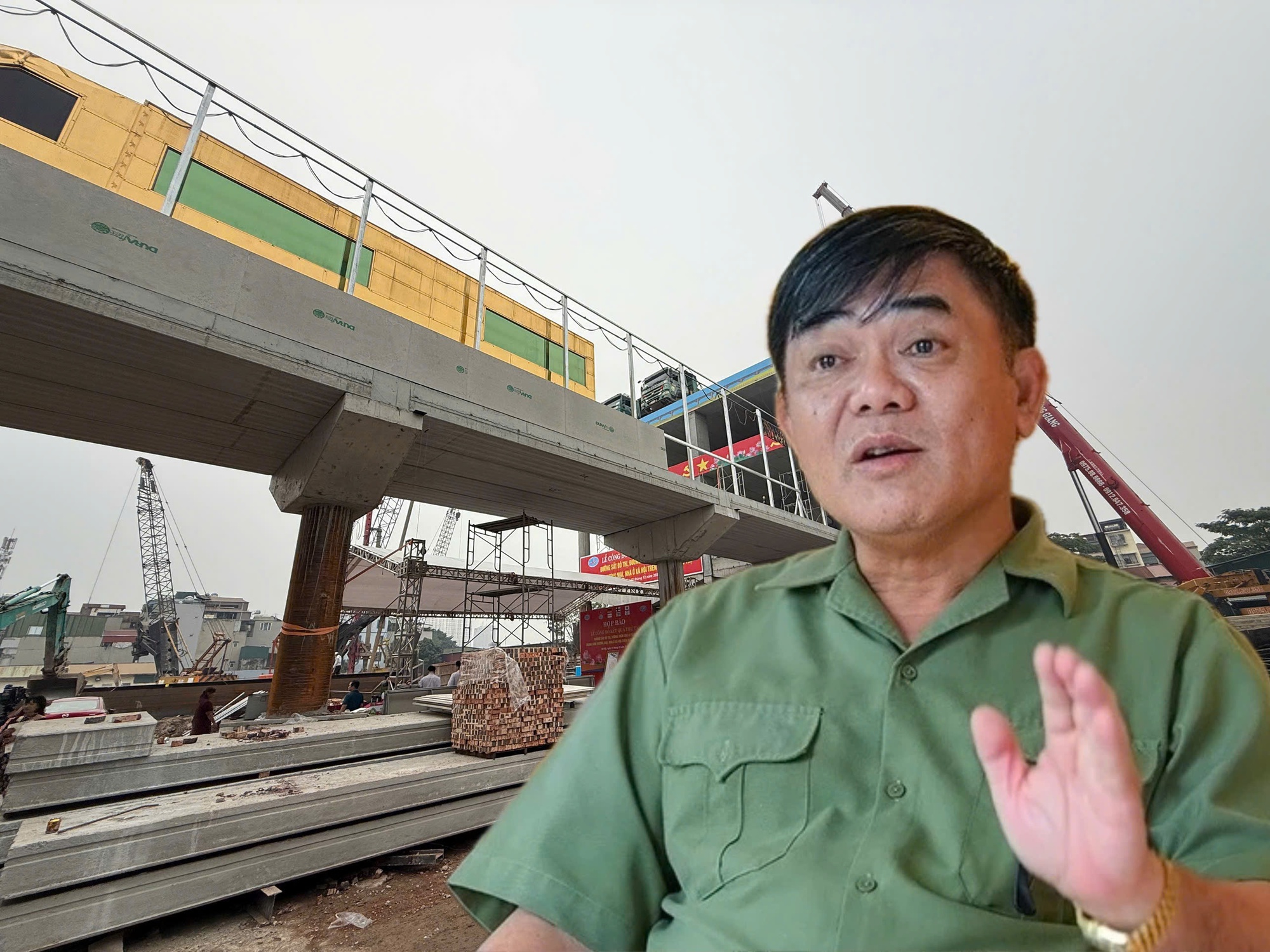
Chairman Nguyen Huu Duong stated that no other country, including Japan, has developed a similar model.
Addressing concerns about the impact of housing tens of thousands on the transportation axis, Mr. Duong assured that the model integrates educational, healthcare, and commercial facilities, minimizing resident travel needs.
Proximity to the urban railway eliminates the need for personal vehicles, reducing traffic congestion and air pollution—a critical issue in Hanoi.
Chairman Nguyen Huu Duong noted that no country, including Japan, has implemented a similar model. Following the pilot project’s introduction, the company plans to invite embassies for tours and is open to technology transfer upon request.
Previously, on March 4, 2025, Deputy Prime Minister Tran Hong Ha chaired a meeting with Hoa Binh Company, scientific experts, and representatives from the Ministry of Construction and Ministry of Science and Technology. The discussion focused on constructing elevated highways and urban railways using the PRC V+ high-strength concrete pile technology.
Hoa Binh Company reported that the PRC V+ technology employs prestressed centrifugal concrete piles and prestressed hollow panel slabs. This method replaces traditional on-site casting of piles and beams, reducing costs and time. The standardized, precast components are mass-produced in factories, ensuring faster construction and consistent quality.
This innovative approach significantly cuts expenses and accelerates project completion, marking a new era in infrastructure development.
“The ‘Beer Baron’ Breaks Ground on a Social Housing Project Near Times City: A Special, Gold-Plated Appliance Featured”
“Mr. Duong Bia” shared that while Vietnam only has one official God of Fortune Day, the workers at Hoa Binh’s social housing will consider every day a God of Fortune Day.
The Billionaire’s Road to Losses: How Did the ‘Beer’ Tycoons End Up Here?
The beleaguered Duong Man company, owned by the notorious tycoon Duong “Beer,” has reported yet another loss of 20 billion VND in the first half of 2024, marking the fifth consecutive year of financial woes. With 200 billion VND in bonds maturing in November, the company now faces a daunting task of debt repayment.