The Huu Nghi – Chi Lang Border Gate Expressway project is a pivotal national infrastructure initiative. Since its inception in 2016, the project has faced numerous challenges, leading to three changes in its investment model.

Rendering of the Huu Nghi – Chi Lang Border Gate Expressway Project
In its third iteration, the project adopted a Public-Private Partnership (PPP) model. The state budget allocated VND 5.5 trillion, while the investor contributed VND 5.529 trillion.
Despite positive outcomes, the implementation process revealed shortcomings and violations by the Provincial People’s Committee and related agencies.
For the independent PPP project spanning 2022–2025, the Government Inspectorate (TTCP) noted delays in technical design approval and cost estimation, hindering construction progress and causing errors.
Construction packages lagged behind schedule, with contractors commencing work before approved construction drawings. The EC04 package continued despite orders to halt for expansion to four lanes, resulting in VND 3.16 billion in wasted demolition costs.
Contractors for three consulting and non-consulting packages exhibited deficiencies and violations. Investors and project companies delayed loan disbursements and failed to secure sufficient financing as per the BOT contract.
According to approved designs, approximately 1.5 million m³ of waste soil and rock remain unallocated for disposal by the Provincial People’s Committee. Contractors lack mineral exploitation permits, and environmental protection fees remain unpaid by provincial authorities. State agencies have not yet allocated land or determined compensation for additional rice land.
Regarding increased state budget participation, TTCP highlighted TPBank’s failure to fulfill capital commitments, significantly impacting project progress. Stricter regulations are needed to penalize financial institutions that fail to honor investment pledges.
Investors and project companies failed to mobilize loans and other funds as agreed in the BOT contract. The Lang Son Provincial People’s Committee and People’s Council approved Resolution 18/NQ-HĐND to increase local budget contributions without securing investment funds. They later requested central government support of VND 2.7 trillion outside the public investment plan.
At the time of inspection, Lang Son Province had not adjusted the investment decision. The Ministry of Finance listed the project among those facing challenges.
Responsibility for shortcomings and violations lies with the Ministry of Construction, Lang Son Provincial People’s Council, Provincial People’s Committee, Department of Construction, Project Management Unit 2 (former Ministry of Transport), Vietnam Expressway Corporation (VEC), Provincial Project Management Board, and BOT companies. TPBank is also accountable for unfulfilled commitments.
TTCP recommends the Prime Minister direct the State Bank of Vietnam to hold TPBank accountable for failing to arrange credit and disburse funds as pledged. Regulatory measures should address financial institutions’ non-compliance with investment commitments.
The Ministry of Construction, in collaboration with Lang Son Province and VEC, must expedite cost settlement and clarify responsibilities for violations, imposing strict penalties as required by law. Potential criminal violations resulting in state budget losses will be referred to investigative agencies.
“Once a Hotspot for Land Fever and Dubbed the ‘Second Da Lat’ of the Central Highlands, This Region is Set to Be Connected by a $1.1 Billion Highway”

The Quảng Ngãi – Kon Tum Expressway (Quảng Ngãi – Măng Đen section) spans approximately 82 kilometers, with a total investment of around 25.1 trillion VND. This route has already attracted investor interest, who have pledged to self-finance 100% of the capital.
Official Approval for the Construction of an $8.9km, $500 Million Bridge Connecting Ho Chi Minh City and Dong Nai
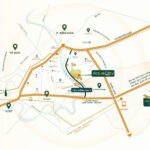
The project is executed through a public-private partnership model, with a total investment of nearly 11.5 trillion Vietnamese Dong.
Unprecedented Record Set in Border Province: The “Meritorious Official” Officially Revealed
This will be the driving force for 2026.
Proposed New Airport Within 100km of Noi Bai, Slated for Operation by 2029
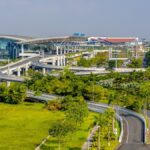
Welcome to the international airport, a global gateway connecting continents and cultures. Here, the world converges, offering seamless travel experiences and unparalleled convenience for both business and leisure travelers.
Extending the Ben Thanh – Suoi Tien Metro Line Directly to Long Thanh Airport

The proposal to extend the Bến Thành – Suối Tiên metro line directly to Long Thành Airport was presented during the Đồng Nai Provincial People’s Council meeting, aiming to alleviate traffic congestion between Ho Chi Minh City and Đồng Nai.