















From London’s Ultra Low Emission Zone (ULEZ) in the UK to Paris’s ban on old diesel vehicles in France, and Beijing’s replacement of millions of coal heaters in China, major cities worldwide are pioneering efforts to reclaim clean skies and reduce air pollution.
London (UK)
London, once a central hub during the Industrial Revolution, was among the world’s largest cities from the mid-19th to early 20th centuries. However, rapid technological advancements and urbanization took a severe toll on air quality.
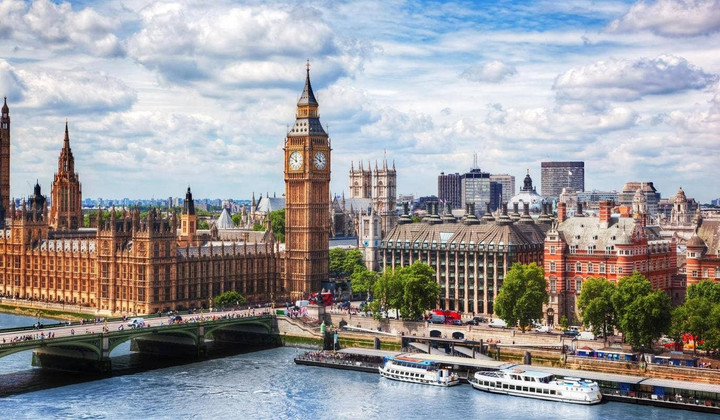
Air quality in London has seen significant improvements.
London’s infamous smog has been immortalized in history and literature. The city’s yellow-gray haze is vividly depicted in the works of Charles Dickens, Arthur Conan Doyle, and the paintings of Monet, symbolizing a dark era of air pollution in the UK’s capital.
In recent years, however, London’s air quality has made remarkable strides. In 2018, Mayor Sadiq Khan announced that the city’s air was the cleanest it had been in a decade.
One of London’s standout initiatives is the Breathe London campaign. This network of hundreds of air quality sensors across all 33 boroughs provides real-time pollution data. Strategically placed near hospitals, schools, parks, and along roads, these sensors identify pollution hotspots.
The Breathe London network also supports the expansion of the Ultra Low Emission Zone (ULEZ). Since 2019, London has led the world in implementing this model. Vehicles entering the ULEZ must meet strict emission standards or face daily charges, with heavier vehicles like trucks and buses incurring higher penalties.
By 2023, the ULEZ expanded to cover all 33 boroughs, marking a significant step in London’s fight against air pollution.
Experts attribute the improved air quality to Mayor Sadiq Khan’s environmental policies since taking office. These include the T-charge for older, polluting vehicles in central London and the establishment of low-emission bus zones.
Paris (France)
Once notorious for its thick smog, diesel emissions, and fine particulate matter, Paris was among Europe’s most polluted capitals. However, recent years have seen a dramatic transformation. Strict emission regulations, speed limits, diesel bans, and reduced parking have cleaned the air and prevented thousands of premature deaths.
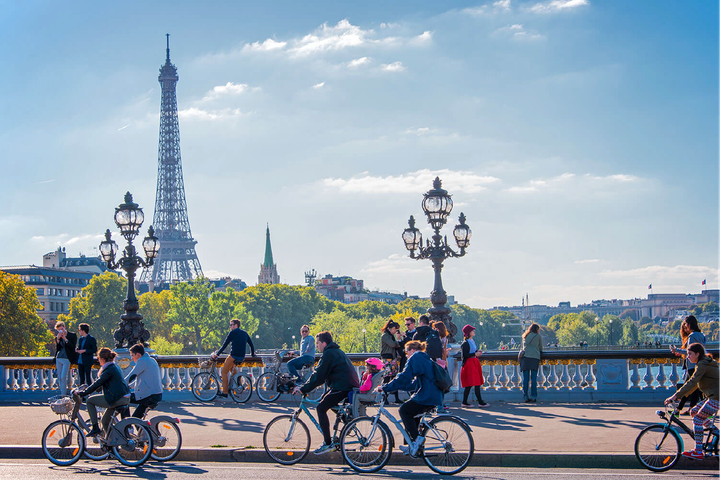
Paris (France) is a favorite city for cycling enthusiasts. (Photo: Wanderlustcrew)
Since taking office in 2014, Mayor Anne Hidalgo has prioritized “reclaiming Paris for its people” over cars. Under her leadership, the city has reduced parking spaces, transformed concrete plazas into public spaces, and converted many streets into pedestrian-friendly zones.
A landmark achievement was the 2016 ban on cars along the Right Bank of the Seine, replaced by a riverside promenade. Additionally, many car lanes have been converted into dedicated bike paths, expanding the cycling network by over 40% since 2015, totaling more than 1,000 km.
Diesel trucks and motorcycles over 13 years old are banned from the city center, with fines of €68 (approx. $77) for motorcyclists and €135 for truck and bus drivers.
Paris also bans diesel cars over 18 years old and gasoline cars over 21 years old from the city center.
The city has embraced the “15-minute city” concept, allowing residents to access essential services like healthcare, education, markets, and cultural activities within a short walk or bike ride. In French, this is known as “la Ville du Quart d’Heure.”
Beijing (China)
In the 1990s, Beijing experienced rapid growth in population, industry, and coal usage. As prosperity increased, so did car ownership, reaching one million vehicles. Consequently, pollutants like sulfur dioxide (SO₂) and particulate matter far exceeded national air quality standards.
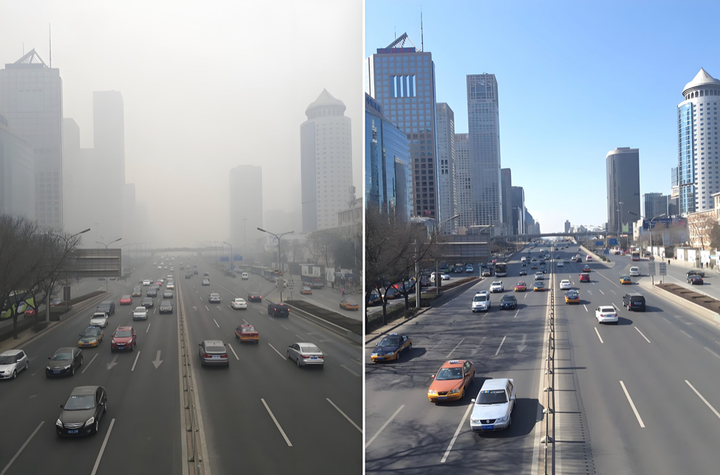
Beijing is gradually reclaiming its blue skies.
Chinese authorities implemented hundreds of measures targeting fine particulate matter (PM) and soot emissions from coal use, industrial facilities, vehicles, and construction dust.
Power plants and heating systems transitioned from coal to natural gas. Subsidies and retrofit programs encouraged the replacement of old coal-fired boilers with cleaner alternatives.
Beijing developed an air quality forecasting system with statistical models, numerical models, and expert assessments. The city also shut down 288 polluting enterprises in sectors like construction materials, chemicals, and machinery, reducing industrial emissions by over 8,300 tons.
A pivotal moment came in the winter of 2017, when Beijing’s five-year Clean Air Action Plan reduced annual PM2.5 levels from 89.5 to 58 µg/m³, surpassing the national target of 60 µg/m³.
In 2018, Beijing launched the “1 μg Initiative,” focusing on vehicle emissions and dust control. By 2023, the city allocated $2.73 billion for energy conservation and environmental protection, aiming to further reduce PM2.5 levels.
Beijing also emphasizes regional cooperation, working with neighboring regions like Hebei, Tianjin, and Inner Mongolia to combat cross-border air pollution.
By 2024, Beijing’s average PM2.5 concentration dropped to 30.5 μg/m³, a 6.2% decrease from the previous year. The city enjoyed 290 days of good air quality, 114 more than in 2013, while heavily polluted days decreased by 96.6%, from 58 to just two.
Revolutionizing Transportation: Comprehensive Policies to Accelerate the Shift to Electric Vehicles
Affirming its commitment to not leave citizens to “fend for themselves” during the transition process, Hanoi is actively developing a series of practical support policies.
Global Experts Offer Solutions to Tackle Vietnam’s $13 Billion Annual Disaster Crisis

Failure to address this issue promptly will exacerbate the detrimental impact on public health and the Vietnamese economy, leading to increasingly severe consequences.
Proposed: Hanoi, Ho Chi Minh City to Implement Stricter and Accelerated Emission Standards for Vehicles

The Ministry of Agriculture and Environment has proposed that Hanoi and Ho Chi Minh City implement a stricter and accelerated roadmap for vehicle emission standards, specifically targeting cars and motorcycles.
New Proposal Directly Affecting Millions of Vehicles to Take Effect Next Year

The implementation of Level 4 standards for vehicles manufactured between 2017 and 2021 in Hanoi and Ho Chi Minh City is a notable concern, as nearly 16% of these vehicles fail to meet the required criteria.
Motorcycle Emission Testing Roadmap in Hanoi, Ho Chi Minh City, Da Nang, and Beyond: What You Need to Know
Motorcycle emission testing is a crucial measure designed to effectively monitor and reduce vehicle emissions, contributing to a cleaner and healthier environment.