








The Department of Agriculture and Environment of Quang Tri Province has issued a document urging several units and localities within the province to strengthen forest management and protection, addressing the illegal exploitation of man dia trees.
Recently, in the northern forest areas of Quang Tri Province, locals have been venturing into the forests to hunt for man dia trees to sell to traders. The reason cited is that Chinese traders are offering to purchase this type of wood by the kilogram, with prices ranging from 1 to 3 million VND per kilogram, depending on quality.
According to the Department of Agriculture and Environment of Quang Tri, this activity poses a risk of forest encroachment, disrupts security and order, and complicates forest protection efforts.
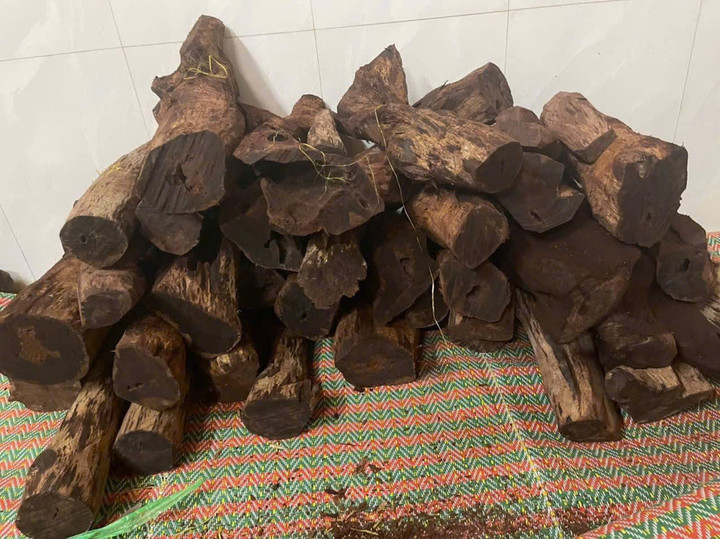
Man dia, once an obscure tree species, has recently gained attention as Chinese traders offer to buy it at prices ranging from 1 to 3 million VND per kilogram.
In response, the Department of Agriculture and Environment of Quang Tri has requested forest management boards and forestry companies to increase patrol forces in areas where man dia trees are distributed, particularly in border areas, trails, and locations frequently exploited for forest access.
Upon discovering illegal exploitation, units must record the incident, gather information, and immediately report it to local forest rangers and commune police for coordinated handling.
The Provincial Forest Ranger Force is tasked with directing Forest Ranger Stations to closely collaborate with local authorities and forest owners in educating and guiding residents to comply with forest protection regulations. They are also to monitor trader activities, collection points, and establishments trading man dia tree products.
Forest Ranger Stations must intensify patrols in natural forests containing man dia trees, promptly detecting and addressing illegal logging, exploitation, and transportation activities.
The People’s Committees of communes, wards, and Con Co Special Zone are required to enhance awareness campaigns in villages, hamlets, and neighborhoods, urging residents not to exploit this tree species in natural forests. Simultaneously, localities must collaborate with forest rangers and relevant authorities to inspect, verify information, and monitor trader and collection facility activities to prevent violations.
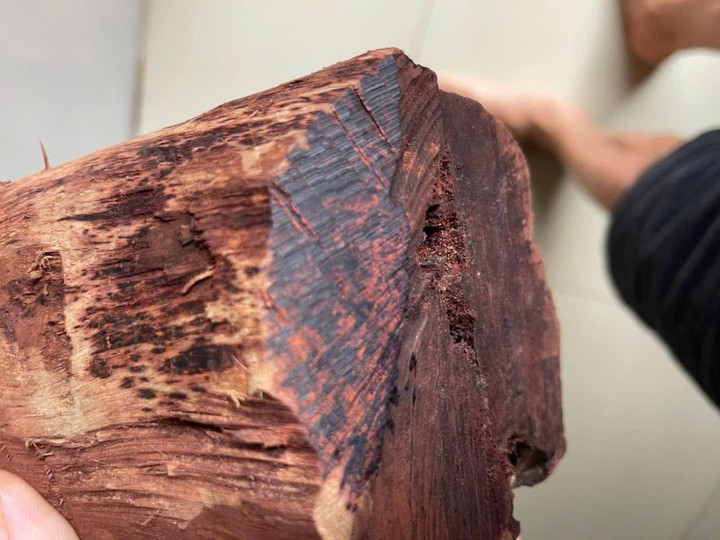
Man dia wood is relatively soft and light, with some dried pieces displaying beautiful grain patterns in the core.
The Department of Agriculture and Environment notes that the man dia tree, scientifically known as Archidendron clypearia (Jach.) I. Niels, belongs to the Mimosa family (Mimosaceae). It is a medium-sized tree, growing 18 to 20 meters tall.
Discover Saigon’s Premier Pet Bird Shop: 341 Exotic Birds Temporarily Held in Ho Chi Minh City
Discover a captivating collection of birds at our shop, featuring vibrant species such as the White-rumped Shama, Chinese Hwamei, Red-whiskered Bulbul, Mynah, Hill Myna, Spotted Dove, and the stunning Magpie-Robin. Explore our diverse selection and find your perfect feathered companion today.
Cam Lộ – La Sơn Expressway Phase 2: Will Construction Begin This Year?
Following the La Sơn – Hòa Liên expressway, the second phase of the Cam Lộ – La Sơn expressway project, which runs through Quảng Trị province and Huế City, is set to commence construction soon, albeit later than initially planned.
Massive $56 Million Project in Quang Tri at Risk of Delay Due to 50+ Households’ Relocation Hurdles
The Nhật Lệ 3 Bridge project, along with its connecting roads, boasts a total investment of 1.3 trillion VND in Quảng Trị. However, the project is currently facing delays due to land clearance issues involving over 50 households.
Land Acquisition Hurdles Threaten Early Completion of Quảng Trị’s Billion-Dollar Bridge Project
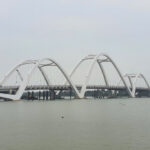
Despite being designated a key project and urged by Quảng Trị Province to accelerate completion by 10 months ahead of schedule, the Nhật Lệ 3 Bridge project continues to grapple with land clearance bottlenecks. These delays threaten its targeted completion by 2025, casting uncertainty over the project’s timeline.
Land Acquisition Hurdles Threaten Early Completion of Quảng Trị’s Billion-Dollar Bridge Project
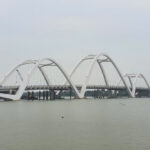
Despite being designated a key project and urged by Quảng Trị Province to accelerate completion by 10 months ahead of schedule, the Nhật Lệ 3 Bridge project continues to grapple with land clearance bottlenecks. These delays pose significant challenges to meeting the targeted 2025 completion deadline.