During the 6th session of the 10th Ho Chi Minh City People’s Council on December 10, Mr. Tran Quang Lam, Director of the Department of Construction, announced that the city is investing heavily in its transportation infrastructure. This includes major projects such as metro lines, regional and inter-regional roads like Ring Road 2, Ring Road 3, Ring Road 4, and highways such as the Ho Chi Minh City – Moc Bai and Thu Dau Mot – Chon Thanh expressways.
Since the issuance of Resolution 188 by the National Assembly, Ho Chi Minh City has implemented a highly streamlined mechanism for urban rail investment, which is both robust and unique.
A prime example is the Can Gio – Ben Thanh Metro Line, which has seen the fastest deployment in history. Within just 2 months, relevant departments completed all necessary conditions for the city’s People’s Committee to approve the investment policy.
On December 19, the city will break ground on several key projects, including the Ben Thanh – Can Gio Metro Line.
The Ben Thanh – Can Gio Metro Line has a total investment of approximately VND 102,430 billion (excluding VND 12,784 billion for land clearance). Vinspeed Railway Investment and Development Joint Stock Company (a subsidiary of Vingroup) is the project’s investor.
The line spans over 54 km, with Phase 1 including only the two terminal stations: Ben Thanh and Can Gio. The estimated travel time between the two stations is just over 13 minutes.
The project passes through 8 wards and communes in Ho Chi Minh City, including Ben Thanh Ward, Xom Chieu Ward, Tan Thuan Ward, Tan My Ward, Nha Be Commune, Binh Khanh Commune, An Thoi Dong Commune, and Can Gio Commune. It requires approximately 328.26 hectares of land, including the railway protection corridor.
The entire line is expected to operate 6 trains, with a frequency of 20 minutes per trip, uniformly applied during both peak and off-peak hours from 6:00 AM to 11:00 PM daily.
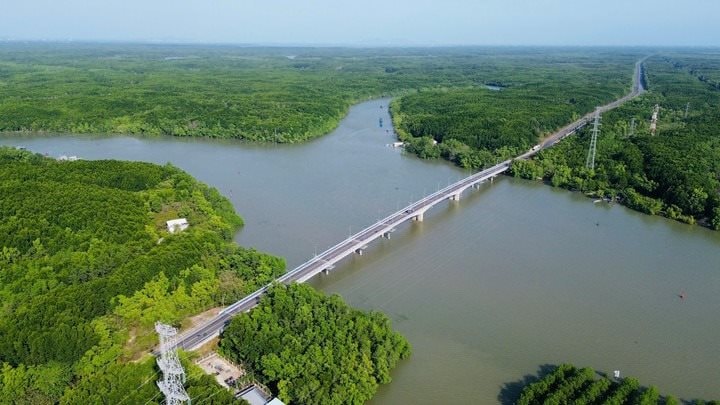
The 54km metro line will cross four rivers—Soai Rap, Rach Dia, Loi Giang, and Dinh Ba—running parallel to the Rung Sac Road.
Once operational in 2028, the project is expected to employ around 400 workers. The project’s operational period is 70 years from the date of investment approval and investor acceptance.
Vinspeed anticipates completing construction within 2 years. If achieved, this would mark a new milestone in Vietnam’s infrastructure development timeline.
From conceptualization to approval, the Ben Thanh – Can Gio Metro Line took less than a year to complete.
At the conference announcing Ho Chi Minh City’s 2021-2030 planning, with a vision to 2050, held earlier in January, Prime Minister Pham Minh Chinh discussed the construction of an underground railway system connecting downtown Ho Chi Minh City to Can Gio with Mr. Pham Nhat Vuong, Chairman of Vingroup.
In early March, Ho Chi Minh City held a meeting with the investor, where Vingroup presented a detailed investment proposal for the urban railway line connecting downtown Ho Chi Minh City to Can Gio to the Director of the Department of Construction. By April, Ho Chi Minh City submitted a report to the Prime Minister, proposing the inclusion of the Can Gio metro line in the planning.
Subsequently, relevant departments worked continuously with the enterprise to prepare for the project’s investment. In early December, the project received investment approval and met all conditions for groundbreaking on December 19.
Budget Revenue Surges: Unraveling the Land-Driven Anomaly
The General Statistics Office under the Ministry of Finance reports that Vietnam’s state budget revenue for the first 11 months reached nearly VND 2.4 trillion, surpassing the annual estimate by 21.9% and marking a 30.9% increase year-on-year. Notably, land-related revenue saw a significant surge. Economist Nguyen Tri Hieu questions why other revenue streams lagged while land contributions dominated the budget.
Ho Chi Minh City Construction Department: No Mandatory Plan to Switch Gasoline Vehicles to Electric Yet!

The Ho Chi Minh City Department of Construction has announced that the city is actively pursuing a green transformation roadmap. This initiative focuses on enhancing existing infrastructure and alleviating traffic congestion.
Proposed Construction of Two New Pedestrian Bridges on Ton Duc Thang Street, Ho Chi Minh City
Two pedestrian bridges spanning Ton Duc Thang Street, along with the renovation of Ba Son’s B and C docks, have been proposed to enhance connectivity and support river tourism.
Asia’s “Red River Miracle” on the Horizon: Key Considerations for the $17.5 Billion Mega-Project

The project holds significant importance for the development of Hanoi, the capital city, and is currently evaluating two distinct proposals.
“Hotspots” in HCMC Apartments: Thuan An Surges 129%, Di An Jumps 103%
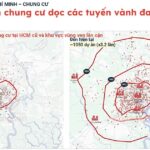
In the first 11 months of 2025, interest levels in Thuan An surged by 129%, Di An by 103%, and Thu Dau Mot by 65% compared to the same period last year, highlighting the growing appeal of these satellite cities adjacent to Ho Chi Minh City.