
















Vietnam’s National Assembly has passed the amended Construction Law with over 92% approval. The government is tasked with detailing conditions, procedures, and timelines for issuing construction permits.
During the final presentation before the vote, Minister of Construction Tran Hong Minh stated that the government’s decree will streamline the permit process as much as possible.
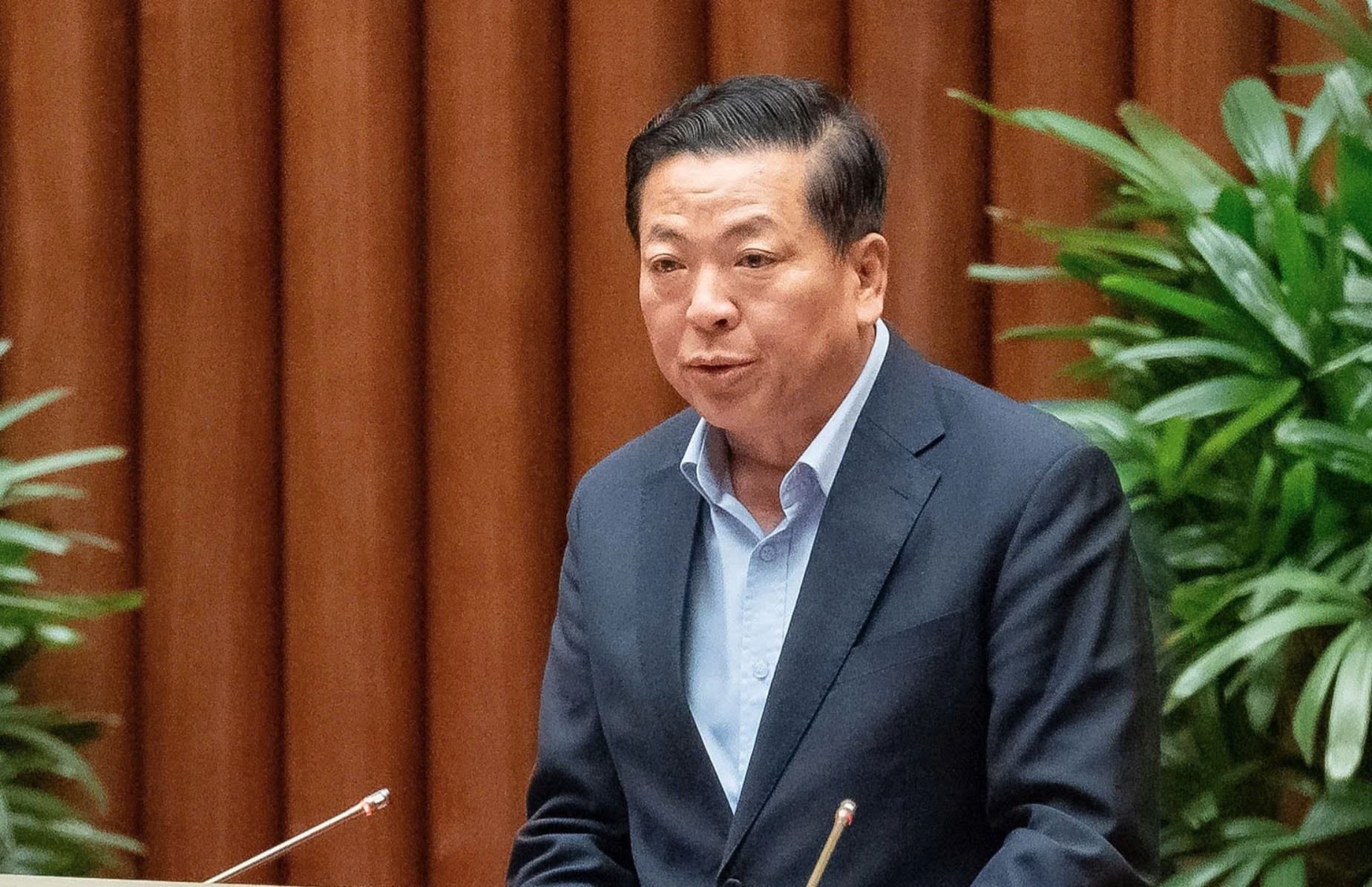
Minister of Construction Tran Hong Minh speaking at the session on December 10. Photo: National Assembly Media
According to Minister Minh, the process will be fully digitalized, with an expected maximum processing time of 7-10 days. This initiative aims to reduce time and costs by at least 30%, as mandated by the government. Additionally, the government will enhance the accountability of design consultants in ensuring construction safety.
Currently, the permit issuance timeline is 15 days for single-family homes, 20 days for non-residential projects, and up to 30 days for Class I and II projects, starting from the receipt of complete documentation.
Over time, there have been numerous complaints about the complexity, delays, and high costs associated with construction procedures, despite several resolutions aimed at reducing administrative burdens. In response, Prime Minister Pham Minh Chinh has repeatedly directed efforts to streamline construction permits and strengthen post-inspection measures.
Under the revised law, the procedure for reviewing technical designs and construction drawings for projects with approved basic designs will be eliminated. Instead, investors will be responsible for overseeing construction designs after approval. This change ensures that each project undergoes only one procedure from preparation to commencement, according to the government.
The scope of projects exempt from permit requirements has also been expanded. For example, Class IV projects, single-family homes under 7 stories with a total floor area under 500 m², and projects with approved feasibility studies are now exempt from construction permits.
However, these exemptions do not apply to projects within designated urban development zones, national tourism areas, or areas with specific architectural management regulations.
At the National Assembly Standing Committee meeting on November 24, Deputy Minister of Construction Bui Xuan Dung stated that permit applications will be simplified through the use of national databases for construction, land, and population records. He emphasized that digitalization and online public services will reduce processing times and costs for citizens.
He also assured that while procedures are being simplified, state management responsibilities remain intact.
Previously, the government proposed to the National Assembly that the law should simplify permit procedures and expand exemptions to include rural single-family homes under 7 stories and renovation projects that do not alter structural integrity.
During group and plenary discussions, some delegates suggested extending permit exemptions to urban homes under 7 stories and tasked the Ministry of Construction with developing detailed standards. Instead of issuing permits to individual households in urban areas, authorities could delegate responsibility to consulting firms, reducing burdens and costs for residents.
Persistent issues with lengthy and costly permit processes have been reported, despite efforts to reduce administrative procedures. Prime Minister Pham Minh Chinh has repeatedly called for streamlining construction permits and enhancing post-inspection measures.
National Assembly Chairman Tran Thanh Man expressed support for reducing procedures and processing times but urged the government to publish construction designs on the national information system for public oversight and feedback.
The amended Construction Law will take effect on July 1, 2026, with provisions on permit exemptions effective from the beginning of next year.
National Real Estate Market Outlook: What to Expect

The National Real Estate Exchange must be designed as a level playing field, with robust oversight mechanisms and clear, enforceable penalties.
Exciting News for Social Housing Seekers

On December 4th, the Da Nang People’s Committee issued a decision to implement the project “Investment in the Construction of at Least 1 Million Social Housing Units for Low-Income Earners and Industrial Zone Workers for the Period 2021-2030,” as approved by the Prime Minister.
Unlocking Vietnam’s Maritime Potential: MSC CEO Advocates for Larger Vessels in Vietnamese Ports

MSC, the world’s leading container shipping company, faces challenges beyond mere water depth in Vietnam’s ports. The true hurdles lie in the design, connectivity, and operation of the entire port and logistics ecosystem, which currently fall short of MSC’s expectations, limiting the number of ports capable of accommodating their vessels.
Exciting News for Ho Chi Minh City Residents: Building Your Dream Home Just Got Easier!

In December, the advisory body is set to introduce new regulations on architectural management protocols, aligning with updated planning frameworks and current practices.
Streamlining Construction Permits: Minister of Construction Addresses Public and Business Struggles

Minister of Construction Trần Hồng Minh stated that the current permitting process for managing construction order has caused significant hardship for citizens and businesses, deeming it an “utterly unreasonable” requirement.