Vietnam’s stock market witnessed a “Black Friday” on December 12th, as a widespread sell-off engulfed nearly all stock groups. The trading board was awash with red, with numerous stocks hitting their lower limits by the end of the session, casting a pessimistic shadow over the market.
No Specific Trigger Identified
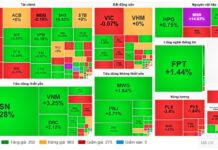
Statistics revealed over 600 declining stocks, while fewer than 200 stocks managed to rise. Adjustments of 3%-4% were prevalent, with several large-cap stocks even plummeting to their lower limits, indicating intense and widespread selling pressure.
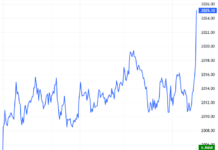
By the close of December 12th, the VN-Index had shed 52 points, a 3.06% decline, settling at 1,646 points, officially breaching the 1,650-point support level. The index’s downturn was significantly influenced by blue-chip stocks.
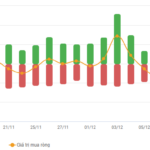
Notably, this marked the VN-Index’s fourth consecutive day of losses, following multiple unsuccessful attempts to reach new highs. Foreign investors’ selling pressure persisted, with net selling of nearly VND 600 billion on HoSE. However, compared to previous sessions, the selling pace showed signs of slowing. December 12th also marked the sixth straight session of net selling by foreign investors, further dampening market sentiment.

The sudden market plunge on December 12th left many investors anxious.
The session’s unexpected turn became a hot topic on investment forums. Many investors sought reasons for the market’s sharpest decline since mid-October, especially given the absence of significant negative macroeconomic news.
Leaders of securities companies unanimously stated, “There is no specific factor explaining the December 12th sell-off.” Mr. Truong Hien Phuong, Senior Director at KIS Vietnam Securities, analyzed that isolating individual factors makes it challenging to pinpoint a direct cause for the steep decline.
In reality, the market had been moving sideways for about two weeks prior, lacking strong enough news to generate new momentum. Investors remained cautious, mostly on the sidelines, while significant capital had not re-entered, leaving the market devoid of upward impetus.
Technically, Mr. Phuong noted that after a prolonged sideways phase, markets often experience a pronounced shift. This could be upward with positive news or downward with weak support and waning investor confidence. For December 12th, the downward scenario unfolded as selling pressure intensified late in the session, rapidly spreading and triggering a broad sell-off.
According to Mr. Phuong, the most notable factor in this session was the weakening of Vingroup-affiliated stocks. Over the past two months, while the VN-Index hovered around 1,600-1,800 points, support primarily came from these stocks. Excluding the Vingroup group, the VN-Index would have been around 1,500 points.
“With the market lacking supportive news and prolonged sideways movement, investor sentiment became more sensitive. Fears of further index declines triggered strong selling. Additionally, continued net selling by foreign investors, concentrated in large-cap stocks, made domestic investors—already fragile—even more cautious,” the expert analyzed.
Mr. Phuong also observed recent signs of significant capital exiting the market. Strong selling often occurred late in sessions, with large volumes pushing many stocks to their lower limits. This activity stemmed not from retail investors but primarily from institutions or large-scale investors, amplifying the impact swiftly and intensely.
Short-Term Risks Persist
From another perspective, Mr. Nguyen Thanh Lam, Director of Research and Analysis at Maybank Securities, attributed the sharp decline to a combination of factors. Primarily, foreign investors’ net selling throughout the previous week created substantial psychological pressure, especially amid weak market liquidity.
According to Mr. Lam, year-end periods typically see less active capital flows. Thus, even slightly stronger selling can significantly drive prices down. Additionally, the following week marks the final derivatives expiration of 2025.
“Derivatives expiration weeks often spark concerns, leading some investors to reduce stock exposure beforehand,” Mr. Lam commented.
He also mentioned worries about rising interest rates recently. However, he believes this factor may be seasonal and temporary, insufficient to create a prolonged negative trend for the market.
Given current market dynamics, leaders of several securities companies acknowledge short-term downside risks, particularly as some investors face margin calls. In the final session of the week, many investors indeed faced margin calls.
Mr. Truong Hien Phuong anticipates margin calls may continue in the next 1-2 sessions, forcing some investors to sell to meet additional collateral requirements, adding technical downward pressure.
However, this decline does not stem from macroeconomic risks or issues with businesses or the economy but primarily from technical and psychological factors. “If the market falls further, the selling pressure will likely weaken as forced selling exhausts. This is likely a short-term correction rather than a major risk.
For investors holding quality stocks, I believe there’s no need to sell at any cost now. Over the past 2-3 weeks, most stocks have dropped 5%-30%. Recovery attempts lasted only 1-2 sessions before sharper declines, leaving most investors in the red. Nonetheless, there’s no reason for panic selling, especially since the adjustment is technically driven,” Mr. Phuong added.
Promising Outlook for 2026
Ms. Hoang Thi Hoa, Senior Securities Director at Dragon Capital, noted that excluding Vingroup-affiliated stocks, the VN-Index’s current P/E ratio remains attractive.
The 2025 Q3 earnings reports of many companies show genuine operational improvements, not just capital flow effects. These profit fundamentals will determine future capital attraction.
According to Dragon Capital’s expert, Vietnam’s market is attractively valued, with potential for double-digit growth compared to single-digit growth in many other markets. Vietnam’s consumption growth highlights its strong appeal.
Mr. Vu Huu Dien, CEO of VPBank Securities, anticipates a highly favorable 2026 due to stable macroeconomic conditions and the Federal Reserve’s rate-cutting cycle.
After-tax profits of listed companies are expected to grow around 20%, a trend likely to continue, bolstering corporate valuations. Despite the VN-Index’s rise, many stocks remain attractively priced.
“Vietnam’s market upgrade and the return of foreign capital (projected up to USD 5 billion) will be crucial drivers, attracting major investment funds into Vietnam,” Mr. Dien expects.
Why Did the VN-Index Plunge 52 Points in the Final Session of the Week?

The selling pressure from this group swiftly spread to real estate, stocks, and banking sectors, causing a sharp decline in many blue-chip stocks and fostering a negative sentiment that dragged the market downward.
VPX Debuts on HOSE with a $2.4 Billion Valuation on December 11th

On December 11th, 1.875 billion VPX shares will commence trading on the HOSE at a reference price of VND 33,900 per share, propelling the company’s market capitalization to nearly VND 64 trillion and introducing a valuable addition of high-quality securities to the market.
Stock Market Outlook for the Week of December 8-12, 2025: Storm Clouds Gather
The VN-Index plummeted relentlessly in the final session of the week, marking its steepest weekly decline since the tariff shock in April 2025. Pessimism is spreading as the market loses all support from blue-chip stocks, while buying power remains insufficient to counter the mounting selling pressure.
Pinetree: Empowering the Next Generation of Self-Directed Investors

The digital age is revolutionizing how we seize financial opportunities. Amid this transformation, a new breed of investors, dubbed the “Self-Directed Investor Generation,” has emerged, increasingly defining their distinct DNA: Freedom – Automation – Confidence – Autonomy.
Chairman of the SSC: High-Quality FDI Enterprises to Rebalance Sectoral Structure on the Stock Market

The State Securities Commission (SSC) is aggressively promoting the listing of large-scale, high-performing foreign direct investment (FDI) enterprises, while streamlining the IPO and listing process to just 30 days.