













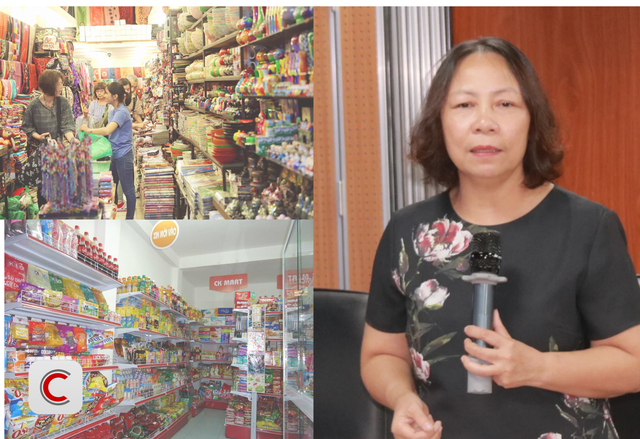
Ms. Le Thi Duyen Hai, Deputy Secretary General of the Vietnam Tax Consulting Association
During the seminar “Resolving Challenges in Transitioning from Lump-Sum Tax to Tax Declaration” for business households organized by TheLEADER, Ms. Le Thi Duyen Hai, Deputy Secretary General of the Vietnam Tax Consulting Association, provided insights into the current tax policies for business households.
She highlighted a common question among many: “Do individuals producing and selling vegetables, raising chickens, or selling food items like sticky rice or beans need to register their business and tax obligations?” This is a crucial question.
According to current tax policies, all business households must register their business and tax obligations upon starting operations. Once a household reaches the taxable threshold, they are required to declare and pay taxes. If the annual revenue exceeds 1 billion VND, they must also issue invoices.
“It’s essential to clarify that, except for households engaged in agriculture, forestry, fisheries, salt production, street vending, or small-scale seasonal trading, all business households must register their tax obligations, even if they are exempt from business registration,” Ms. Hai explained.
The tax registration is done using the individual’s identification number, which serves as the tax code for business activities, rather than a separate tax identification number.
Thus, all business households and individuals, except those in very small-scale or tax-exempt sectors like agriculture, forestry, fisheries, and salt production, must register their business activities. A business household can be an individual or a group of individuals forming a collective, all of whom must complete the registration process.
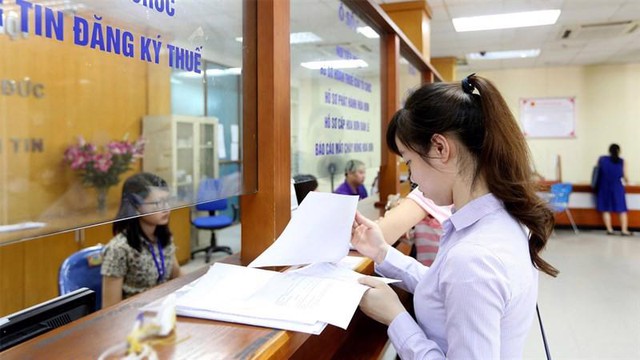
The expert noted that registration is conducted at the business registration office and is linked with the tax authority. The business registration form provides essential information for tax purposes, such as the start date of operations. Under the one-stop-shop mechanism, all households must register when their business activities trigger tax obligations.
In the tax management system, business households in retail, food services, and transportation sectors are required to register their business activities.
If a business household fails to register, their income may be classified as salary or wage income, unless it falls under categories like securities, capital transfers, or land-related activities, which are subject to different tax treatments.
Individuals with multiple income sources, including business, salary, securities, capital investments, and bank interest, will have some tax-exempt income and some income already subject to withholding tax. Salary and wage income is typically withheld at the source, while business income must be self-declared.
“Currently, some business households operate under the lump-sum tax regime. If they fail to register their business, their income may be treated as wage income. The tax rates differ significantly: wage income is taxed progressively up to 35%, while business income is taxed based on revenue as per VAT and personal income tax regulations,” Ms. Hai explained.
For households in agriculture, forestry, fisheries, salt production, street vending, and small-scale or seasonal trading, tax registration is done directly at the tax authority.
However, the expert pointed out that many business individuals are already under tax authority management, meaning they have registered for tax but not for business. They often register their business only when they need to issue invoices or declare income from commissions or agency fees.
“Many property rental households, despite earning business income, only register for tax and not for business. In the current context, it is advisable for business households, except those exempt, to register their business to ensure compliance with tax and other obligations, thereby protecting their rights,” Ms. Hai recommended.
Tax Expert: In a Household, If the Husband Produces Beans and the Wife Sells Them at the Market, Each is Considered a Separate Business Entity

Experts suggest that among the over 5 million business households, nearly half are operated by individuals, leading to variations in tax calculation methods.
Tax Expert: Selling 10 Chickens Daily and 30 Bowls of Pho Daily Reaches Annual Revenue of 500 Million VND

The Deputy Secretary-General of the Vietnam Tax Consultants Association suggests that while thresholds of 500 million or 1 billion VND may seem substantial for businesses in remote areas, they are relatively insignificant for those in major cities. Additionally, these thresholds are influenced by the profit margins specific to each industry.
Unprecedented: Two Vietnamese Banks Reach the 2 Million Billion Dong Deposit Milestone

Customer deposits in the banking system currently exceed 15 trillion dong. Of this, deposits at just these two banks amount to over 4 trillion dong.