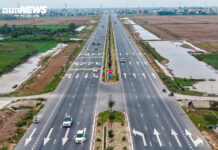
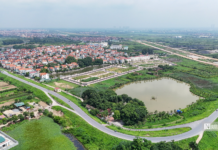
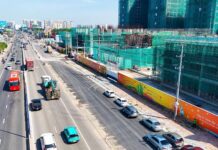
Deo Ca Group, representing a consortium of investors, has submitted a proposal to the Hanoi People’s Committee for the appraisal of the investment policy report on the Hong River Scenic Boulevard project.
The company presented two route options, along with detailed cost, technical, and timeline analyses. Specifically:
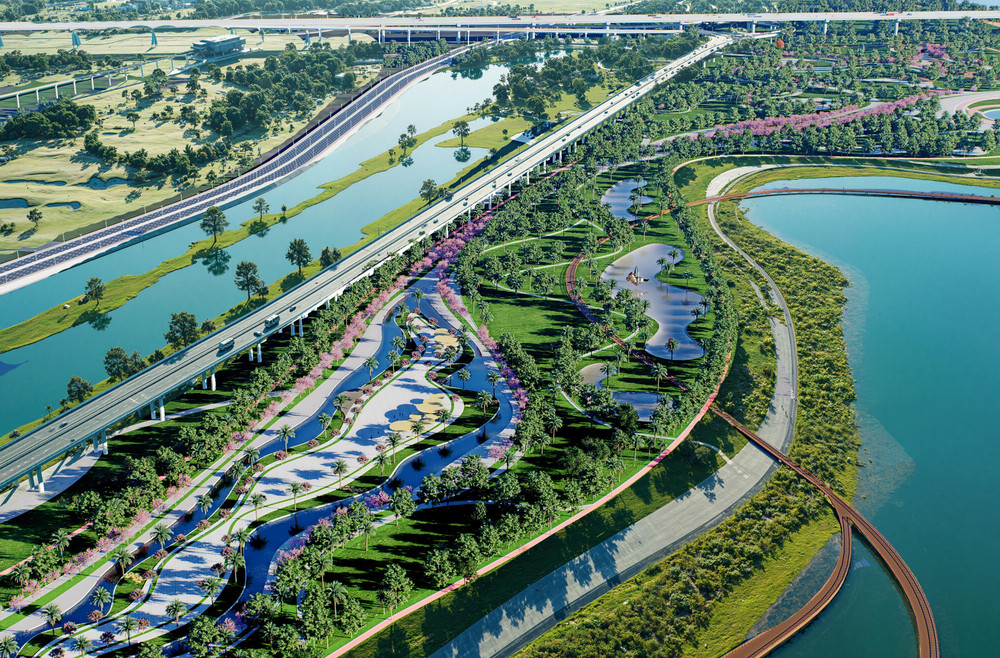
Option 1: With a total investment of over VND 288 trillion, this option prioritizes adjusting the route outside the dyke to minimize disruption to residents on both banks of the Hong River, reducing land clearance costs to approximately VND 40 trillion, or 15% of the total investment. Deo Ca asserts that this option ensures project completion by 2030.
Option 2: This option has a preliminary investment of over VND 348 trillion, involving the expansion of the existing dyke road, but with land clearance costs soaring to over VND 139 trillion, accounting for 41% of the total investment.
Simulations by the Institute of Water Resources Science confirm that both options ensure flood safety for the Hong River.
Deo Ca emphasizes that both options are designed with the principle of prioritizing transportation infrastructure, ensuring dyke safety, and minimizing land clearance impacts. This foundation will guide urban planning and redevelopment, aligning with the motto “Golden Roads Create Golden Values.”
These principles align with international best practices observed in smart cities like Chongqing (China) and Seoul (South Korea), where modern infrastructure development has been a catalyst for economic, social, and cultural growth over the past 15 years.
Major banks have expressed readiness to provide credit, highlighting the feasibility of Deo Ca’s proposal to the Hanoi People’s Committee.
Aiming to complete the riverbank roads by February 2030 to commemorate the 100th anniversary of the Communist Party of Vietnam, Deo Ca ensures that all investment options are highly feasible, avoiding delays.
Based on their research, Deo Ca recommends Hanoi select Option 1 and approve the formation of a new consortium, including Deo Ca, Geleximco, and other capable investors, to develop components on the left bank of the Hong River. If Option 2 is chosen, Deo Ca will establish a similar consortium for the assigned projects.
Should Hanoi assign Deo Ca to develop the right bank component, where land clearance and resettlement costs are substantial, the company requests permission to use land funds from the BT contract to secure loans from four state-owned commercial banks for land clearance and construction.
Additionally, Deo Ca proposes publicly auctioning land acquired from outside the dyke area to repay investment capital, credit, and interest, ensuring transparency.
Major banks such as BIDV, VDB, TPBank, ABBank, and MSB have expressed readiness to provide credit, commending the feasibility of Deo Ca’s proposal to the Hanoi People’s Committee.
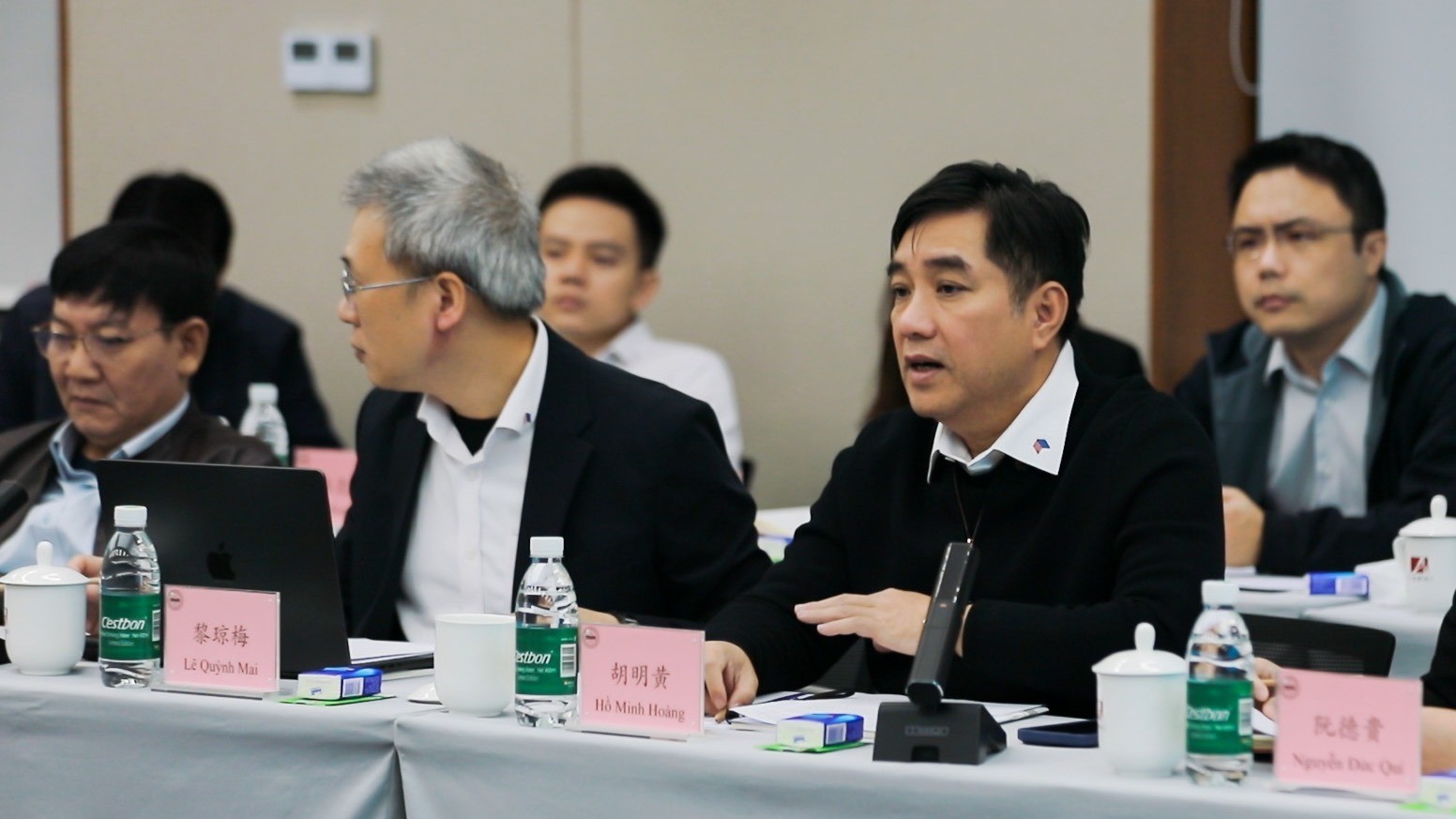
Mr. Ho Minh Hoang, Chairman of Deo Ca Group, during a working visit to China. Photo: Deo Ca.
Alongside preparing the investment report, Deo Ca has conducted extensive surveys and learned from riverfront infrastructure development models in South Korea and China.
In early October, Chairman Ho Minh Hoang met with Seoul Mayor Oh Se-hoon and Vietnamese Ambassador to South Korea Vu Ho. During a tour along the Han River in Seoul, the company noted well-designed elevated sections, including solutions to lower elevations, preserving scenic views and ensuring clearance with existing bridges. Some sections featured dense pillar placement, with over 30 river crossings, increasing concrete structure volume.
According to South Korean experts, the Han River Boulevard project, renovated since 2007, faced technical limitations that prevented the use of advanced technologies like TBM (Tunnel Boring Machine) to minimize environmental impact. These insights are valuable for Deo Ca in applying suitable technical solutions to the Hong River project.
South Korean experts also shared flood management strategies for flows exceeding 3,000 m³/s. Seoul maintains upstream reservoirs, regularly dredges the river, treats wastewater before discharge, and manages riverside vegetation to create sustainable tourism and ecological spaces.
The Han River’s transportation model, including bus networks and monorail studies, is considered suitable for Deo Ca’s proposed Hong River development.
Previously, a Deo Ca delegation met with POSCO to discuss cooperation opportunities in the Hong River Scenic Boulevard project and other PPP infrastructure projects. POSCO is expected to provide steel construction solutions, modular technology, and materials for railway, bridge, and tunnel projects in Vietnam. Deo Ca is also fostering partnerships with South Korean firms like Yooshin Engineering, Hoban Construction, and KIND.
In June 2025, a consortium led by Deo Ca Group surveyed Chongqing (China) to study infrastructure development models integrated with urban planning, transportation connectivity, and river management. The delegation focused on flood control solutions for the Yangtze and Jialing Rivers, renowned for blending modern transportation technology with natural landscapes.
Seamless Infrastructure Advantages Position Imperia Holiday Ha Long as the New Coastal Apartment Market Highlight
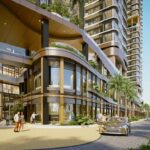
The robust development of infrastructure and year-round tourist influx are propelling Ha Long into a new growth cycle for its condominium market. Amid this landscape, coastal real estate—particularly projects boasting prime locations, excellent connectivity, and high exploitation value—continues to demonstrate enduring appeal. Imperia Holiday Ha Long emerges as a standout choice in this evolving scenario.
Province with Per Capita GRDP 1.6 Times the National Average Aims to Become a Centrally-Governed City by 2030
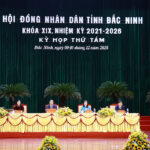
On the afternoon of December 10th, during the 8th session of the 19th term of the People’s Council of Bac Ninh Province, Chairman of the Provincial People’s Committee Pham Hoang Son delivered a speech clarifying several issues related to the content of inquiries. He also addressed the socio-economic development tasks for 2025 and outlined the goals, tasks, and solutions for 2026.
Proposed Riverside Avenue: Hanoi Opts for Existing Dyke Route Along Red River Scenic Corridor

The proposed route along the existing embankment has been deemed superior by the Hanoi Department of Planning and Architecture. This option minimizes impact on riverbanks, aligns with transportation planning, and significantly reduces land clearance requirements.
80% Public Investment Capital Allocated to Infrastructure: Experts Highlight Imbalance
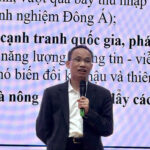
According to Dr. Can Van Luc, international standards indicate that infrastructure spending typically accounts for only 55-60% of total public investment. However, in Vietnam, this figure reaches up to 80%, yet still falls short of meeting demand. Meanwhile, allocations for technology, healthcare, education, and climate change remain significantly low.
Real Estate Firm Experiences Explosive Growth in 9 Months, Analysts Predict 2025 Sales Surge Fueled by Infrastructure and Urban Migration Trends
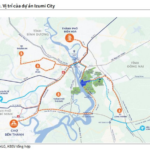
This forecast hinges on the anticipated active launch of the Izumi City project throughout the remainder of 2025, coupled with the market’s capacity to absorb low-rise residential products in provinces such as Long An and Can Tho.