














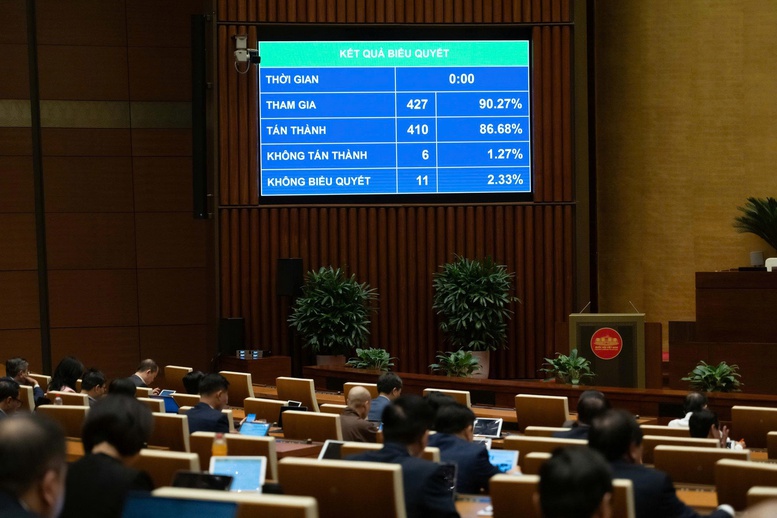
Voting Results for the National Assembly Resolution on the Investment Policy for Gia Binh International Airport Construction Project
On December 11, the National Assembly conducted a vote to adopt the Resolution on the Investment Policy for the Gia Binh International Airport Construction Project.
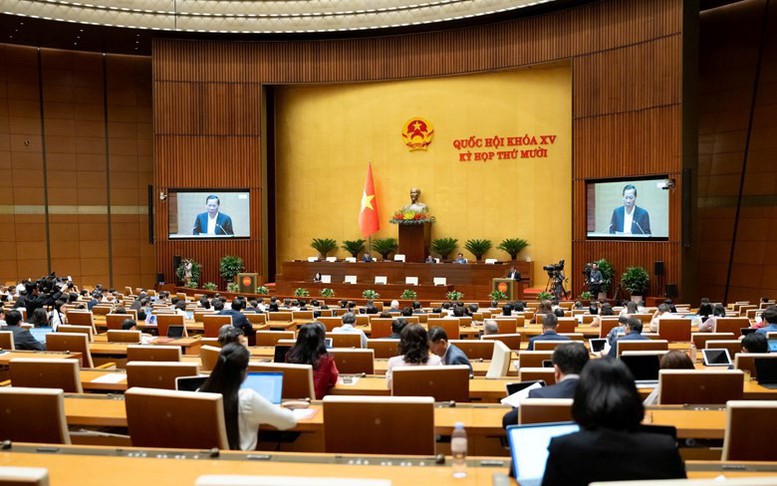
Prior to the vote, the National Assembly heard a report from Minister of Construction Tran Hong Minh, authorized by the Prime Minister, presenting the Explanation, Absorption, and Refinement Report on the draft Resolution.
Clarifying Impact Assessments and Relationships with Transport Modes
According to the Explanation, Absorption, and Refinement Report, Minister Tran Hong Minh highlighted the first clarification regarding the impact of Gia Binh International Airport on transport modes and neighboring airports.
RELATED NEWS

During the development of national specialized plans for five transport sectors, the Ministry of Construction directed the calculation of transport demand across modes, including air transport demand in the Northern region, particularly the relationship between Gia Binh International Airport and Noi Bai International Airport, to ensure efficient operation between the two airports.
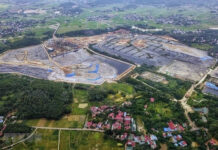
The report stated that land clearance for approximately 922 hectares of agricultural land is targeted for completion by Bac Ninh Province in December 2025. The remaining areas are expected to be completed in 2026.
Bac Ninh Province has handed over nearly 700 hectares to the investor for construction. Regarding resettlement, the province has planned two resettlement areas covering 337 hectares and two cemetery parks. The infrastructure for the resettlement areas is expected to be completed in Q1/2026, while public facilities, religious, and cultural sites are slated for completion by the end of 2026.
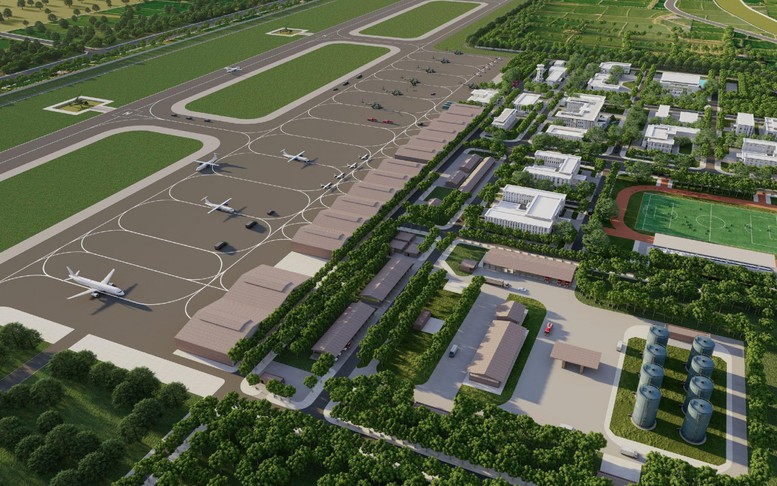
The investor is currently constructing facilities for APEC 2027, including runways, taxiways, aircraft parking areas, a VIP terminal, and an air traffic control tower. According to a survey by the National Assembly delegation, the investor has mobilized significant machinery, equipment, and labor for land leveling, weak soil treatment, and large-scale piling. Construction is scheduled for completion by the end of 2026, with trial operations beginning in February 2027.
Assessing Impacts on Historical Sites, Food Security, and Livelihoods
Regarding impacts on historical and cultural sites, the project affects 25 sites, including one national-level and 11 provincial-level sites. Relocation of these sites follows the principle, “Where residents resettle, the sites will follow,” with community consultations ensuring that relocation does not compromise the original values of the sites.
Concerning food security, the Ministry of Agriculture and Environment noted that the conversion of rice land for the project is included in the adjusted national land use plan submitted by the Government to the National Assembly. Bac Ninh Province affirmed that the project will not significantly impact local food demand, thus posing no threat to national food security.
In terms of livelihoods, the project requires 1,200–1,500 workers during construction, primarily employing local labor. Upon completion, it will create approximately 10,000 jobs, with at least 30% filled by local residents. The investor is collaborating with local authorities to provide vocational training and skill development tailored to project needs.
Finalizing Planning and Investing in Connectivity Infrastructure
The Explanation Report outlines that the connectivity infrastructure for Gia Binh International Airport is planned to seamlessly link with key highways, including Hanoi – Lang Son, Hanoi – Thai Nguyen – Cao Bang, Hanoi – Hai Phong – Quang Ninh, the Capital Region Ring Road 4, and direct connections to Hanoi. The project also connects to two high-speed rail lines: Hanoi – Quang Ninh and the urban rail network.
Regarding investment, in addition to existing highways, the Government has tasked Hanoi and Bac Ninh Provinces with developing the 37 km Hanoi – Gia Binh International Airport route under the BT model, with a 120 m cross-section, scheduled for completion in 2026–2027. The Ring Road 4 project is underway in Hanoi, and the railway line through the area is being expedited to enhance connectivity between Gia Binh and Hanoi, as well as neighboring provinces.
The project is a strategic initiative, crucial for developing the Capital Region’s aviation infrastructure. Gia Binh International Airport will complement Noi Bai Airport, leveraging advantages in space, connectivity, and infrastructure, while driving growth in industries, logistics, e-commerce, tourism, and services.
Gia Bình International Airport: A National Growth Catalyst and Breakthrough Hub

The years 2025-2026 herald a transformative era for Vietnam’s aviation industry, as pivotal national infrastructure projects enter a phase of aggressive implementation. Gia Binh International Airport (Bac Ninh), the largest private airport project in Vietnam’s history, has received unanimous investment approval from the National Assembly. This landmark development will solidify Vietnam’s position on the regional and global aviation map.
Vietnam’s National Assembly Approves $8.5 Billion ‘5-Star’ Gia Binh Airport Project

The Gia Binh International Airport project, with a total investment of approximately VND 196,378 billion, is strategically located across the communes of Gia Binh, Luong Tai, Nhan Thang, and Lam Thao in Bac Ninh province.
Gia Bình 5-Star Airport: A $8.5 Billion Investment with a 70-Year Operational License

Gia Binh Airport aspires to become the premier aviation gateway to Northern Vietnam, serving as a vital hub for passenger and cargo transit, as well as a leading maintenance, repair, and overhaul (MRO) center for aircraft in the Asia-Pacific region.
State Land Reclamation: National Assembly Approves Three Additional Scenarios for Government Land Recovery

On the morning of December 11th, with 428 out of 437 delegates in attendance voting in favor, the National Assembly adopted a resolution outlining specific mechanisms and policies to address challenges and obstacles in the implementation of the Land Law.
New Regulations on Converting Garden Land to Residential Land: Reduced Land Use Fees for Citizens

Residents will benefit from reduced land use fees when converting garden land to residential land, effective from the beginning of 2026.