Recently, the Heavily Wounded Veterans Company of Hoa Binh, a business associated with the renowned entrepreneur “Beer Road,” unveiled the results of a groundbreaking urban infrastructure model test in Vietnam. This innovative design integrates highways, urban railways, commercial spaces, and social housing into a single four-tiered structure—a first for the country.
The entire assembly, including construction, assembly, concrete pouring, and load testing, was completed in just 10 days with only 50 workers. Chairman Nguyen Huu Duong emphasized its rapid deployment, low investment cost, and environmental friendliness. The technology has been patented domestically and is currently being registered internationally.
This model extends a series of projects once deemed “unrealistic,” yet Mr. Duong persistently pursued them. From the “world’s best and cheapest” highway to the TOD model integrating social housing, and gold-plated structures that have made waves domestically and internationally.
Once planned to sell a gold-plated hotel to boost cash flow, but unexpectedly changed his mind at the last minute
Entrepreneur “Beer Road” gained prominence for his signature “gold-plating” style, a unique hallmark of Hoa Binh’s real estate projects.
From the Hoa Binh Somerset twin towers ($26 million) to the Hoa Binh Green City complex with gold-plated balconies, lobbies, corridors, and elevators, to the Danang Golden Bay hotel with over 1,800 rooms featuring an infinity pool gold-plated on the 29th floor. In 2020, a gold-plated hotel in Hanoi debuted with over $100 million in capital, where even bathrooms, sanitary ware, and interiors were coated in 24K gold.
However, the COVID-19 pandemic severely impacted Hoa Binh’s ecosystem, resulting in annual losses of approximately VND 1 trillion in revenue and VND 500 billion in profit for three consecutive years. Cash flow pressures led Mr. Duong to consider an unprecedented move: selling the gold-plated hotel in Hanoi for a starting price of $250 million.
Yet, Mr. Duong unexpectedly reversed this high-profile decision. In September 2023, he withdrew the sale after Hanoi approved Hoa Binh’s proposal to develop two social housing projects. He stated, “The company now has revenue and funds… there’s no need to sell the hotel anymore.”
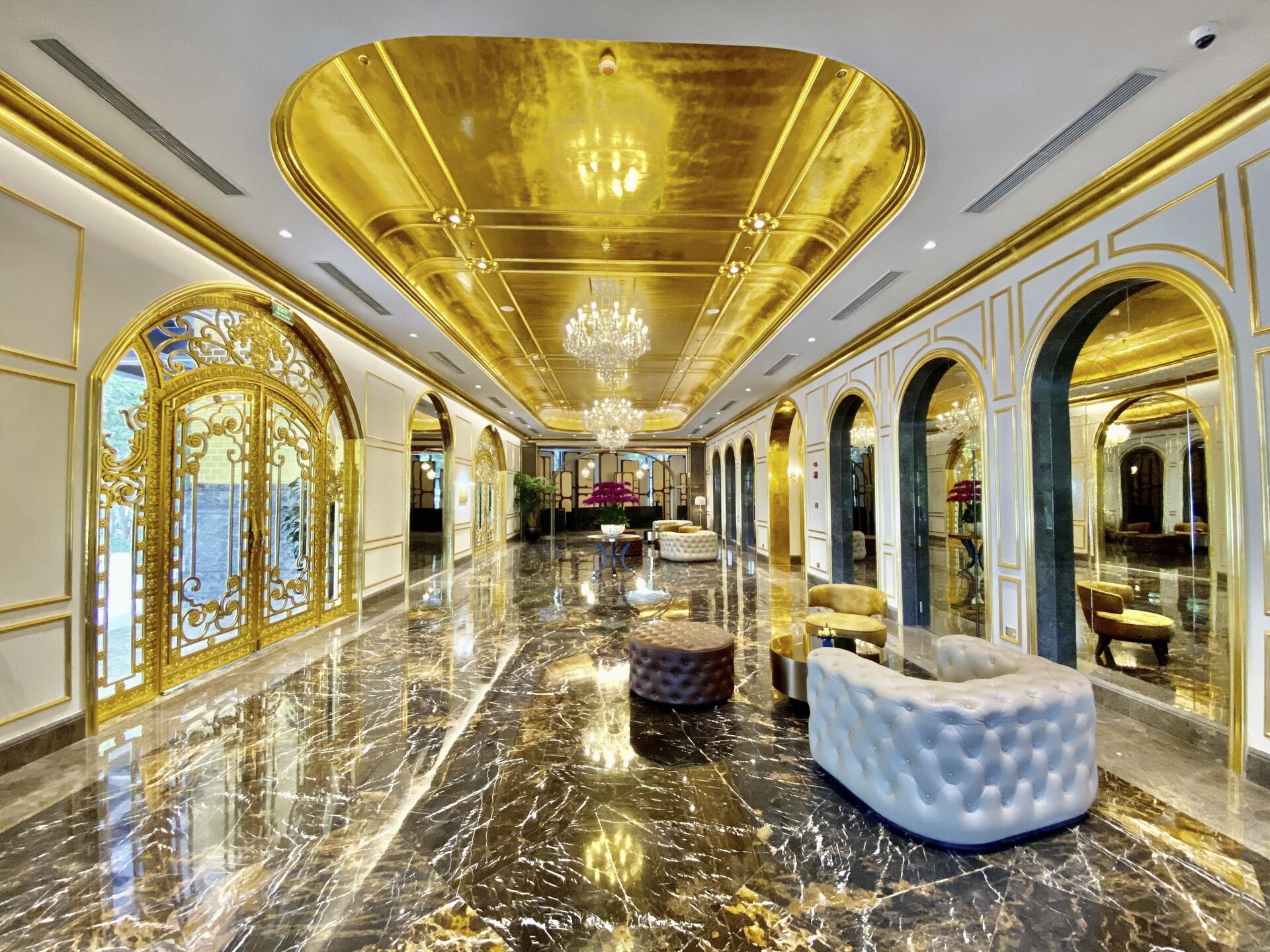
Inside the gold-plated Dolce by Wyndham Hanoi Golden Lake hotel of entrepreneur “Beer Road.”
Nevertheless, financial challenges persist. In early August, a debt of over VND 560 billion related to the Hoi An Golden Sea project in Quang Nam was again put up for sale by the bank.
Cash flow issues remain unresolved despite Mr. Duong’s continued pursuit of signature projects. As of June 30, 2025, Duong Man’s undistributed after-tax profit was negative by over VND 270 billion. On the other side of the balance sheet, the company’s total liabilities exceeded VND 1.1 trillion.
The dream of the “World’s Best, Lowest-Cost” highway
In 2023, Mr. Duong marked a turning point by venturing into large-scale transportation infrastructure. At the inauguration of a 1 km sample road on October 5, 2023, he introduced a soil-free road foundation technology using precast pile slabs—a rigid hollow structure with precast slabs and piles. This design reduces settlement, saves land, and is particularly suitable for the weak foundations of the Mekong Delta.
He asserted, “This highway is the best in the world with the lowest cost globally. Its construction cost is only two-thirds that of global highways. Currently, Vietnam’s highway construction costs are the highest globally, yet their lifespan is the shortest.”
Two sample roads (one in the plains and one in the mountains) underwent static and dynamic load testing, exceeding standards: withstanding impacts of 250-270 tons (above the 180-ton standard), resisting magnitude 8 earthquakes, producing noise levels below 35 dB, and boasting a lifespan of over 150 years. Hoa Binh even offered to donate 1 km of sample road for free to demonstrate its effectiveness.
Regarding his motivation for entering highway construction, Mr. Duong shared with the Manager Magazine: The opportunity to build highways arose from a desire to create high-quality roads at low costs and with high durability, contributing to the nation’s economic growth.
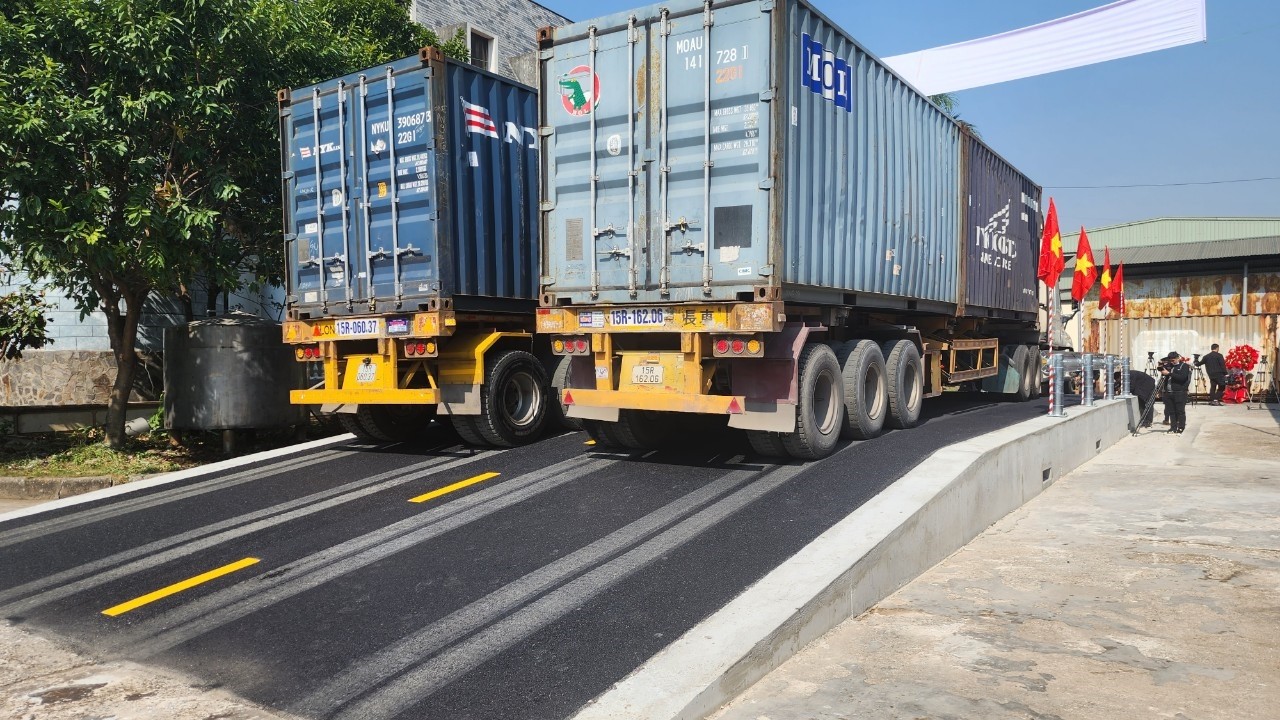
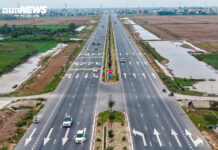
Hoa Binh’s sample highway section.
Recently, on March 4, 2025, Deputy Prime Minister Tran Hong Ha chaired a meeting with Hoa Binh Company, scientific experts, the Ministry of Construction, and the Ministry of Science and Technology regarding the construction of elevated highways and urban railways using V+ high-strength concrete pile hollow slab technology.
According to Hoa Binh’s report, this new technology standardizes precast concrete components for elevated highways and urban railways, produced en masse in factories. This eliminates the need for on-site concrete pouring for piles and beams, speeding up construction and ensuring quality. Mass production in factories also significantly reduces costs.
Even social housing features gold-plated fixtures and proposes building 5-story structures above metro lines
Beyond infrastructure, Mr. Duong continues to pursue high-standard yet affordable social housing models.
A standout example is the Vinh Hung social housing project, which began construction in late August 2025. Mr. Duong described it as the “three mosts”: most centrally located, most environmentally friendly and smart, and most fully equipped with amenities in the podium.
This social housing project also drew attention for its Toto sanitary ware with gold-plated faucets. Mr. Nguyen Huu Duong noted that a model house featuring Toto gold-plated fixtures was showcased four years ago but only recently received construction approval. He emphasized that no other social housing project in the country uses gold-plated Toto sanitary ware.
“Hoa Binh’s social housing features Mitsubishi elevators and Toto sanitary ware—the highest standards in commercial housing. I gold-plated the faucets as a gift to everyone, at no additional cost,” Mr. Duong shared.
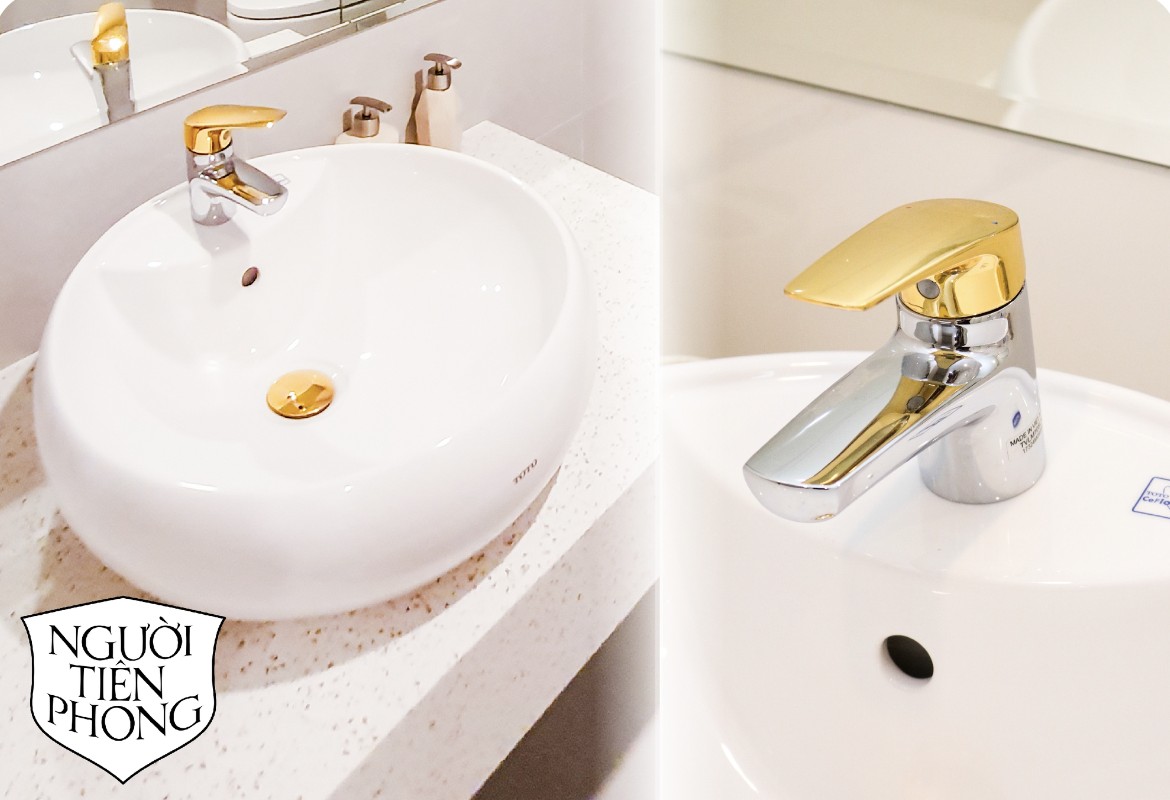
Sanitary ware at the Vinh Hung high-rise social housing project features Toto fixtures with gold-plated faucets.
In addition to the gold-plated social housing project, the recently tested multi-tiered “Highway and Urban Railway” model at 321 Vinh Hung suggests the possibility of building 3 to 5 stories above metro lines, creating 60,000 to 100,000 social housing units.
Traditionally, Hanoi would need to allocate VND 62 trillion for this metro line, taking 5-7 years to complete. With this model, construction time is reduced to about 1 year, and the state would not only avoid budget expenditures but also potentially earn VND 3 trillion in VAT from social housing sales.
The expected selling price is VND 25 million per square meter, with construction costs around VND 12 million; the difference would offset road construction expenses. Thus, the smallest unit would cost just over VND 1 billion.
North Ninh Cancels Hundreds of Contracts, Reclaims Numerous Social Housing Units

Revised Introduction:
Bắc Ninh is tightening regulations on social housing, reclaiming numerous units sold to ineligible buyers. Authorities also warn against widespread illegal deposit and reservation practices plaguing multiple projects.
North Ninh Recovers and Terminates Contracts for Hundreds of Social Housing Units Sold to Ineligible Buyers
The Department of Construction in Bac Ninh Province has conducted inspections, leading to the revocation and cancellation of contracts for hundreds of social housing units sold to ineligible buyers. Additionally, they have issued warnings regarding illegal capital mobilization practices observed in several projects.
Prime Minister Demands Strict Action Against Profiteering in Social Housing Procedures and Transactions
Prime Minister Pham Minh Chinh has issued Directive No. 34/CT-TTg, dated December 11, 2025, aimed at rectifying and enhancing transparency in the approval, sale, and rental processes of social housing, while actively preventing corruption and misconduct in this critical sector.
What is the Minimum Income Required to Qualify for Social Housing Under the New Regulations?

Decree 261/2025/NĐ-CP has revised the income thresholds for eligibility to purchase social housing. The following three questions will help you assess your understanding of these updated regulations.
Elevating Hanoi and Ho Chi Minh City to Global Civilized Urban Centers: A Vision by the Politburo

The Politburo has mandated a comprehensive review and revision of specialized mechanisms and policies to empower major cities, including Hanoi and Ho Chi Minh City, to maximize resource mobilization for large-scale infrastructure projects. These initiatives aim to ensure seamless connectivity and synchronized development across urban landscapes.