







The establishment of a gold trading exchange is currently under scrutiny by regulatory bodies, experts, and the business community, particularly following the National Assembly’s approval of the amended Investment Law. This law marks a significant step by removing gold jewelry from the list of conditional business sectors. Representatives from the State Bank of Vietnam emphasize the need for a cautious approach in developing this model to achieve a dual objective: fostering market growth while maintaining monetary security.

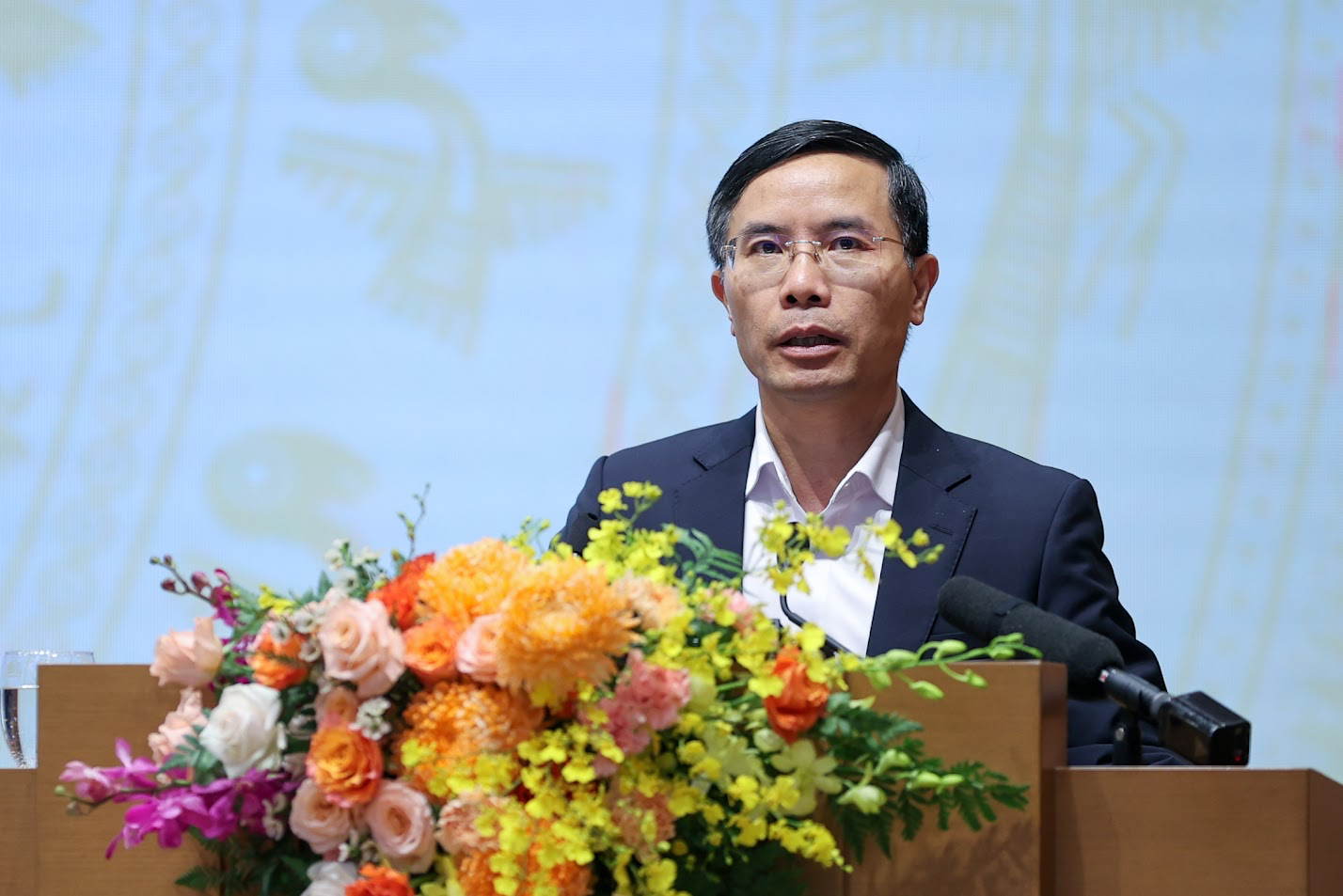
Mr. Dao Xuan Tuan, Director of the Foreign Exchange Management Department, State Bank of Vietnam: The study of the gold trading exchange model should be approached comprehensively, cautiously, with a clear roadmap, and aligned with macroeconomic goals and Vietnam’s realities.
Speaking at the recent “Seminar on the Development of the Gold Jewelry Market and the Establishment of a Gold Trading Exchange,” Mr. Dao Xuan Tuan, Director of the Foreign Exchange Management Department at the State Bank of Vietnam (SBV), noted that Vietnam’s gold market is closely linked to the currency market and heavily influenced by public sentiment and expectations. Gold prices not only reflect supply and demand but also impact macroeconomic stability. As the regulatory body for currency and banking activities, the SBV aims to achieve a dual goal: promoting the gold market while ensuring macroeconomic stability, monetary security, and banking system safety.
“On December 11, the amended Investment Law was passed, with Appendix 4 removing gold jewelry from the list of conditional business sectors. This is a significant advancement and a favorable foundation for refining policies and developing the gold market,” Mr. Dao Xuan Tuan stated.
Regarding gold market management, the SBV representative noted that policy changes in this area are complex. However, recent developments indicate genuine reform potential, and Vietnam is on the right track. The long-standing habit of gold hoarding among the public has profoundly impacted the monetary and financial markets, making the study of a suitable model for a modern gold market essential.
Concerning the gold trading exchange model, the Director of the Foreign Exchange Management Department explained that a modern exchange is expected to enhance transparency, standardize transactions, and reduce market fragmentation. However, international experience highlights risks associated with inadequate legal frameworks, supervisory mechanisms, and inter-agency coordination.
Therefore, the SBV representative stressed that the study of the gold trading exchange model should be approached comprehensively, cautiously, with a clear roadmap, and aligned with macroeconomic goals and Vietnam’s realities. International insights and experiences will be valuable references in policy formulation.
“Moving forward, the State Bank of Vietnam will continue collaborating with ministries, the Vietnam Gold Business Association, and international organizations to refine and submit the development plan for this model to the Government. The goal is to establish a transparent, healthy gold market that meets international standards,” the Director of the Foreign Exchange Management Department added.
Emphasizing the necessity of establishing a gold trading exchange, Mr. Dinh Nho Bang, Chairman of the Vietnam Gold Association, noted that international experience shows an efficient gold exchange is crucial for a healthy domestic gold market. This contributes to the overall development of the financial market and the economy, especially during periods of gold market volatility. Establishing and operating an effective gold exchange will benefit citizens, investors, and businesses, ensuring a stable supply of raw gold. This aligns with the goal of positioning Vietnam as a regional hub for high-quality jewelry production and export. Currently, Vietnam’s jewelry industry has significant potential but is constrained by a lack of raw materials.
In practice, leading gold jewelry exporters such as China, India, and Turkey all have gold trading exchanges. These exchanges ensure a steady supply of raw materials for production, create jobs, generate foreign exchange earnings, and positively contribute to economic growth.
Drawing on international experience, Mr. Albert Cheng, Secretary-General of the Singapore Gold Association, noted that China established the Shanghai Gold Exchange (SGE) in 2002. As China’s largest physical gold trading center, the SGE was a strategic move to modernize the gold market and enhance transparency. Initially, the SGE faced challenges related to operational mechanisms, participant engagement, and liquidity. However, it has since developed comprehensively, becoming an effective financial management tool for Beijing and competing with international markets.
The Secretary-General of the Singapore Gold Association recommended that Vietnam establish a dedicated task force to liaise between the industry and the Government, ensuring a suitable roadmap for the sustainable development of the gold market.
Shaokai Fan, Asia-Pacific Regional Director of the World Gold Council, suggested that Vietnam could choose from various models based on its regulatory objectives. Before selecting a model, it is essential to clearly define regulatory goals, address core issues, and determine the desired role of the gold market in the economy. When establishing a gold trading exchange, it is crucial to assess whether it will promote gold exports and the development of the jewelry industry.
Unveiling Vietnam’s Longest Expressway: A $470 Million Masterpiece Set to Open in One Week

By December 19th, the 11-trillion-VND Huu Nghi – Chi Lang Expressway will open, providing a faster route to the international border gate. Spanning nearly 60 kilometers, 2,800 personnel and 1,230 pieces of equipment are working around the clock in three shifts to meet the deadline.
AEON MALL Huế Unveils New Project in the Ancient Capital, Marking a Successful Partnership with Industry Giants

Building on the success of our partnership with AEON MALL Hue, the largest shopping center in Central Vietnam, Newland Investment Corporation proudly broke ground on a new project in the heart of Hue City on the morning of December 10, 2025.
AkzoNobel: Pioneering Market Leadership with Sustainable Competitive Advantage

Sustainable development is not merely a trend for AkzoNobel; it has become the core driving force behind all our operations.
“Heartfelt Dilemma: Ho Chi Minh City Vendors Forced to Raise Prices”

Amid rising input costs and recalculated tax obligations, proprietors are compelled to adjust pricing to offset expenses and sustain operations.
Record-Breaking Year: Vietnam Recovers Over 27.4 Trillion VND in Corruption Assets and Economic Gains
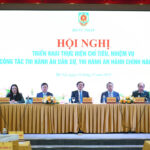
In 2025, Civil Judgment Enforcement Agencies nationwide surpassed the targets set by the National Assembly, notably achieving a remarkable recovery of over 27,400 billion VND in assets from corruption and economic crimes. This represents a significant increase of more than 5,230 billion VND compared to 2024.