













The Vietnamese government has issued Decree 318/2025, detailing provisions of the 2025 Labor Law regarding labor registration and the labor market information system. This marks a significant step toward modernizing labor management, facilitating policy planning, and fostering a synchronized labor market development nationwide.
Comprising 4 chapters and 25 articles, the decree establishes a unified legal framework for the development, connection, and utilization of the national labor database. It clearly defines three groups of individuals required to register for labor.
The first group includes workers subject to compulsory social insurance under the 2024 Social Insurance Law.
The second group comprises employed individuals not covered by compulsory social insurance.
The third group consists of the unemployed, defined as those without jobs, actively seeking employment, and ready to work.
Civil servants, public employees, and military personnel are excluded from the scope of this decree.

Civil servants, public employees, and military personnel are excluded from the scope of this decree.
Self-Declaration by Workers
A notable feature of the decree is the clear delineation of declaration responsibilities. Workers are responsible for self-declaring and are legally accountable for the accuracy and honesty of the information provided. Employers must collect, provide, and update complete worker information upon recruitment, changes, or termination of employment relationships.
Labor registration information is standardized and expanded into four main categories: basic personal details; educational qualifications, vocational training, and skill certifications; employment status, job requirements, and unemployment duration; social insurance and unemployment insurance details, along with specific characteristics such as disabilities, poverty status, near-poverty status, veterans, and those who have completed military or police service.
For workers subject to compulsory social insurance, labor registration is integrated directly into the social insurance declaration form. The data, once received, is automatically synchronized with the national labor database.
For workers not covered by compulsory insurance and the unemployed, registration is conducted entirely online via the National Employment Service Center at vieclam.gov.vn or the VNeID application. The system processes and provides feedback immediately upon completion of the declaration.
Decree 318/2025 takes effect on January 1, 2026, with a phased implementation schedule. Specifically, the group subject to compulsory social insurance will begin on July 1, 2026, while the remaining labor groups will start on January 1, 2027.
Critical Update: Mandatory Social Insurance Contributions to Change Based on Minimum Wage from January 1, 2026—Employees, Take Note!
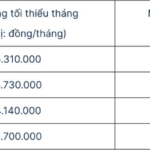
On November 10, 2025, the government issued Decree 293/2025/NĐ-CP (effective January 1, 2026), outlining regional minimum wage rates for employees under labor contracts. Consequently, the minimum social insurance contribution wage will also adjust starting in 2026.
Revitalizing Post-Illness Recovery: Workers Entitled to Over 700,000 VND Daily Allowance

Unwind and recharge with confidence. Our comprehensive benefits package includes a dedicated wellness day, offering 30% of your reference salary to support your recovery after illness.
Quadruple Pension Increase: Who Qualifies?

The 2024 Social Insurance Law, effective from July 1, introduces significant changes, most notably a substantial increase in the one-time retirement allowance, which can be up to four times higher than the previous regulation.
Mastering the Art of Persuasion: The Ultimate Guide to Captivating Your Audience

Under the amended Social Insurance Law, effective July 1, 2025, male workers with over 35 years of social insurance contributions and female workers with over 30 years will be entitled to a one-time allowance calculated using a new method.