



















A Trillion-Dollar Market
According to the “Global Wellness Economy Monitor 2024” report by the Global Wellness Institute (GWI), healthcare real estate is the fastest-growing sector in the global economy, valued at $6.3 trillion. The most significant growth comes from the middle-aged and elderly population—groups with a high demand for safe, serene living spaces that reduce stress and support health therapies.
Over the past decade, Asia has witnessed a profound shift in the concept of housing. While previously owning a home was associated with material comforts, today, health, energy rejuvenation, and long-term quality of life are the new benchmarks.
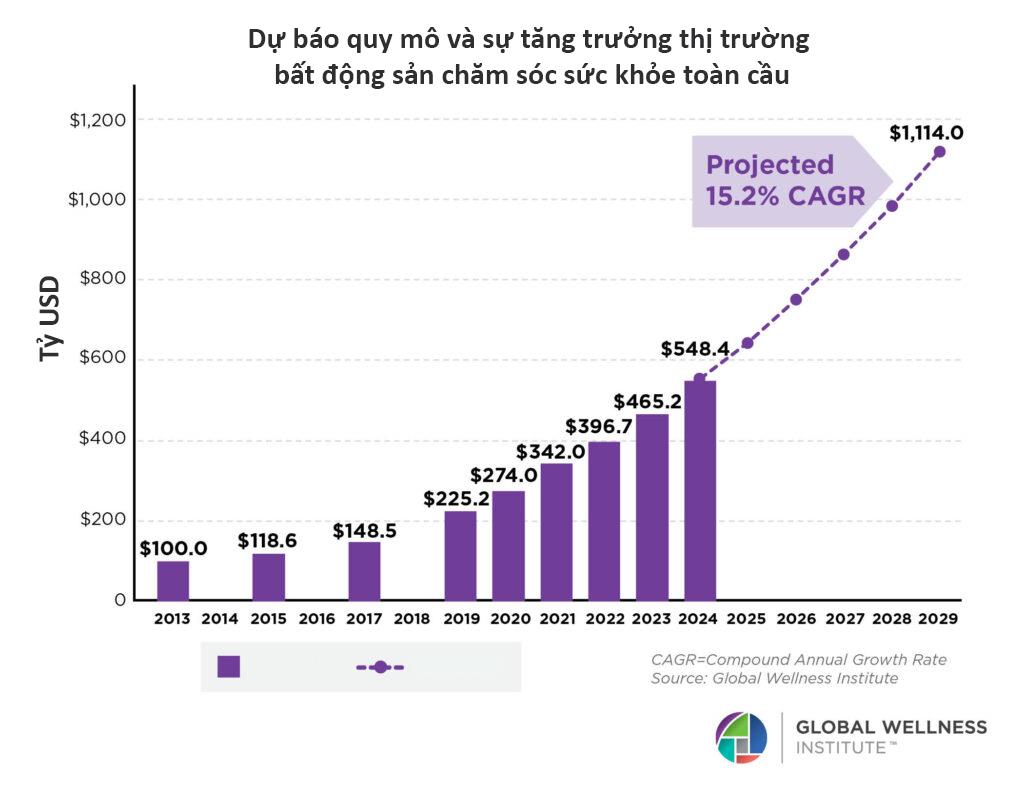
The healthcare real estate market is projected to reach $1.114 trillion by 2029. Source: GWI
Demographic changes, particularly rapid aging in countries like Japan, South Korea, Singapore, and China, have fueled demand for therapeutic real estate. This has positioned the wellness real estate market in the region to surpass tens of billions of dollars, becoming one of the fastest-growing sectors in the global health economy.
This trend is not a fleeting fad but a response to genuine societal needs. The elderly require specialized care spaces; the emerging middle class seeks balance; and busy professionals desire stress relief and energy recovery within their homes.
Across Asia, models like “healing homes,” “medical residences,” and “longevity living” are no longer novel and have become the new standard for luxury segments. Real estate is thus becoming an integral part of the health ecosystem, closely linked with medicine, natural therapies, and mental well-being.
Vietnam’s Advantages in Developing Therapeutic Residences
Vietnam is no exception to this trend. Experts believe that as the population ages, chronic disease pressures rise, and post-pandemic wellness demands surge, the domestic market has a rare opportunity to pioneer innovative products.
Commenting on this trend, Mr. Nguyen Chi Thanh, Vice Chairman of the Vietnam Real Estate Brokerage Association, stated that real estate models integrated with healthcare are emerging as a genuine market need.
Mr. Thanh highlighted Vietnam’s advantages, driven by an aging population, rising wellness tourism, and healthcare potential. However, he emphasized that this sector requires investors with operational expertise and deep healthcare knowledge. “Only when these elements align can healthcare real estate deliver real value to residents and business efficiency to developers.”
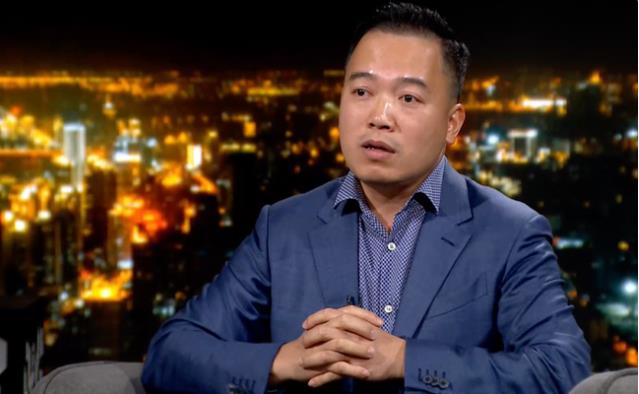
Mr. Nguyen Chi Thanh, Vice Chairman of the Vietnam Real Estate Brokerage Association
In this context, Onsen Fuji is emerging as a pioneer in Vietnam’s wellness real estate trend. The company has launched projects like Lynn Times Onsen Retreat in North Hanoi, Lynn Times Onsen Retreat in Hung Yen, and Tokyu Retreat, featuring the Thera Home model. This model focuses on a comprehensive therapy ecosystem leveraging natural hot springs, modern medicine, and on-site healthcare. Thera Home is one of Vietnam’s first representatives to align with Asia’s billion-dollar wellness trend, positioning itself as a “therapeutic residence” where living spaces are designed as healing environments, not just dwellings.
Unlike traditional real estate, which prioritizes physical amenities, Thera Home centers on restoring body, mind, and spirit. The integration of nature, medicine, and mental therapy is evident in both apartment designs and communal spaces, creating an environment that fosters daily health regeneration.
Thera Home’s most distinctive feature is its 24/7 on-site healthcare and nursing system, a model typically found in advanced wellness economies.
The on-site medical center acts as the project’s “operational heart,” offering residents regular health monitoring, biometric checks, and immediate emergency support. This integration of healthcare into daily life reassures the elderly, those with chronic conditions, and individuals needing recovery care, eliminating reliance on external medical systems.
Beyond 24/7 healthcare, Thera Home incorporates biosensor technology for daily wellness management. These sensors help regulate heart rate, blood pressure, sleep patterns, and oxygen levels, maintaining bodily balance, reducing stress, and improving sleep quality—crucial for long-term health, especially among the elderly and high-stress individuals.
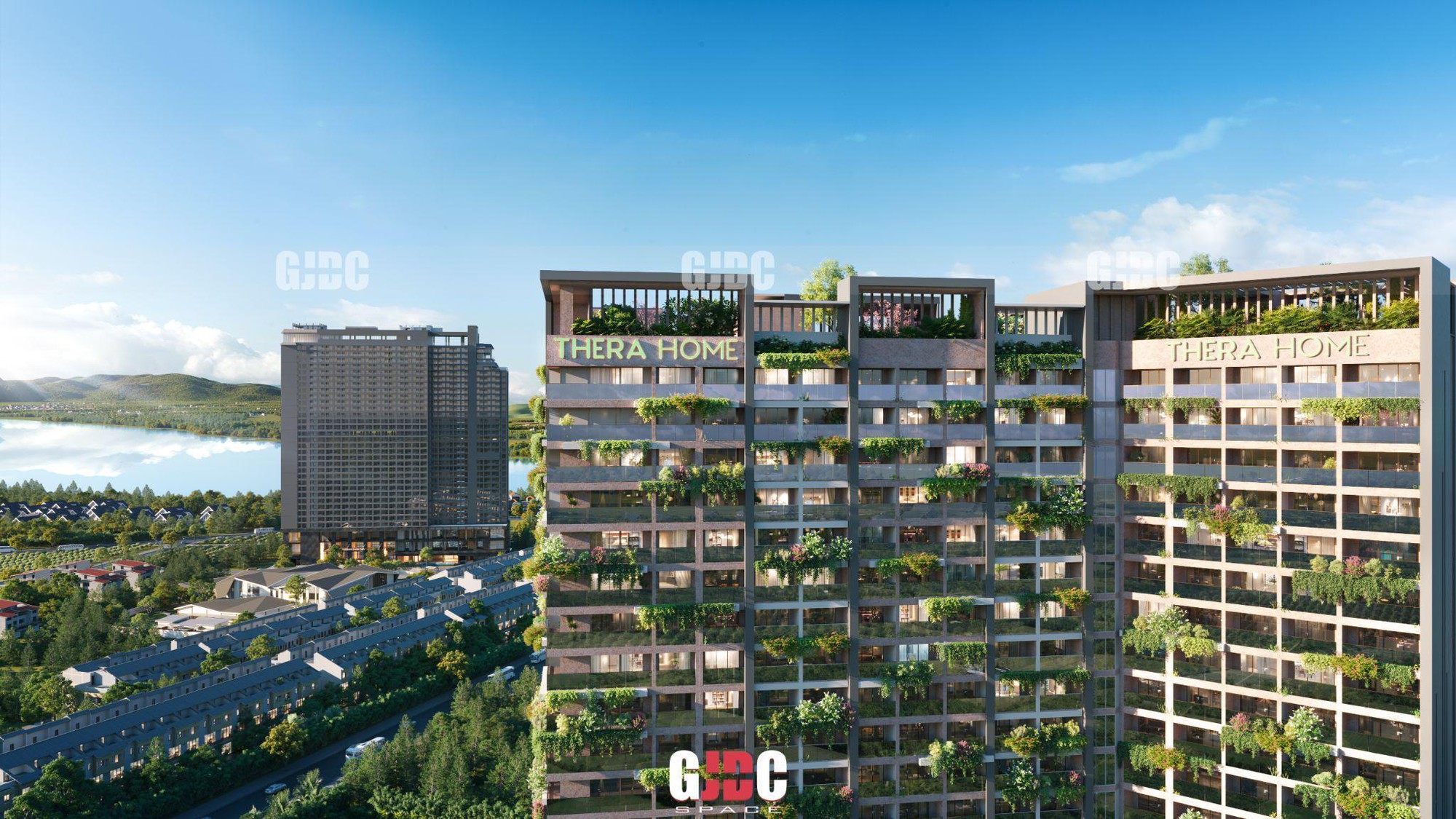
Thera Home’s standout feature is its 24/7 healthcare and nursing system.
Thera Home’s emergence reflects urban dwellers’ health-conscious aspirations and opens new investment avenues in Vietnam’s real estate sector. As real estate enters the therapeutic era—where value aligns with health and quality of life—pioneering models like Thera Home demonstrate a clear competitive edge: meeting sustainable, long-term demands. This is not just a new living trend but an investment in Asia’s future lifestyle: peaceful, high-quality, and longer living.
Fuji Onsen Chairman’s Thera Home: Unveiling Japanese Business Philosophy
The Chairman of Onsen Fuji’s Board of Directors is steering the company toward sustainable growth, rooted in the Japanese principles of Kaizen, Omotenashi, and Sanpo Yoshi. These values are vividly embodied in the groundbreaking Thera Home product line—a premium therapeutic residence offering round-the-clock healthcare services.
“Cen Land: Embracing the New Era”

With over two decades of experience, Cen Land has consistently demonstrated its agility and strategic foresight in navigating the ever-changing landscape of the real estate market. The company’s ability to not only overcome challenges but also solidify its leadership position is a testament to its resilience and adaptability.
Investment Trends 2025: The Rise of Health-Restoring Real Estate

The world is witnessing a powerful shift: from glitzy high-rises to regenerative real estate – where a home is not just a dwelling, but a sanctuary for proactive wellness and self-care.
Real Estate: “Live nearby, invest nearby” – The driving force for market recovery

With the positive market signals in early 2024, the trend of living near – investing nearby is being assessed as a strong recovery momentum for the 2024 real estate market.