


















As the new year approaches, the anticipation for the latest smartphone releases is palpable, yet I find myself less enthused by the familiar names in the industry. Peter Kostadinov, Senior Editor at Phonearena, shares this sentiment in his recent article.
Below is an excerpt from his piece:
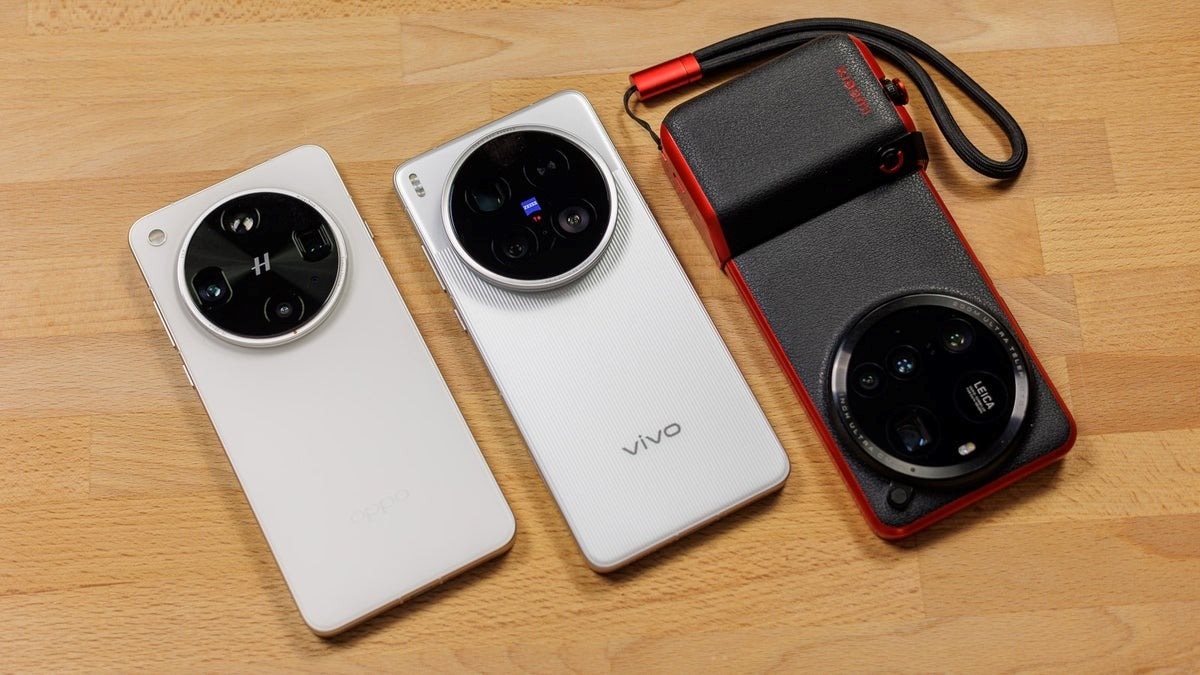
The upcoming iPhone 18, Pixel 11, and Galaxy S26 fail to excite, as they seem to rely on recycled hardware and software gimmicks to attract users. Instead, my attention is captured by the likes of the Xiaomi 17 Ultra, Oppo Find X9 Ultra, and Vivo X300 Ultra, devices that promise to push the boundaries of Android’s hardware and software ecosystem.
I’ve made a New Year’s resolution for 2026: to avoid devices from Apple, Samsung, and Google due to their incremental updates and lack of true innovation. Here are the devices that have captured my interest:
Xiaomi 17 Ultra
One of the most intriguing Chinese smartphones this year is the Xiaomi 17 Pro Max, a bold challenger to the iPhone 17 Pro Max, featuring a unique rear display. However, the upcoming Xiaomi 17 Ultra will forgo this feature in favor of something even more exciting: a cutting-edge camera system.
The rear camera setup pairs a 50MP Omnivision OV50X 1.0-inch primary sensor with a 200MP telephoto lens, promising exceptional zoom and cropping capabilities. Based on my month-long experience with the Xiaomi 15 Ultra in 2025, the 17 Ultra is poised to excel in both photography and videography. It will also introduce a new LOFIC (Lateral Overflow Integration Capacitor) sensor, offering improved dynamic range, noise reduction, and flicker mitigation in a single exposure—a truly exciting prospect.
Rumors suggest the device may feature variable optical zoom, though past disappointments temper my expectations. Nonetheless, the 17 Ultra is expected to enhance portrait photography with a new 35mm portrait lens, enabling advanced cropping, bokeh effects, and Live Photos directly from the primary sensor. HDR portraits with strong backlighting should also benefit from the LOFIC sensor.
Beyond its camera, the Xiaomi 17 Ultra boasts a flat display, the latest Snapdragon 8 Elite Gen 5 chip, a 7000mAh battery, and 100W fast charging—features that align perfectly with my current desires.
Vivo X300 Ultra
My affection for Vivo smartphones is no secret, and my daily driver, the X200 Pro, remains exceptional even in late 2025. The prospect of the X300 Ultra taking this legacy further is thrilling.
The Vivo X200 Ultra, released in early 2025, set a high bar with its feature-rich, top-tier camera. The X300 Ultra is rumored to raise the stakes with a 200MP primary sensor, featuring a 35mm Sony LYT-901 1/1.12-inch lens and an 85mm telephoto lens with a Samsung HPB 1/1.4-inch sensor. The ultra-wide camera will also utilize a 50MP 1/1.28-inch sensor, doubling as both ultra-wide and wide-angle lenses.
This device is expected to be the first with dual 200MP cameras, pushing photographic capabilities to new heights. Unfortunately, details remain scarce, with rumors only hinting at a 7000mAh silicon-carbon battery, 100W wired charging, and the Snapdragon 8 Elite Gen 5 chip.
Most excitingly, the X300 Ultra is rumored to launch globally—a welcome change, as the X200 Ultra was not widely available.
Oppo Find X9 Ultra
How does one improve upon the already exceptional Oppo Find X9 Pro? Simple: by offering even more.
I’m eager to see how Oppo will enhance the Find X9 Pro experience, a device I recently praised as nearly perfect. Rumors suggest a notable successor to the Find X8 Ultra, replacing the Dimensity 9500 chip with the Snapdragon 8 Elite Gen 5 and featuring a quad-camera setup.
This setup may include a 200MP Sony LYT-901 primary sensor, a 200MP short telephoto lens, a 50MP long telephoto lens, and a 50MP ultra-wide lens. If the image quality rivals or surpasses the Find X9 Pro, we’re in for a treat.
The device is also expected to feature a 7000mAh battery, slightly smaller than the X9 Pro’s 7500mAh but justified by the addition of an extra camera. In my view, this trade-off is worthwhile, as cameras cannot be added post-purchase, unlike battery charging.
Rumors of a global release are particularly exciting, as my experience with the China-exclusive Oppo Find X8 Ultra was hindered by regional restrictions and optimizations.
Conclusion
China’s leadership in smartphone innovation is undeniable and shows no signs of slowing. We can expect most hardware advancements to originate from this region in the near future, a trend I wholeheartedly embrace. While software experiences may occasionally fall short, the excitement injected into an otherwise stagnant market is well worth the trade-off.
I’m ready to take that leap.
Unveiling the OPPO Find X9 Series: A Legacy of Redefining Technology

From its groundbreaking sliding camera to the revolutionary 200MP Hasselblad telephoto lens, the OPPO Find X series has spent seven relentless years setting the benchmark for Android flagships.